

Order 138
Pixels are smudged on the Russian map.
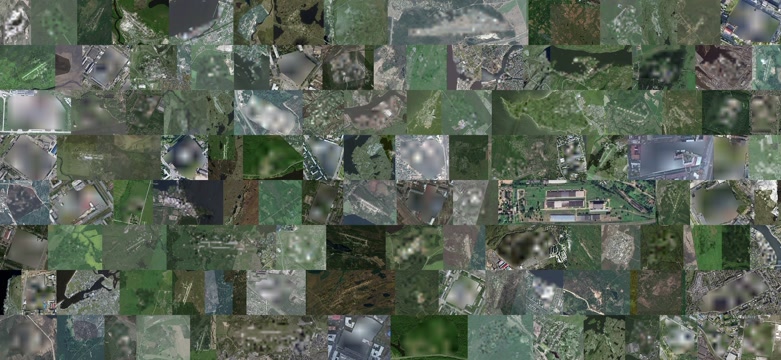
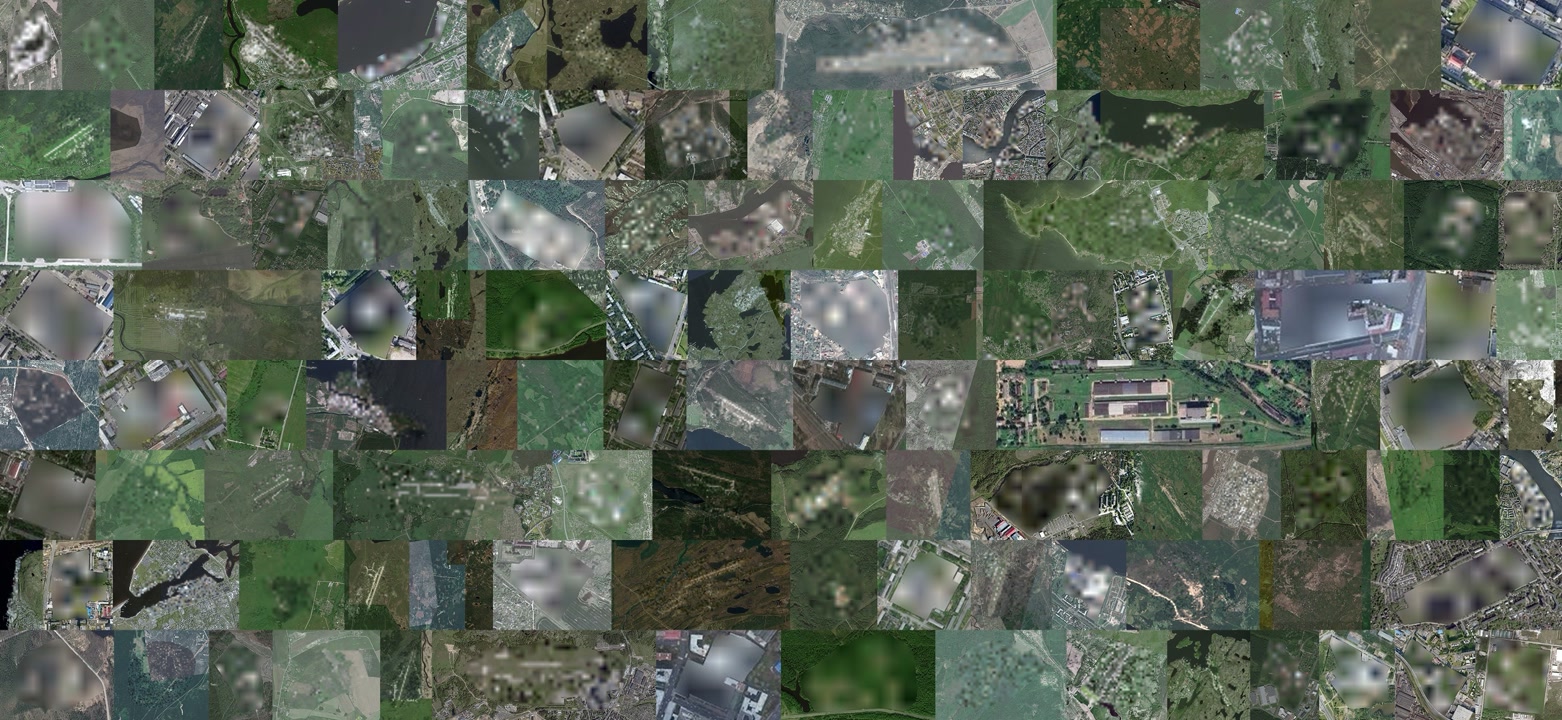
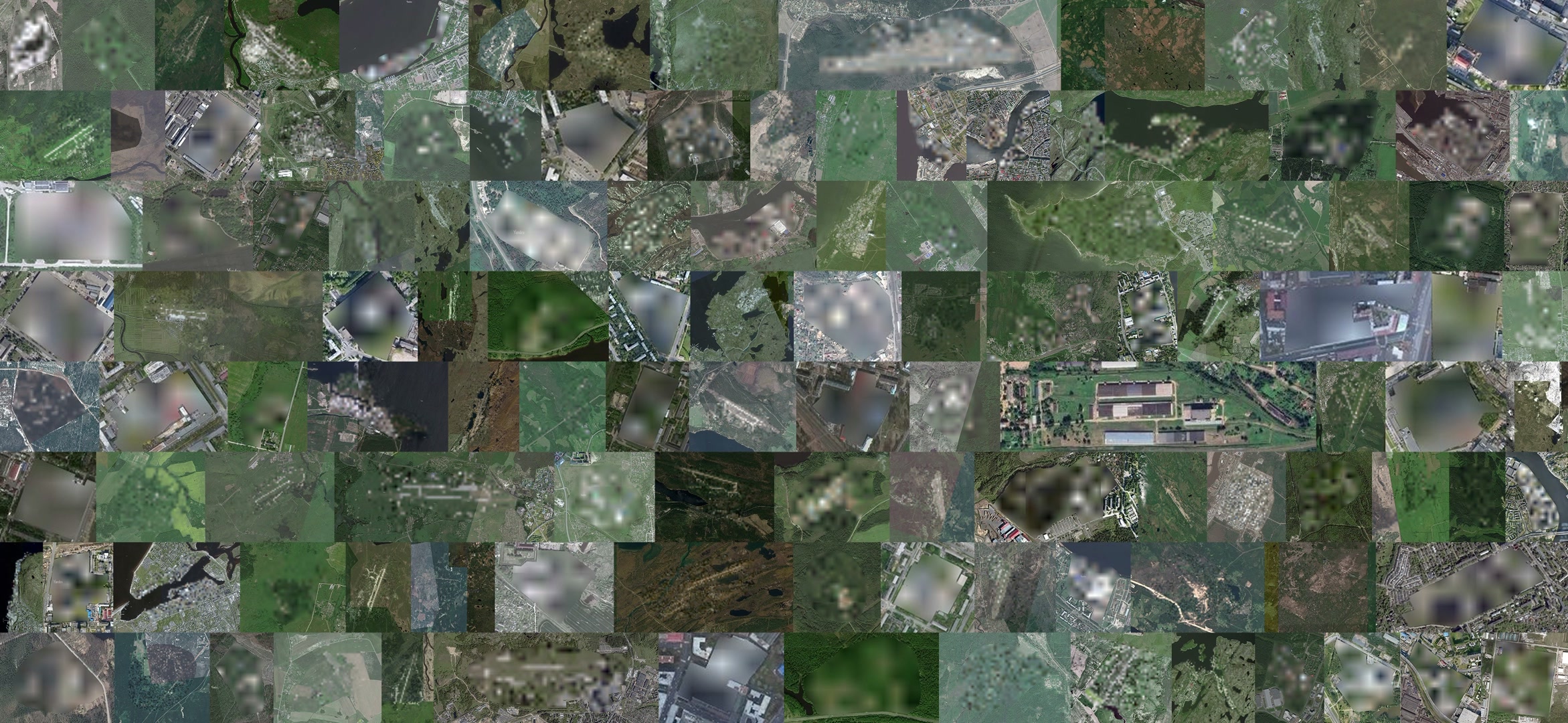
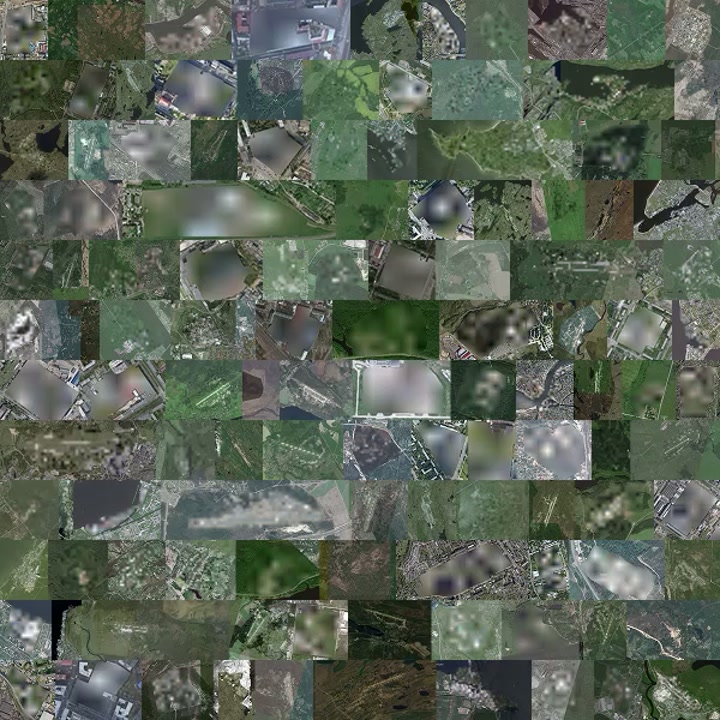
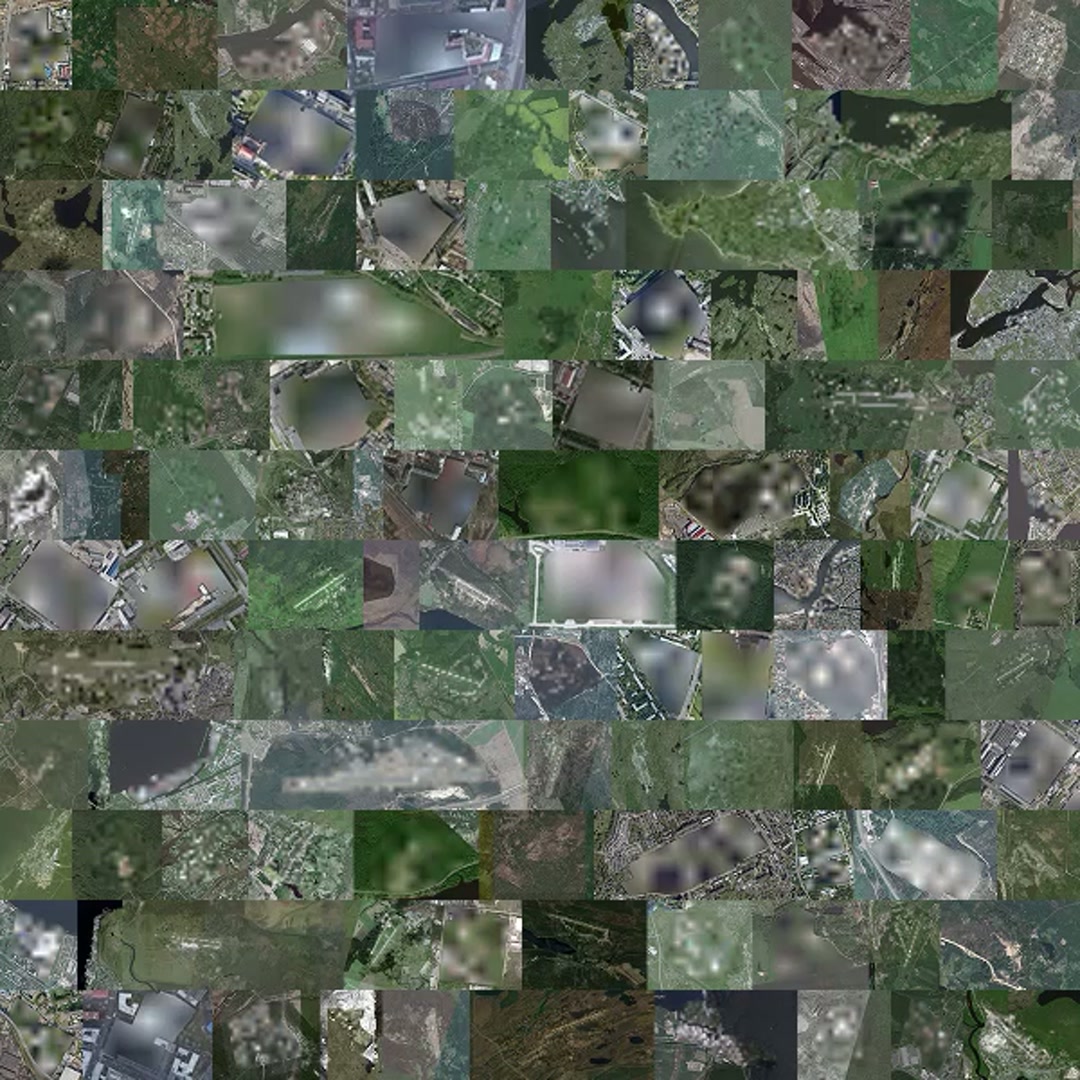
Hundreds of sites, hiding in plain sight.
Behind them lies a secret order — revealed by a single mistake.
Order 138
Benjamin Fredriksen, Journalist
Frida Annette Helseth Strømme, Graphic designer
Les denne saken på norsk Dette er de ukjente områdene Russland vil skjule fra kartet
A little more than a year ago, Ukrainian forces launched «Operation spider web» and surprised the world. Their drones flew across five time zones to destroy a fifth of Russian bombers.
Among the locations hit was Olenya airport, on the Kola peninsula.
In a drone operation at five locations simultaneously Ukrainian forces showed the capacity to target Russia in an unprecedented way. Video: SBU (Ukrainan security forces)
The spectacular operation serves as an example of how Ukrainian drone warfare has put Russia on the back foot. The drone attack also points us to a universe of enigmatic blurs and national scale map rinse.
Today, obscurity clouds the Olenya air field on the Russian map service «Yandex Maps». Open up the satellite map on this location, and you’ll be served pixel porridge.
The air field on the Kola peninsula is smudged on the satellite map of the Yandex map service. The red outline marks the extent of the blur.
Faksimile: Yandex LLC
This airport is covered by one of more than 120 such blurs that Scandinavian broadcasters NRK and SVT have examined.
We have talked with experts across many fields, and compared with a number of other data sources to understand how and why the blurs are drawn.
←
- The map shows all the 120 blurs we have examined for this story.
- The second biggest category is military and civilian air fields. Our research shows that 10 of the 29 air fields are not in use.
- We have found 17 blurs on top of different air defense sites and locations for electronic warfare.
- Six garrisons and military training camps are blurred.
- The biggest category of blurs are factories, industry and research facilities. →
- Multiple sources comment that it is hard to see any logic behind the way the locations are selected.
- For instance, some nuclear power plants are blurred, but not all of them.
- Also, some refineries, some naval bases, and some radar installations are blurred – but many are not.
- In another example, the blur do not cover an actual nuclear deployment site, but does cover the related support facilities.
- Some blurred locations are still fully visible on other image views from Yandex, like street map and aerial photos.
- The Dossier Center expose of 6088 companies that are part of the defense industry
- Ukraine forces’ map of drone strikes
- OpenSanctions and Ukraine sanctions
- Lists of Russian military installations and refineries
- NASA’s Black Marble satellite imagery that captures night light as a proxy for human activity
- They cover large areas
- They contain more than one possibly high value
- At the same time, similar sites – in some cases close by – are not blurred
- Economical support for the company or its employees
- Cheaper loans
- Preferred supplier or vendor
- Exemption from military service
- Better salaries
- Part 1, revealing the images and the numbers that document the quick pace of Russia's ground force enlargement
- Part 2, talking to Russian sources about president Putin's support for starting a conflict against Nato
There are a lot of apparent contradictions with the 120 blurs.
Even though some unanswered questions remain, one aspect is clear.
An apparent mistake in a court ruling has revealed the connection to the desperate scramble of the Russian authorities to protect against the cheap and plentiful airborne hazards.
It all started with this attack on the oil refinery in Ryazan.
This video was aired after the first drone attack on the refinery in Ryazan, April 13th, 2024.
What Russia wants to erase
For the last year, journalists from NRK have been examining Russia’s increasing military presence on the Nato border.
In the same area, we have observed that the Russian map service Yandex has redacted a large number of locations.
We have created a computer program that analyses all of Yandex’ satellite maps along the border to Europe, to find the blurred areas.
The process in detail
The process in detail
The Yandex satellite maps service works in the same way as similar ones from Google and Bing. The program we built requests map data for a given area, and at a high zoom level where the blurs are clearly visible.
Next, the program divides the area into smaller pieces, and computes the visual complexity of each smaller tile. This is because the blurs decrease the detail density. When only the tiles below a certain threshold are kept, we are left with a bespoke, jagged representation of the original blur.
Grafikk: NRK
We are also left with some false positives, especially from areas that are naturally low on complexity, like peat, bog, tundra and cereal crop. Journalists from NRK, Swedish broadcaster SVT and Estonian media Delfi have worked together to carefully review each detection, and determine what the blurs cover.
We have used Qgis and Google Earth to visually compare the blurred Yandex area to other map services that are not blurred. Additionally, we have overlaid other datasets to understand what lies beneath the blur:
The resulting dataset contains 120 verified blurs along Russia’s western border. This is only the tip of the iceberg, there are many more across the country.
The algorithm looks for areas where image complexity is lower than normal. It turns out that this is a good way to detect a blurred area. The jagged features you see in this article are a result of that process.
We have reviewed each of the detections to try to understand what the Russian authorities try to hide behind the blur.
It’s not particularly difficult, since you can compare them to the unblurred location by switching to another map provider, like Google Maps or Apple Maps. Digital constrictions have increased the last year, but at least when we started our work on this, these providers were also available within Russia.
Here’s how it works. Try it yourself, on the area of Russian president Vladimir Putin’s resort:
Sammenligning av to bilder
Yandex
This blur is on the east coast of the Valdai lake and hides the favorite resort of Putin and his two sons, according to reports.
It is protected by a ring of at least thirteen air defense systems and a big blur.
We have reached out to Yandex to ask for an explanation on how and why the blurred areas are selected. They have not answered.
We asked them about the range of withheld locations, as Yandex Maps applies blurs to more than airports, refineries, and Putin’s beach houses.
Protecting military sites
About half of the smudged sites appear to be military in nature.
Sammenligning av to bilder
Yandex
Ghadzhievo is a large military area north of Murmansk. The blur covers a submarine base, a submarine missiles depot, and also a nuclear warhead storage unit.
The Gadzhievo blur shows some of the features common of the military blurs we have seen:
In other cases, the military purpose is easier to discern. Like with this one, right on the border to Lithuania.
Sammenligning av to bilder
Yandex
In Kaliningrad, next to Lithuania, lies a base station for a Russian satellite navigation system. It is obscured by a blur on Yandex Maps, but its american colleague shows it in detail.
Yandex, Google
This installation is a part of the Russian analog to GPS, called «Glonass». This could be the preferred navigational system for the Russian army.
Sites like this, along with radars, air defense, military air fields and garrisons, make up of around half of all the blurs we have analysed.
Confusingly, a lot of these locations seem to have little or no activity. Research shows that a lot of them may have been abandoned for years.
Study of night light activity, as detected by NASA’s Black Marble satellites, show that ten of the military installations in our data set are totally dark. The Afrikanda air field is one such location.
Sammenligning av to bilder
Yandex
The Afrikanda air field is one of the 10 military locations where research shows no activity, but they are still obscured on the Russian map service.
Why would they be hidden, if they are not in use?
Sources NRK and SVT have interviewed for this story, have different suggestions. One theory is that the lack of logic is the tactic – an attempt to confuse or mislead analysts.
Some bring up a Soviet tradition to retract information from maps – even whole cities were removed back in the day.
Yet our findings show that Yandex’s Russian blurs are recent, triggered by Ukraine’s successful drone campaigns.
Six of the obscured locations in our data set have been the target of at least one Ukrainian drone attack. Two were airfields, two were shipyards and one was an oil refinery.
But the most recent strike stands out because it falls into a different category—a scientific research institute.
Why hide a research institute? The largest category Yandex obscures is civilian structures.
Western countries also obscure their maps
Western countries also obscure their maps
Russia is not alone in having the maps and satellite images digitally altered to protect important locations.
A spot check on Norwegian and Swedish sites, for instance, show that locations are obscured on both Google Maps and Apple Maps.
A spokesperson for Google Maps in the Nordics explained to NRK that they don’t obscure sites from satellite data themselves, but rely on the image provider to do it.
The government authority in charge of this in Norway is the National security authority (NSM). They explained to NRK that they expect the authorized image providers to hide details when they deliver satellite images to commercial map services.
The NSM suffered plenty of critique when they published a live map of protected locations in 2018. Today, it lists around 150 protected locations.
Faksimile: NSM
Enter the OPK
Julie Udal is a military researcher at Norwegian Defence Research Establishment (FFI). She works to understand the intersection of Russia’s economy, industry and military.
Her work shows that the defense industry is one of the few areas of growth in the Russian economy. The civilian sector is declining. The war in Ukraine has created a major demand for military components and the Russian government is allocating a large amount of resources into defense.
Julie Udal is a part of the Russia group of the Norwegian Defence Research Establishment (FFI).
Foto: Adrian Heggem Misfjord / NRK
She says that in the current economy, a lot of companies wish to be a part of the defense industry. It brings multiple benefits.
We show Udal a Russian company outside of St. Petersburg that is blurred on the map. They create valves and parts for ships.
Sammenligning av to bilder
Yandex
In the center of St. Petersburg lies a company that makes valves and pipe parts for the Russian navy. This may explain why they are smudged on the map.
She comments that even companies producing simple parts will be counted as part of the defense industry, if the company has a contract with the military.
– The Russian defense industry is large. They produce enough to cover most of their needs themselves, but are dependent on import for some key elements. Their goal is to serve their own forces, and at the same time strengthen the Russian position in the international arms trade.
Оборонно-промышленный комплекс (OPK) is Russian for «the military-industrial complex». It is an umbrella for companies, research institutes and organizations that take part in development or the production of military equipment or military economy.
It is also the name of a registry of all members of the military economy. And the OPK list is growing. In 2016 it counted around 1400, but now it has grown to more than 6000 companies. President Putin has previously described it as an «industrial army» counting more than 10.000, if you include all subcontractors.
The registry has been secret since 2022. But last year, the Dossier Center published an updated database of 6088 companies on the OPK list.
When we cross check the database with the 120 blurs, we find that 33 blurs are drawn across companies that are on the OPK list.
Udal says the OPK registry gives the Ministry of Industry and trade control of important aspects on how much and what items are produced.
In turn, being an OPK company gives attractive benefits, for instance:
Udal explains that that Western sanctions on key elements has put pressure on the Russian government to produce or procure Russian alternatives.
21 of the 120 blurs cover a company that is on Western sanctions lists.
They are likely tied to the defense industry, war economy or other strategic sector, according to Udal.
– They are most likely a business somewhere along the supply chain, says the researcher.
Precisely why Yandex have put blurs on sanctioned or other companies, is a question we have put to both Yandex LLC and to the Russian Ministry of Industry and Trade.
They have not replied.
But a court’s mistake gives an insight into the government’s way of thinking, and helped us to put two and two together.
Order 138
Our research shows that a court ruling by the Khamovnichesky district court in Moscow in December 2024 mandated the first Yandex blur.
The Khamovnichesky court in Moscow has been the venue of some of Russia's most known cases, where both punk group Pussy Riot and former oligarch Mikhail Khodorkovsky have stood trial.
Foto: Juri A. / Wikimapia/CC BY-SA 3.0
The state prosecutor took «Yandex LLC» to court, because they had declined to blur a specific location from their map products. The court writes that this site had already been repeatedly targeted with drones: four dates in 2024 are listed in the ruling.
NRK has reviewed the ruling. The court redacted the company’s name throughout—not with black bars, but by replacing it with the generic Russian word «адрес».
Yet, the court made one mistake of four cyrillic letters.
In the four page ruling they forgot to replace the abbreviated company name once:
«РНПК». Short for Ryazan oil refinery.
From the ruling we learn a couple of things.
The Ryazan oil refinery is serving the needs of the Russian military. From the court ruling:
«Aдрес \[i.e Ryazan\] works in a non stop mode to secure the needs of the Russian army and navy while they go through with the special military operation.»
The ruling shows that Yandex wouldn’t voluntarily add blurs to their maps. The prosecutor argued that keeping the satellite images freely available on Yandex Map makes the refinery «extremely vulnerable to enemy attack».
Still, the Ryazan oil refinery has been hit by drones 11 times since it was blurred, according to Ukrainian strike maps.
Sammenligning av to bilder
Yandex
The refinery in Ryazan is among the biggest in Russia. Ukrainian drones have recorded 15 hits here since 2022, according to Ukrainian forces.
The ruling also reveals the connection between the blurs and the now secret OPK list.
The court notes that the oil refinery was put on the OPK list by the Russian Ministry of Industry and Trade by an order in 2024.
Order 138.
This image of the Ryazan oil refinery is from 2022.
Foto: Wikimedia-bruker svtk44. Delt med lisensen CC-BY-SA-4.0
The court gave its ruling in December 2024.
A month later, the Russian news agency TASS wrote about it. According to their summary, this was the first time that Yandex was ordered to manipulate their maps to protect the Russian military.
The news agency wrote about the court ruling, and said it was the first time the map company had been forced to remove information that is crucial to the defense industry.
Faksimile: TASS.ru
Yandex have not commented on the ruling, but an earlier explanation they gave may still be relevant.
Nuclear arms expert Matt Korda has reviewed the blurs for NRK, and states that Yandex's «attempts at cencorship are simply not worth the effort», because the imagery is readily available elsewhere.
In 2018, Matt Korda, one of the worlds foremost experts on Russian nuclear weapons, discovered that Yandex had blurred locations on their Turkey and Israel maps. Matt Korda writes to NRK that the response Yandex gave to this was «very telling». The company wrote that they complied with national rules and regulations for each country.
– One could surmise that Russia has changed its national public map in the same way, writes Korda.
By forcing Yandex to obscure their maps, Russian authorities may have spurred what is known in online culture as the Streisand Effect.
The Streisand Effect
This is «Image 3850», which became known world wide after Barbra Streisand tried to remove it.
Foto: Copyright (C) 2002 Kenneth & Gabrielle Adelman, California Coastal Records Project, www.californiacoastline.org
In a burst of assertiveness the American singer Barbra Streisand sued a photographer in 2003 because of one of his images of the Californian coastline.
His project was to document coastline erosion, but she objected because her marvellous mansion was captured on one of the 12.000 photos.
The irony?
Up until the lawsuit, only six persons had seen the picture. But her legal actions caused an internet storm, and soon several hundred thousand curious onlookers downloaded the picture.
Thus the effect that bears her name was born.
If you try too hard to hide, the whole world will want to see.
Hei!
If you feel like dropping us a message after reading this story, we would love to hear from you!
Our most recent stories cover Russian military buildup on the borders to Scandinavia and the Baltics.
We have also covered how a prestige project for Arctic elite soldiers took a nose dive. Not long ago, we also published a story about how Western high end subsea technology, including from the Norwegian company Kongsberg Group, may have ended up helping Russia build a listening network to protect their nuclear weapons.
You may also be interested in our well-read story about what we learned about the Svalbard cable damage when it was finally pulled out of the sea.
And make sure to dive into the Nordic TV documentary «Putin's Shadow War».
Feel free to send us an e-mail, an encrypted Signal message, or double blinded via NRKs SecureDrop – in case you want true, one way messaging.
Thanks.
Håvard Gulldahl & Inghild Eriksen
Journalists
Les også Nye satellittbilder avslører: Russisk oppbygning tett på Norge
Les også Russiske kilder avslører: Dette er Putins plan for Europa