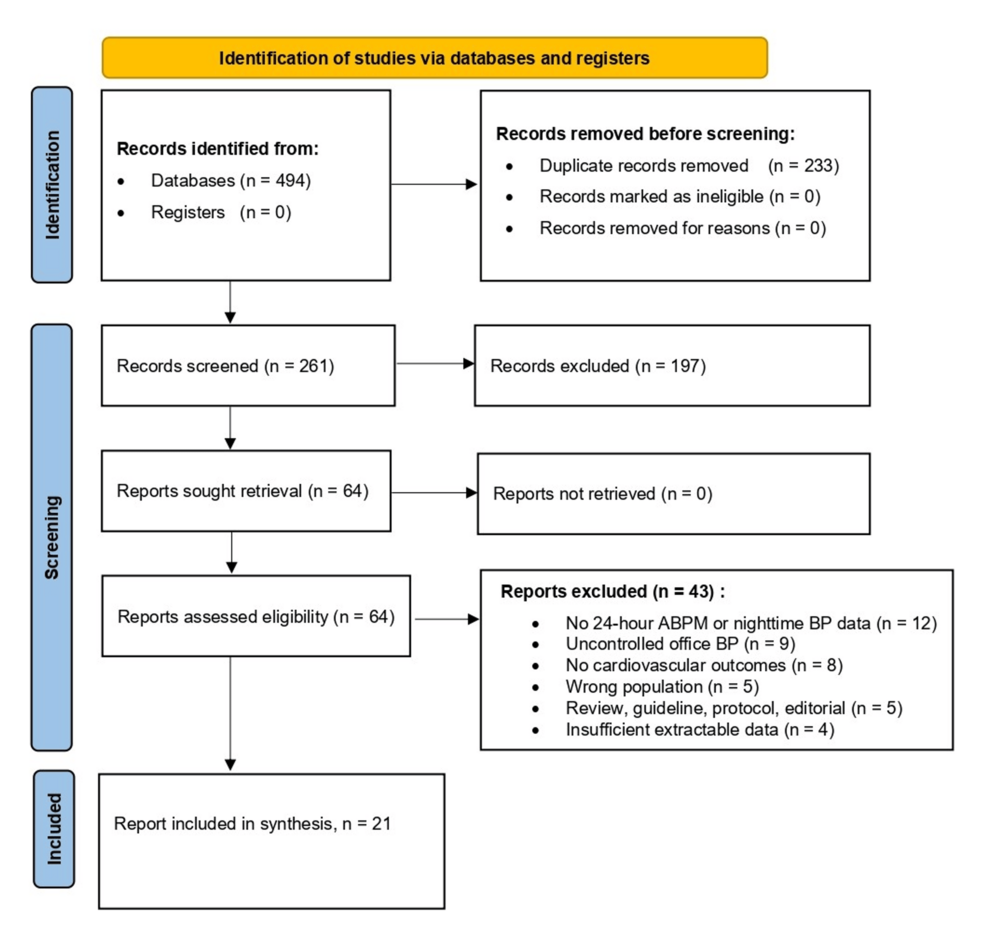
Masked nocturnal hypertension is a hidden blood pressure phenotype in which office blood pressure appears normal or controlled while nighttime ambulatory blood pressure remains elevated. This systematic review evaluated the association between masked nocturnal hypertension or isolated nocturnal hypertension detected by 24-hour ambulatory blood pressure monitoring and cardiovascular or target-organ outcomes in adults with normal or controlled office blood pressure. A systematic search was conducted across PubMed, Web of Science East Mediterranean Region (WOS-EMR), Web of Science, Scopus, and Cochrane Library. Eligible studies included adults with normal or controlled office blood pressure who underwent 24-hour ambulatory blood pressure monitoring and had reported cardiovascular outcomes or target-organ damage. Reviews, editorials, pediatric studies, pregnancy-related studies, studies without nighttime blood pressure data, and studies without relevant outcomes were excluded. Study selection, data extraction, and risk-of-bias assessment were performed using predefined criteria. The included evidence covered population-based cohorts, chronic kidney disease cohorts, diabetes cohorts, hypertension clinic samples, and untreated outpatient populations. Across studies, masked nocturnal hypertension and isolated nocturnal hypertension were generally associated with higher cardiovascular, stroke, and mortality risks, as well as renal, cardiac, vascular, and cerebrovascular target-organ damage, including renal impairment, albuminuria or proteinuria, left ventricular hypertrophy, increased left ventricular mass, arterial stiffness, carotid intima-media thickness, and silent cerebrovascular lesions. However, interpretation should remain cautious because studies differed in population, nocturnal blood pressure thresholds, treatment status, follow-up duration, and outcome definitions. Masked nocturnal hypertension detected by ambulatory blood pressure monitoring appears to be a clinically important phenotype among adults with normal or controlled office blood pressure. The findings support nighttime blood pressure assessment as a useful approach for improving cardiovascular and target-organ risk stratification, especially in high-risk groups such as chronic kidney disease, diabetes, and treated hypertension.
Masked Nocturnal Hypertension and Hidden Organ Risk: A Systematic Review
#### Enter your email address to receive your free PDF download.
Please note that by doing so you agree to be added to our monthly email newsletter distribution list.

New here? Sign up.
Sign in to Cureus
sign in using LinkedIn
sign in using Google
sign in using Facebook
---
or
Sign in with your email address:
Email
Password
Don't have an account? Sign Up
Forgot your password?
Resend confirmation instructions
Sign up for Cureus
sign up using LinkedIn
sign up using Google
sign up using Facebook
---
or
First name
Last name
Email
Password
Specialty
#### Email Communication and Personal Data
Cureus personal data will never be sold to third parties and will only be used to enrich the user experience and contact you in direct relation to the application. I agree to opt in to this communication.
By joining Cureus, you agree to our Privacy Policyand Terms of Use.