


California produced over half its May electricity from solar, a world record
By Blanca BegertStaff Writer
July 31, 2026 3 AM PT
- 57
- 4 min Click here to listen to this article
- Share via Close extra sharing options
-

-

-

- X
* Email * Facebook * X * LinkedIn * Threads * Reddit * WhatsApp * Copy Link URL Copied! * Print
0:00 0:00
1x
This is read by an automated voice. Please report any issues or inconsistencies here.
See more from the L.A. Times in Google Search. Set us as preferred
California hit a major milestone in May, generating more than half its electricity from the sun in what is believed to be a global first, according to an analysis of federal data.
“California has had a wealth of solar growth in the last five years,” said Abby Lestina, an analyst at Grid Status, a group that tracks electricity supply and demand in U.S. power markets but was not involved with the analysis. “It makes sense that they would reach this goal.”
It’s the first time a large-scale power system is known to have surpassed 50% solar for an entire month.
Advertisement
It’s also the second significant power record set by the state recently. For the first five months of 2026, California made more electricity from solar than from natural gas, according to the U.S. Energy Information Administration. Burning natural gas has long been the dominant source of electricity in the state. This could be the first year that solar beats gas in California’s power mix.
California has been trending in this direction for years, but the boom in new battery storage around the state allows it to save solar power when it’s overabundant and use it when the sun goes down.
“Battery storage has transformed California’s power system,” Nicolas Fulghum of Ember, which did the analysis, wrote. “Batteries now shift huge amounts of solar power from midday into the evening peak, which is what allows this level of solar penetration in the system.”
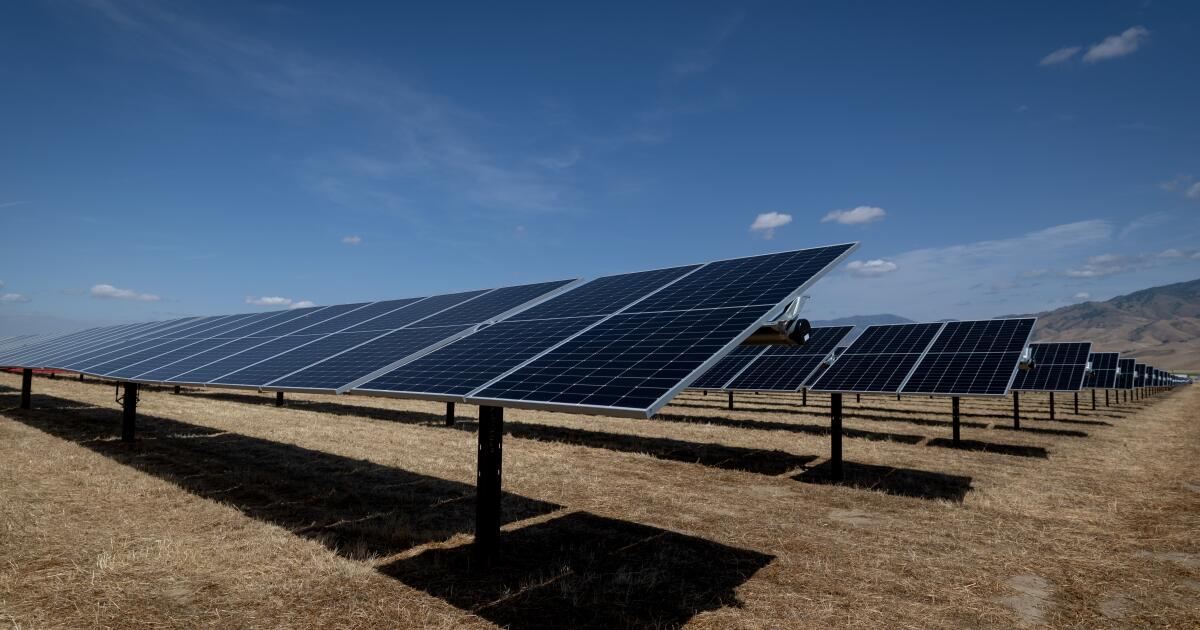
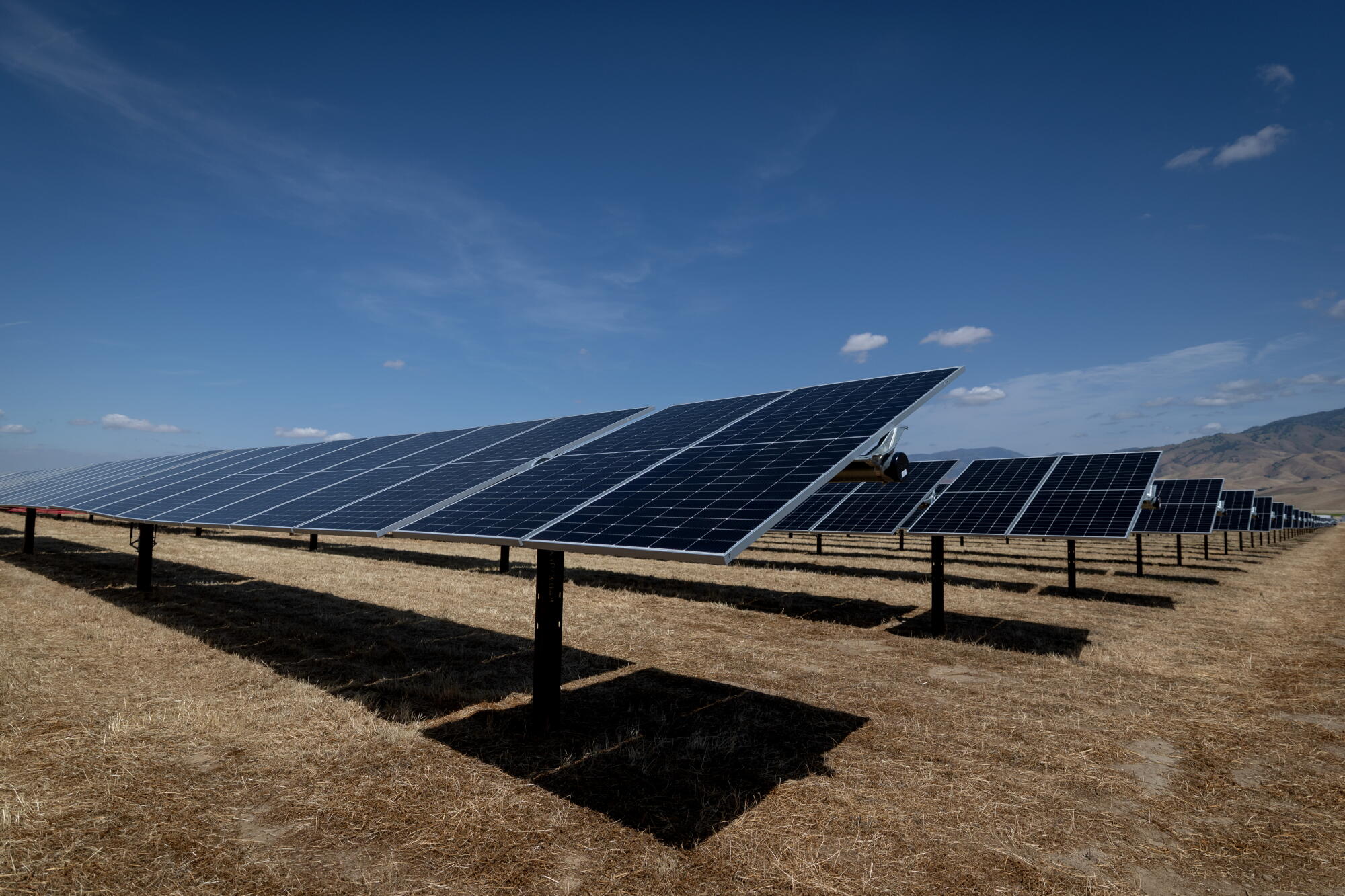
Since 2020, the energy provided by battery storage in California has grown from 500 megawatts to 16,000. The amount of solar power being made has also more than doubled, as the state built vast solar farms in the deserts and elsewhere, and incentivized homeowners to install it on their rooftops.
As a result, by 2026, California had about 23,400 megawatts of utility-scale solar capacity, second only to Texas, according to the EIA. When you add in rooftop and other small-scale panels, California had more than any other state, about 43,500 megawatts.
“Because we are increasing the share of solar/renewables on the grid each year, while also increasing the amount of battery storage, we will continue to see these records each Spring as supply surges,” said Jayme Ackemann, a spokesperson for California’s grid operator.
Advertisement
California is still nowhere close to China’s buildout of clean electricity. No one is. The country built out seven times as much solar just last year as the total California has installed. The difference is, California’s electricity emissions are going down. China’s are not yet.
The state has continued its transition, despite strong efforts from the federal government to slow it down.
Ember, which is based in the U.K. and promotes renewable energy, drew its data from the U.S. EIA’s monthly power reports. Its electricity tracker includes only the energy that is produced in state, not California’s imports from Arizona, for example. Solar generation includes both utility-scale solar and rooftop.
It makes sense that California first surpassed this record in May because the month is usually neither hot nor cold, meaning there’s lower demand, which allows solar to meet more of the energy need, according to the analysis.
The massive SunZia wind project in New Mexico also started sending electricity to California in April, reducing the need to burn natural gas for electricity at night. The imports increased solar’s share in the mix that Ember tracks, Fulghum wrote.
This month, people in California are using more natural gas, which is common as summer temperatures peak.
Advertisement
“Natural gas is the grid operator’s generation that will step in when demand starts to rise,” Lestina said. “You see a big jump in natural gas as a percentage of the fuel mix this year starting on July 12, which is when temperatures started to pick up in the West.”
On the whole, however, California is making more clean electricity, and the amount made from natural gas, which generates air pollution and heats up the climate, has been declining over the last few years.
Under legislation signed in 2018, all of California’s electricity is to come from clean sources by 2045.
“Natural gas will continue to fluctuate as a response to grid conditions until we have replaced that with dispatchable resource,” Ackemann said.
More to Read
More Americans are installing solar batteries at home. Here’s why
July 1, 2026Solar surpasses coal in historic shift for U.S. electricity mix
June 17, 2026As gas prices rise, California gets punched harder at the pump than other states
March 6, 2026Show Comments
Climate & EnvironmentBusinessWorld & NationCaliforniaClimate Change
Get Boiling Point, our newsletter exploring climate change, energy and the environment, and become part of the conversation — and the solution.
By continuing, you agree to our Terms of Service, which include arbitration and a class action waiver. You agree that we and our third-party vendors may collect and use your information, including through cookies, pixels and similar technologies, for the purposes set forth in our Privacy Policy such as personalizing your experience and ads.
Login or register with email
Agree & Continue

Follow Us
Blanca Begert is a climate and energy reporter for the Los Angeles Times.