EffectiveHTML
Effective
HTMLby Plannotator
HTML for thinking with agents.
A visual field guide to choosing and making the right artifact: from rough wireframes to working prototypes, diagrams, and small purpose-built interfaces.
Read the guideBrowse the catalog
Match the artifact to the decision.
HTML earns its place when spatial, visual, comparative, or interactive expression makes the work easier to understand.
WireframesTest hierarchy, content, navigation, and responsive structure.PrototypesTest a credible flow, its behavior, and its relevant states.DiagramsMake relationships and system behavior easier to inspect.PlansKeep implementation sequences legible and source-grounded.
Use HTML when the thing itself carries the explanation.
Markdown is often enough. HTML becomes useful when a reader needs to compare structure, manipulate state, inspect relationships, or participate in the idea.
See structure
Make layout, hierarchy, and responsive choices visible.
Test behavior
Exercise states, feedback, recovery, and product boundaries.
Share the thing
Give collaborators an artifact they can inspect and direct.
One brief. Two different decisions.
The release-readiness example moves from structural exploration to working interaction without confusing the purpose of either stage.
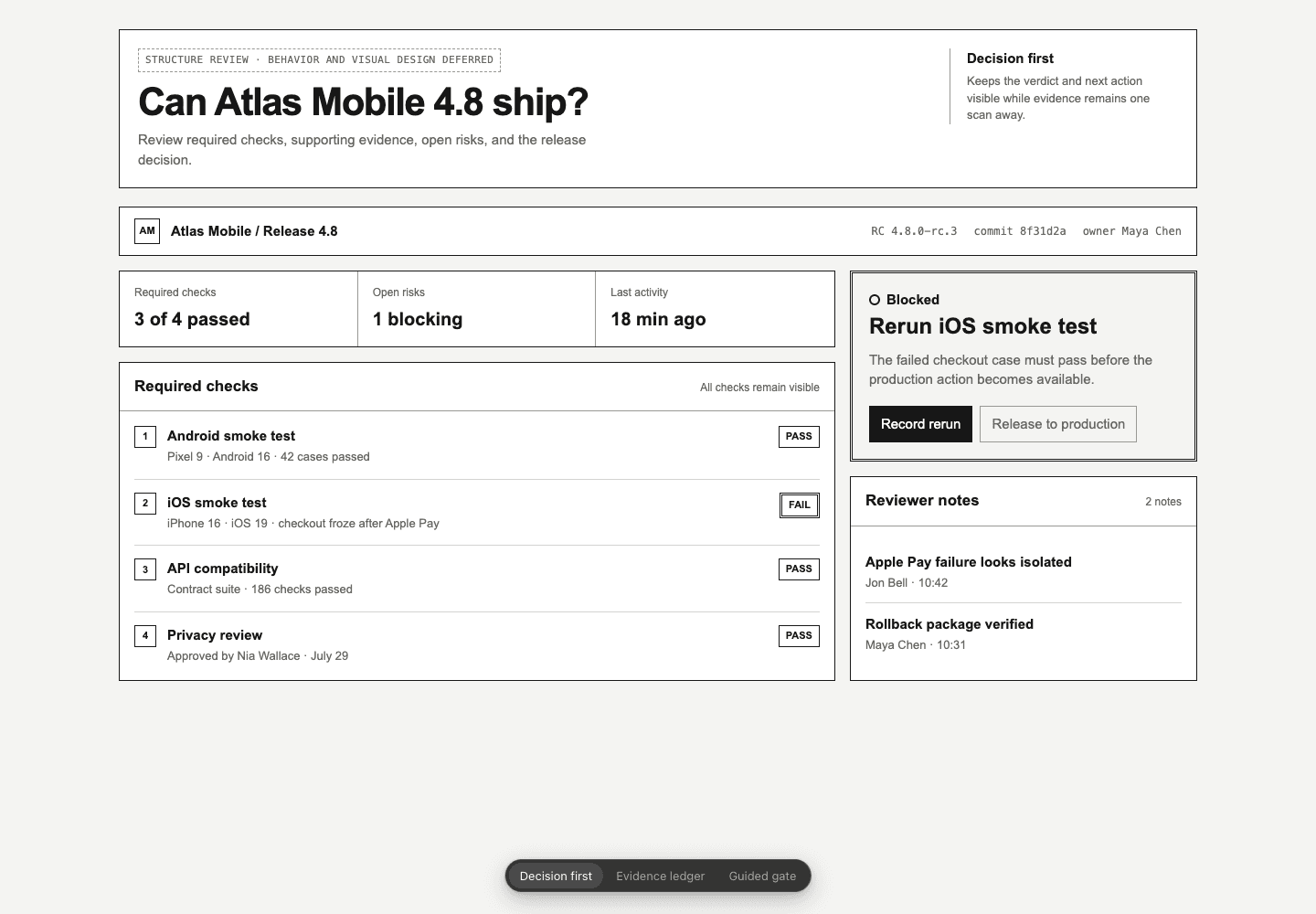 Wireframe — decide what belongs
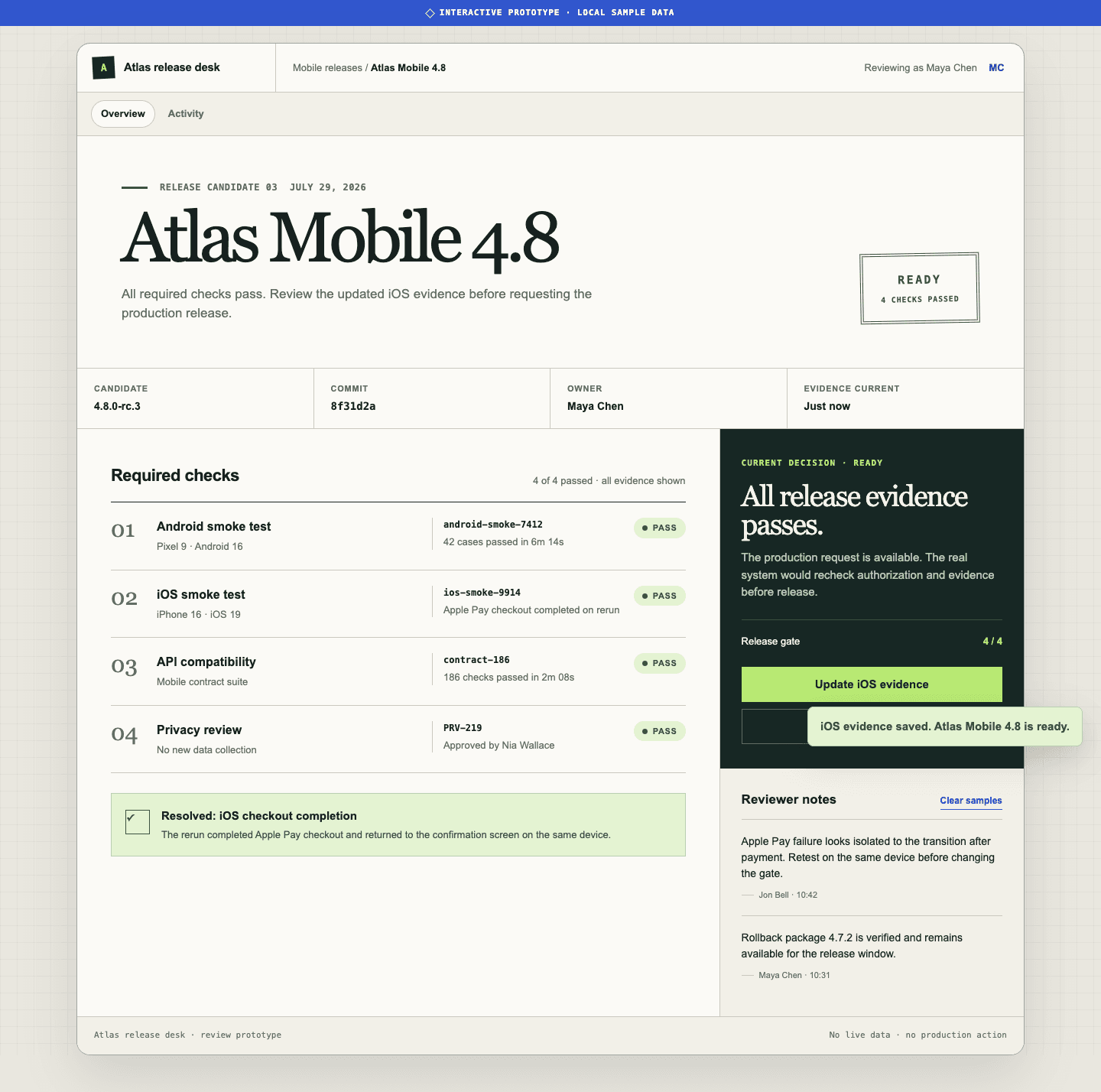 Prototype — test how it behaves