

Meat allergy is on the rise — what scientists want to know
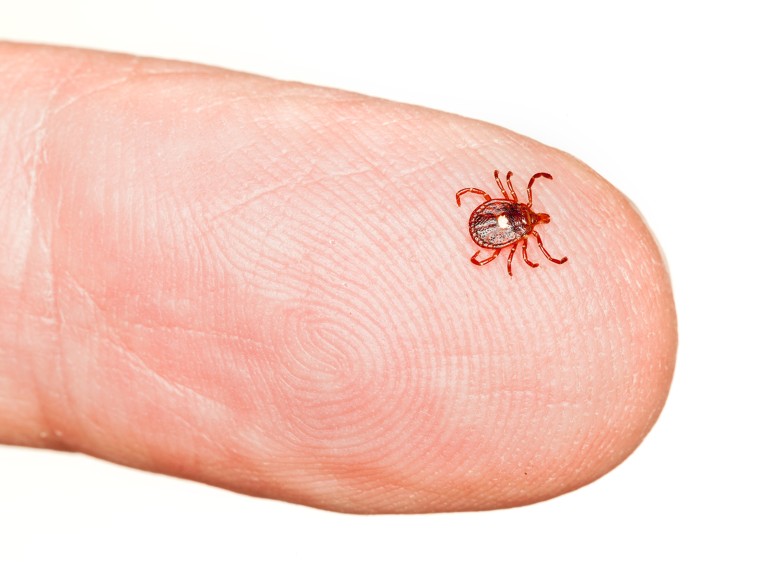
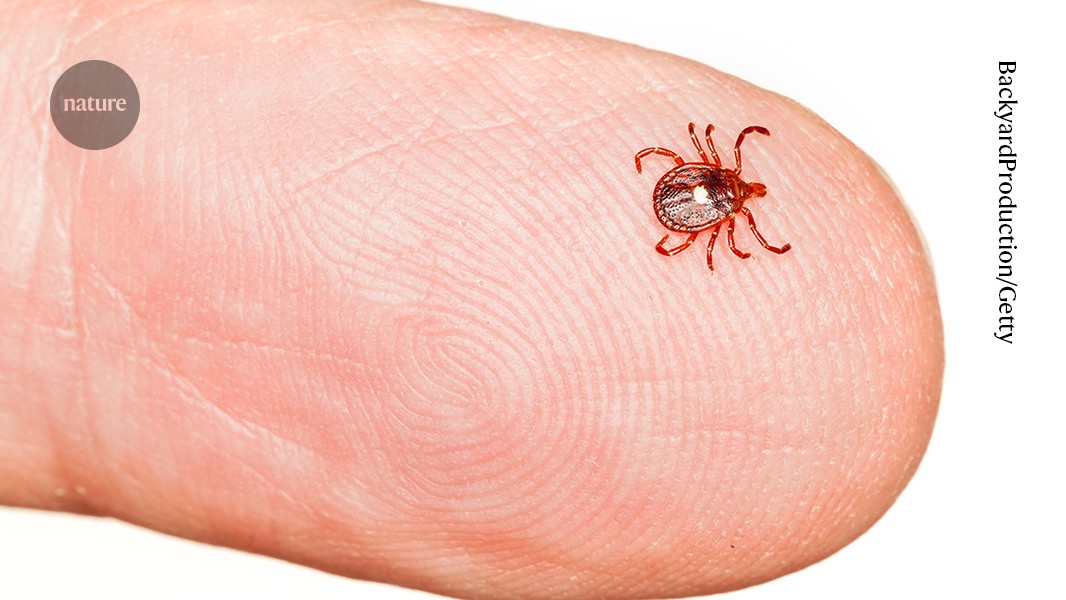
Bites from a lone star tick (Amblyomma americanum), which live on white-tailed deer, are the main cause of α-gal allergy in the United States.Credit: BackyardProduction/Getty
Thomas Platts-Mills develops a rash if he eats red meat. The immunologist is one of thousands of people who are diagnosed each year with tick-induced α-gal allergy — a life-threatening allergy that is on the rise.
People can develop the allergy after being bitten at least twice by ticks that carry a sugar molecule called α-gal (galactose α-1,3 galactose) in their saliva. Ticks are often carried on deer and can be transmitted to a human host when people walk through grasses or past shrubs that contain the parasites.
Cases of α-gal allergy are increasing in many countries. Researchers say climate change and rising deer populations are contributing factors, but there is much that scientists don’t understand about the disease. Even diagnosing it is difficult because people mostly experience vague symptoms, such as stomach pain or vomiting, hours after eating meat, and sometimes months after a tick bite. For this reason, the allergy is probably under-diagnosed. There is currently no treatment or cure.
“We’re still casting in the dark, but it is our responsibility to find something that works for people” in need of treatment, says Benjamin Casterline, an immunology researcher at the University of Missouri School of Medicine in Columbia.
When a tick bites, α-gal is transferred from the saliva into the person’s blood, triggering the production of immunoglobulin E (IgE) antibodies. Future exposures to α-gal, which is found in red meat and dairy products, can trigger an allergic reaction. For some people, this can be life-threatening anaphylaxis, says Platts-Mills, who also studies allergies at the University of Virginia in Charlottesville. At least two people have died worldwide because of the allergy.
On the rise
Australia has the highest rates of α-gal allergy in the world — affecting more than 700 people out of 100,000 in some tick-prone regions. Suspected cases have increased by 22% each year since 2020, with most caused by the Australian paralysis tick (Ixodes holocyclus).
The United States is also a hotspot, and as many as 450,000 people might have the allergy, according to the US Centers for Disease Control and Prevention. Between 2017 and 2022, around 15,000 people each year were newly diagnosed with the allergy, with most cases occurring in regions where the lone star tick (Amblyomma americanum) is common — bites from this tick species are the main cause of α-gal allergy in the United States.
In Japan, 2–4% of the population (up to 4.9 million people) have been exposed to α-gal and produced antibodies, meaning that they are sensitized to the molecule, but are not necessarily allergic to it. In Denmark, the prevalence of α-gal sensitization in the population more than doubled between 1990 and 2016 — from 1.3% to 3.2%. One study found that 1–8% of people living in areas with high tick populations have the allergy, and up to 35% of people might be sensitized1.
Climate change is one explanation for the increase in cases, as warming temperatures increase tick habitats, says Nanju Alice Lee, a food scientist and allergy researcher at the University of New South Wales in Sydney, Australia. For example, Australian tick habitats were previously restricted to a small area of New South Wales but have expanded across the country’s east coast into Queensland, Lee says.
Growing deer populations are another reason for the rise in the United States, says Platt-Mills. White-tailed deer (Odocoileus virgianus) are the main host for the lone star tick and have been increasing beyond their usual habitat, as have roe deer (Capreolus capreolus) populations in Denmark, which are hosts for the castor bean tick (Ixodes ricinus), the main cause of α-gal allergy in Europe.
An unusual allergy
Enjoying our latest content?
Log in or create an account to continue- Access the most recent journalism from Nature's award-winning team
- Explore the latest features & opinion covering groundbreaking research
-
 Why we still don’t know the mounting health risks of climate change
- The growing global battle against blood-sucking ticks
-
 Climate change is speeding up — the pace nearly doubled in ten years
- How climate change will burden our children: data reveal a lifetime of extreme heat
- Immunology
- Climate change
- Diseases
- Immunology
- Climate change
- Diseases
- Gasdermin D-mediated delivery of caspase inhibitors to suppress pyroptosis Article 03 AUG 26
-
 Cancer-fighting antibodies with a one-two punch take aim at tumours News 03 AUG 26
- Somatic mutations reveal the ontogeny of microglia in human aging Article 30 JUL 26
-
 Fires in Europe are breaking records: here’s what the future holds News 30 JUL 26
-
 The past and future impact of climate change on childhood malaria in Africa Article 29 JUL 26
-
 How mosquitoes are conquering the world — in four charts News 29 JUL 26
-
 How smallpox reached the Americas: first genomic evidence points to Europeans News 31 JUL 26
- How mosquitoes are conquering the world — in four charts News 29 JUL 26
-
 Polio will come roaring back if the task of eradicating it isn’t finished soon Editorial 29 JUL 26
- #### Multiple Research-Intensive Associate/Full Professor Tenure System Positions & an 1855 Professorship The College of Human Medicine at Michigan State University (MSU) invites applications for multiple tenured, full-time research faculty positions Flint, Michigan (US) Michigan State University
- #### Tenure Track Assistant Professor- Texas A&M University Vashisht College of Medicine Medical Physiology at the Texas A&M University Vashisht College of Medicine (VCOM) invites applications for a tenure-track Assistant Professor. Bryan, Texas (US) Texas A&M University- Medical Physiology
- #### Postdoctoral Fellowships Worldwide IBSA Foundation for scientific research offers 7 fellowships of € 32.000 to young researchers under 40 years. The call is open to people from research institutes and universities from all over the world. IBSA Foundation for scientific research
- #### Associate or Senior Editor, Discover Journals (Environmental Science) Job Title: Associate or Senior Editor, Discover Journals (Environmental Science) Location: Shanghai, Beijing, Nanjing or Pune, Hybrid Working... Shanghai, Beijing, Nanjing or Pune, Hybrid Working Model Springer Nature Ltd
- #### Global Recruitment for Faculty and Researchers at Anhui Normal University
Access through your institution
or
doi: https://doi.org/10.1038/d41586-026-02362-2
References
1. Commins, S. P. Expert Rev. Clin. Immunol. 16, 667–677 (2020). Article PubMed Google Scholar 2. van Nunen, S. A. Med. J. Aust. 208, 316–321 (2018). Article PubMed Google Scholar
