


AI Data Centers Are Driving Up Power Bills – This Map Shows Where

AI Data Centers Are Driving Up Power Bills – This Map Shows Where
Residential bills in PJM states could rise $15–$20 monthly as data centers drive 46% of capacity auction costs

Nikshep Myle

Nikshep Myle
- AI data centers added $29–$30 billion in grid capacity costs, hitting consumer utility bills directly.
- Voluntary ratepayer protection pledges lack legal enforcement, leaving residents unprotected from rising costs.
- 27 states are advancing laws requiring data centers to fund their own grid expansion independently.
- Illinois: \~23.85¢/kWh, up \~28% year-over-year — among PJM territory’s fastest risers
- Virginia: \~17.61¢/kWh, up \~15.4% — home to Data Center Alley, one of the world’s densest concentrations of data centers
- Hawaii: \~52.00¢/kWh, up \~26.7% — highest in the nation, though driven by fuel costs and grid isolation, not AI
- Georgia: \~15.84¢/kWh, up \~5.7% — where voter frustration over bills ousted two utility commissioners in 2025
- Texas: \~16.44¢/kWh, up \~5.9% — ERCOT has warned that AI loads could tighten the grid further
- [](https://www.gadgetreview.com/the-ai-exam-disaster-forcing-58000-students-to-start-over)
- [](https://www.gadgetreview.com/hank-green-admits-his-ai-use-became-not-healthy-fans-noticed-first)
- [](https://www.gadgetreview.com/country-music-stars-unite-revolt-against-ai-data-centers)
- How 10 Different AI Coding Models Performed During BenchmarksJul 31, 2026

- 14 Best Personal Items for Travel This Summer and Coming FallJul 31, 2026

- 6 AI Prompts to Beat ATS and Land Job InterviewsJul 31, 2026

Nikshep Myle has been a dedicated writer for Gadget Review for over 2 years and has contributed his writing to other publications as well, including TechRadar, Tom’s Guide and Android Police. Outside the digital world, Nikshep is a strong believer in optimizing health, well-being, and curiosity. He finds joy in gaming, exploring new music, and embarking on travel adventures. In Nikshep’s world, technology seamlessly intertwines with personal well-being and a vibrant array of interests.
→
By
Nikshep Myle
Nikshep Myle
Nikshep Myle has been a dedicated writer for Gadget Review for over 2 years and has contributed his writing to other publications as well, including TechRadar, Tom’s Guide and Android Police. Outside the digital world, Nikshep is a strong believer in optimizing health, well-being, and curiosity. He finds joy in gaming, exploring new music, and embarking on travel adventures. In Nikshep’s world, technology seamlessly intertwines with personal well-being and a vibrant array of interests.
All Articles by
→
Aug 4, 2026
·
3 min read
---
Image: Deposit Photos
Key Takeaways
Key Takeaways
Across four recent capacity auctions, AI data centers have added roughly $29 to $30 billion in costs to the electric grid — charges that land directly on your utility bill. That figure, according to Monitoring Analytics, represents about 46 percent of total capacity charges during that period. Data centers now consume around 4 percent of U.S. electricity, and the latest EIA pricing data shows the damage isn’t distributed evenly. Some states are absorbing the hit like a body blow. Others barely feel it.
The Capacity Crunch Behind Your Bill
Grid operators auction off future power supply, and data centers are driving those prices to record highs.
Grid operators like PJM Interconnection — which covers 13 Eastern states and D.C. — hold capacity auctions to ensure enough electricity supply exists, and those costs flow downstream to customers. PJM’s most recent auction will add $6.3 billion to consumer bills over three years, with data-center demand responsible for most of that increase, according to reporting by the New York Times and Utility Dive. As finance analyst Michael Ryan put it, “Ordinary customers are financing infrastructure for some of the richest companies in the world.”
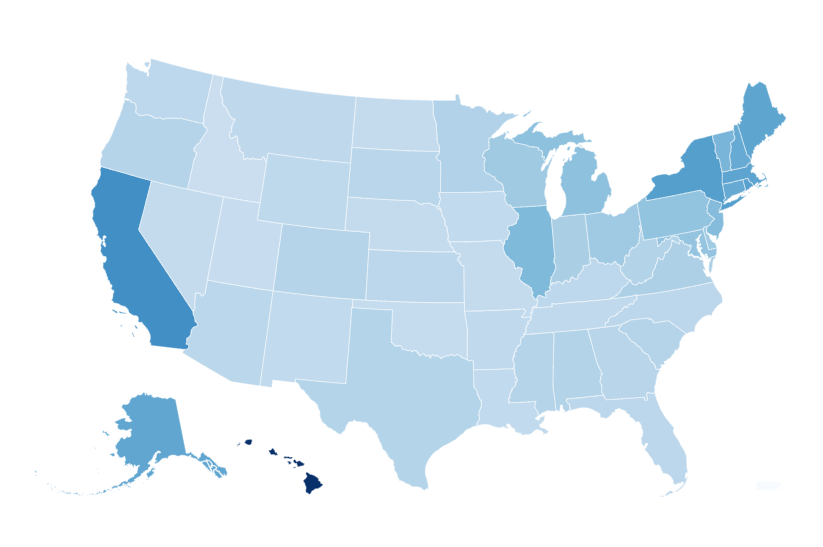
Image: Datacentermap.com
The state-level numbers make that abstract claim concrete:
Business professor Arie Brish argues data centers should function like major real-estate developments — with binding, pre-negotiated agreements on who funds generation, transmission, and backup capacity before a single server rack goes online. Right now, those infrastructure costs get averaged across everyone’s bill instead. That’s not a market failure. That’s a policy choice.
Pledges vs. Laws — Who’s Actually Protected
Voluntary corporate promises sound reassuring until you read the fine print.
President Trump’s Ratepayer Protection Pledge urges tech companies to cover their own energy costs, and firms like Microsoft and Anthropic have made similar voluntary commitments. The catch: none of these carry legal force or enforcement mechanisms. Meanwhile, according to policy tracker MultiState, 27 states are advancing legislation that would require data centers to fund their own grid expansion. California, Ohio, and Utah have already enacted laws that go further than the federal pledge in both scope and enforceability.
Stopping a data center at a zoning meeting and actually lowering your electricity bill are two entirely different fights. Environmental consultant Arif Gasilov notes that community opposition can block individual projects at the local level but rarely influences rate cases — the regulatory proceedings where electricity prices are actually set. Financial literacy expert Alex Beene sharpens the tension: grid-upgrade costs shift to residents while the economic benefits flow to corporations. Bills in PJM-heavy states are projected to stay elevated — potentially $15 to $20 per month higher in some areas, according to analysis from mgrid.org. Utility commission dockets are public record — finding your state’s open rate case and submitting written comment takes less than ten minutes, and that’s exactly where paying too much gets decided.
Share this
---
You Might Also Like\_
[](https://www.gadgetreview.com/the-ai-exam-disaster-forcing-58000-students-to-start-over)• The AI Exam Disaster Forcing 58,000 Students to Start Over
[](https://www.gadgetreview.com/hank-green-admits-his-ai-use-became-not-healthy-fans-noticed-first)• Hank Green Admits His AI Use Became “Not Healthy” – Fans Noticed First
[](https://www.gadgetreview.com/country-music-stars-unite-revolt-against-ai-data-centers)• Country Music Stars Unite & Revolt Against AI Data Centers
---

Our Editorial Process
At Gadget Review, our guides, reviews, and news are driven by thorough human expertise and use our Trust Rating system and the True Score. AI assists in refining our editorial process, ensuring that every article is engaging, clear and succinct. See how we write our content here →

Join over 150k Readers
Join 100,000+ readers discovering the coolest gadgets, smart buying guides, and the tech news that actually matters.
LATEST Lists\_
Why Trust Gadget Review
With over 25 years of experience, our editorial process is built on human expertise, ensuring that every article is reliable and trustworthy. AI helps us shape our content to be as succinct and engaging as possible.
Learn more about our commitment to integrity in our Code of Ethics.