


Lunar Volcanism
Earth's Moon
Lunar Volcanism
The Moon does not have erupting volcanoes today, but it was once flooded with flowing lava.
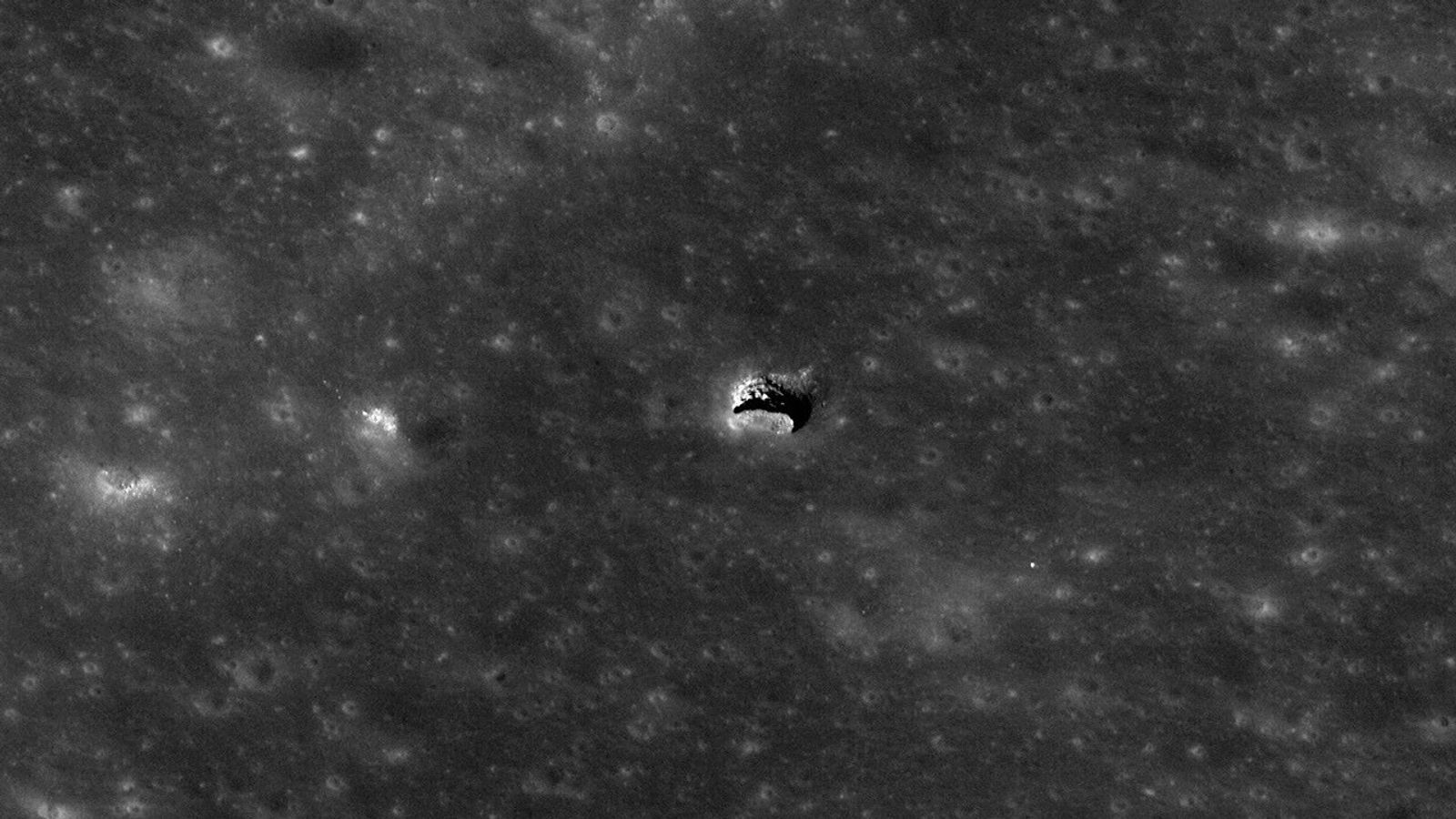
The Moon began as a molten world. Though volcanoes are not erupting on the lunar surface now, signs of past volcanic activity (like caves, plains, and domes made of cooled lava) are widespread. Scientists investigate lunar geology, including past volcanism, to learn more about how our Moon formed—which helps us to understand how other rocky worlds form and change, too.
Explore Lunar Volcanism Stories
- 01
- 02
- 03
- 04
New Evidence Adds to Findings Hinting at Network of Caves on Moon
An international team of scientists using data from NASA’s LRO (Lunar Reconnaissance Orbiter) has discovered evidence of caves beneath the Moon’s surface. Like “lava tubes” found here on Earth, scientists suspect that lunar caves formed when molten lava flowed beneath a field of cooled lava, or a crust formed over a river of lava, leaving a long, hollow tunnel. Go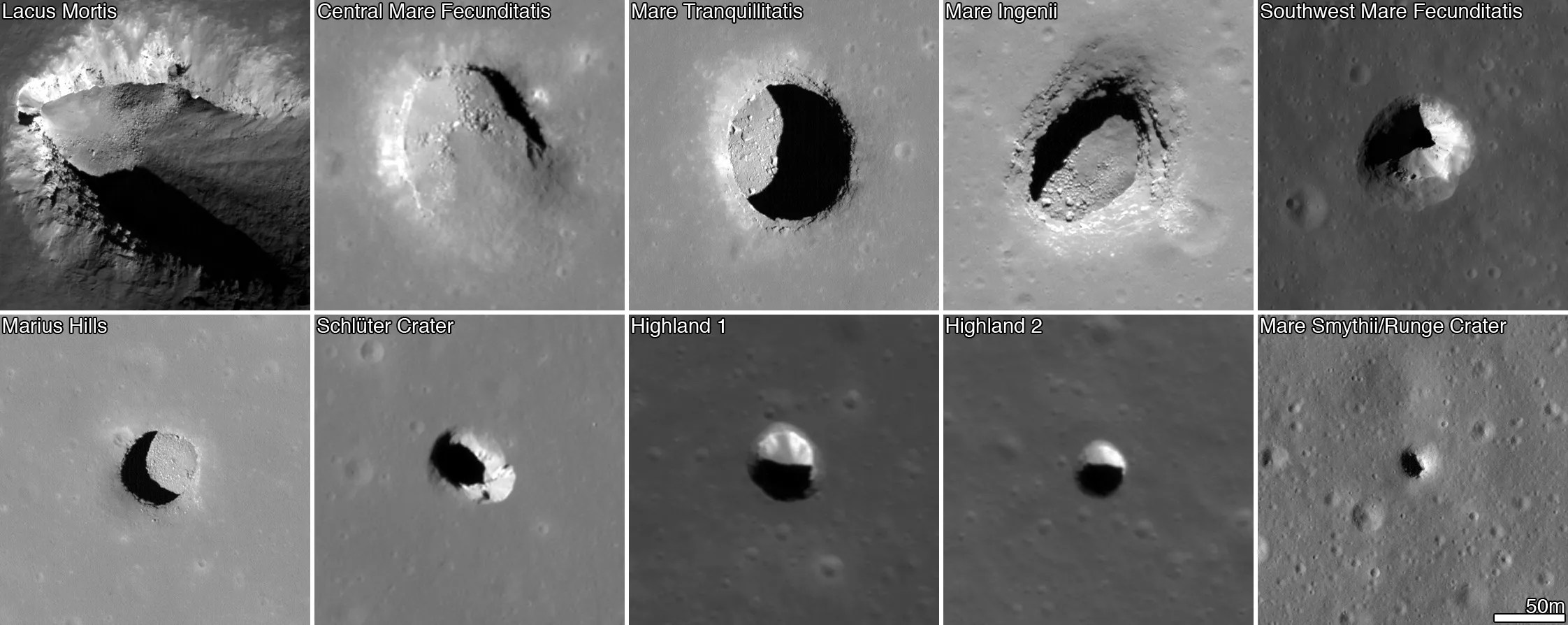 These images from NASA’s LRO spacecraft show a collection of pits detected on the Moon. Each image covers an area about 728 feet wide.
NASA/GSFC/Arizona State University
A Lunar Mystery: The Gruithuisen Domes
The Gruithuisen Domes are a geologic puzzle. Based on early telescopic and spacecraft observations, these domes have long been suspected to be formed by a magma rich in silica, similar in composition to granite. Go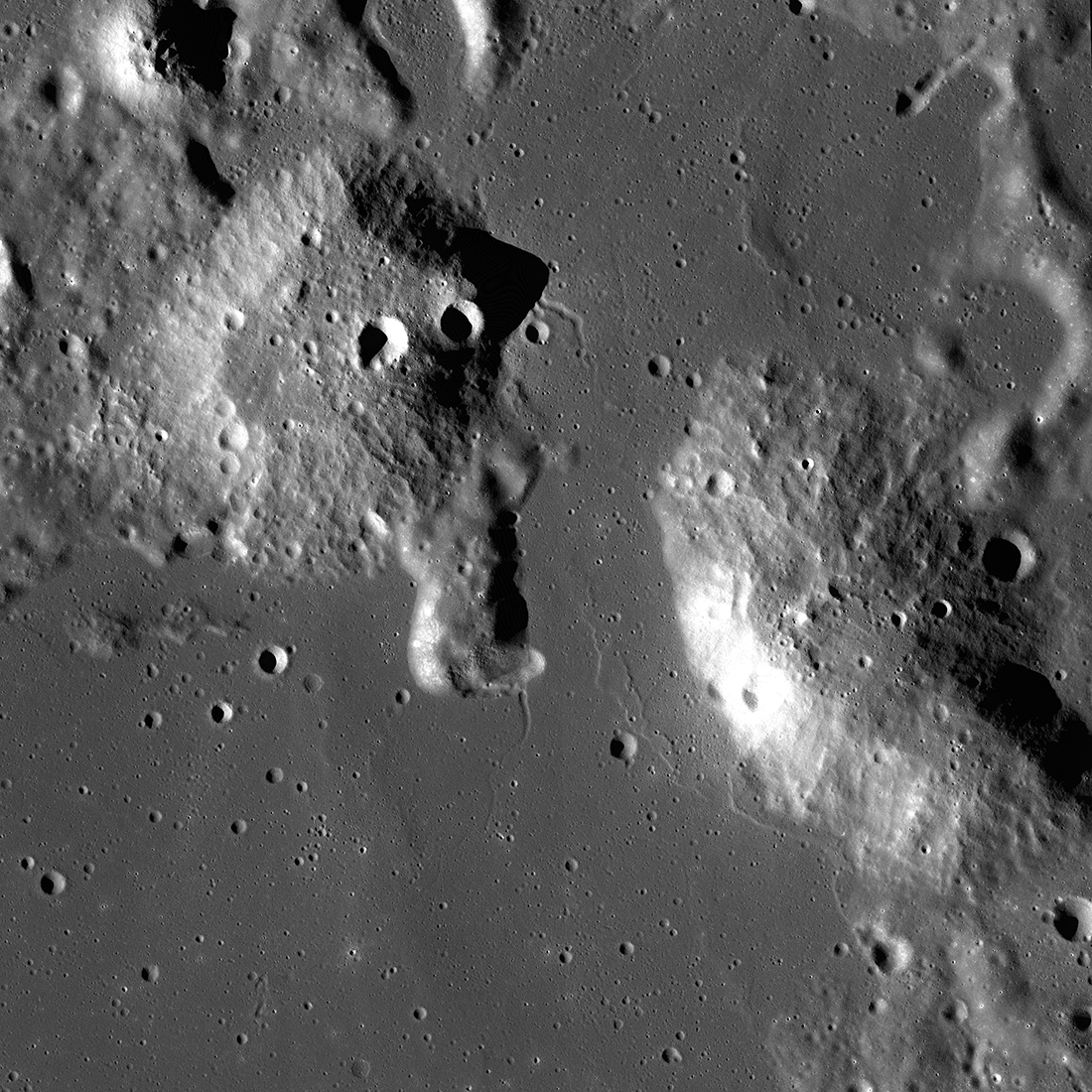 The Gruithuisen Domes, imaged by the Lunar Reconnaissance Orbiter Camera (LROC).
NASA/GSFC/Arizona State University
Compare Lava Landscapes on Earth and the Moon
Similar locations on different worlds, called planetary analogs, help scientists to make sense of our solar system – and field research in Earth’s most otherworldly places bridges the gap between past and future exploration. Interactive Gallery Left: on Hawaiʻi’s Kilauea Volcano, researchers use aerial cameras and hand-held science instruments to characterize their surroundings. Right: An Apollo 15 astronaut at work near Hadley Rille on the Moon. NASAWrinkle Ridge in Mare Crisium
Mare Crisium is a large, dark, basaltic plain on the Moon. Basaltic plains on the Moon were created by early volcanic eruptions. Mare Crisium was once flooded with basaltic lava, a dark, runny lava commonly found on Earth. Go A complex wrinkle ridge in Mare Crisium, imaged by the Lunar Reconnaissance Orbiter Camera (LROC).
NASA/GSFC/Arizona State University
Learn More

10 Cool Things NASA's Lunar Reconnaissance Orbiter is Teaching Us About the Moon
It's shrinking and quaking, and it had active volcanoes more recently than previously thought.
Keep Exploring