Skills are writing.Write them together.
The editor
Markdown you don't have to squint at
One surface, not a split screen. Headings, lists, tables and diagrams render live — and the raw markdown appears just-in-time around your cursor, so you always know what you're actually editing. The file on disk stays plain markdown, character for character.
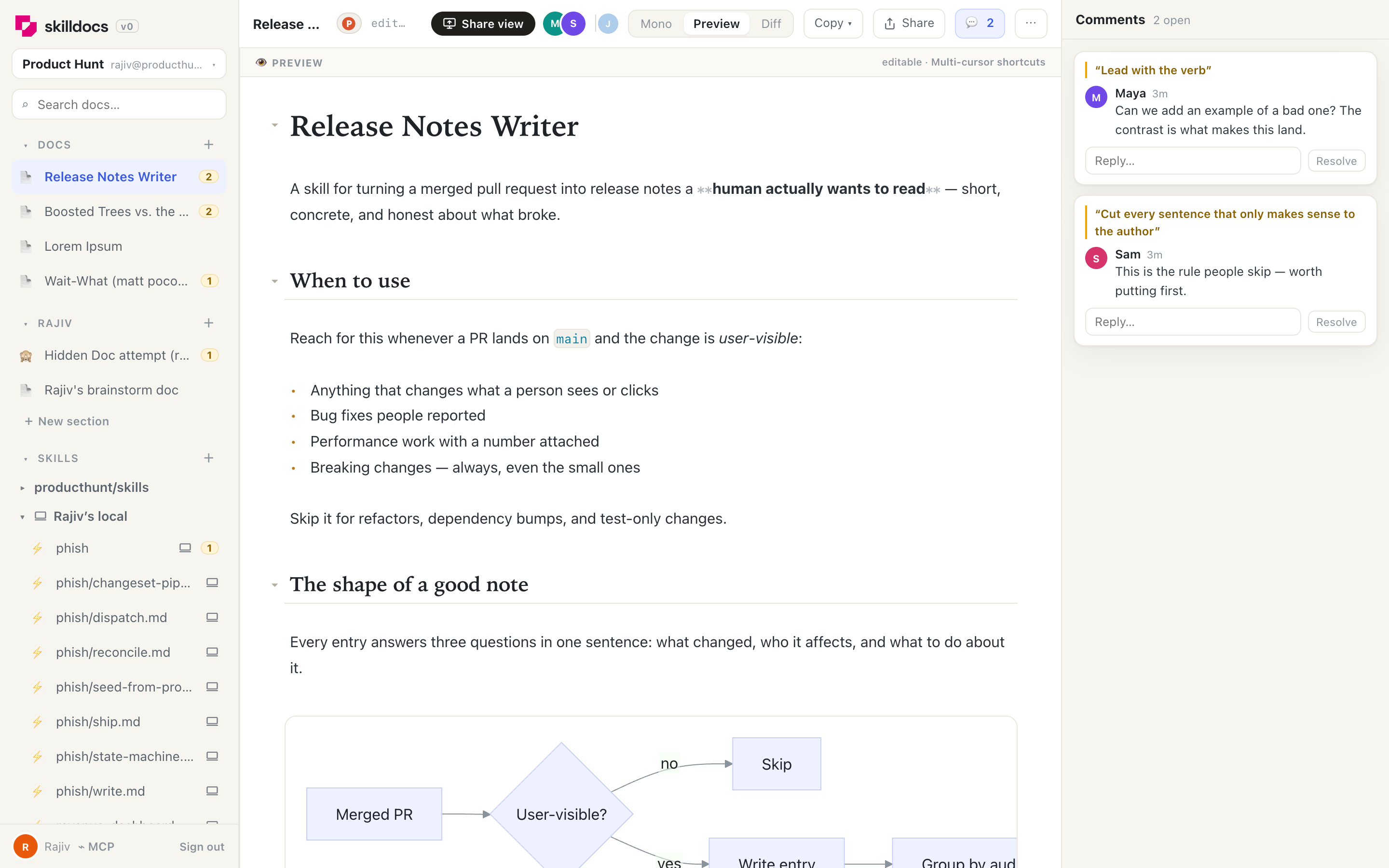
The cursor sits inside a bold phrase, so its `**` markers fade in — everything else stays rendered. Mermaid diagrams draw themselves in place.
- Live preview — syntax reveals where you're working, nowhere else
- Diagrams inline — mermaid renders as you type it
- Multi-cursor — ⌘D, ⌥click, column selection
- Fold by heading — collapse a section, keep the shape
- Real cursors — position and selection, not "last saved by"
- Follow mode — ride along, including their folds
- Share view — invite the whole doc to follow you
- Never conflicts — merges are automatic and lossless
Multiplayer
Everyone in the document, at the same time
The document is a CRDT, so concurrent edits merge character-by-character. No save button, no conflict dialog, no way for two people to overwrite each other. You see their cursor, their selection, their name — and can follow anyone's view like a screen share.
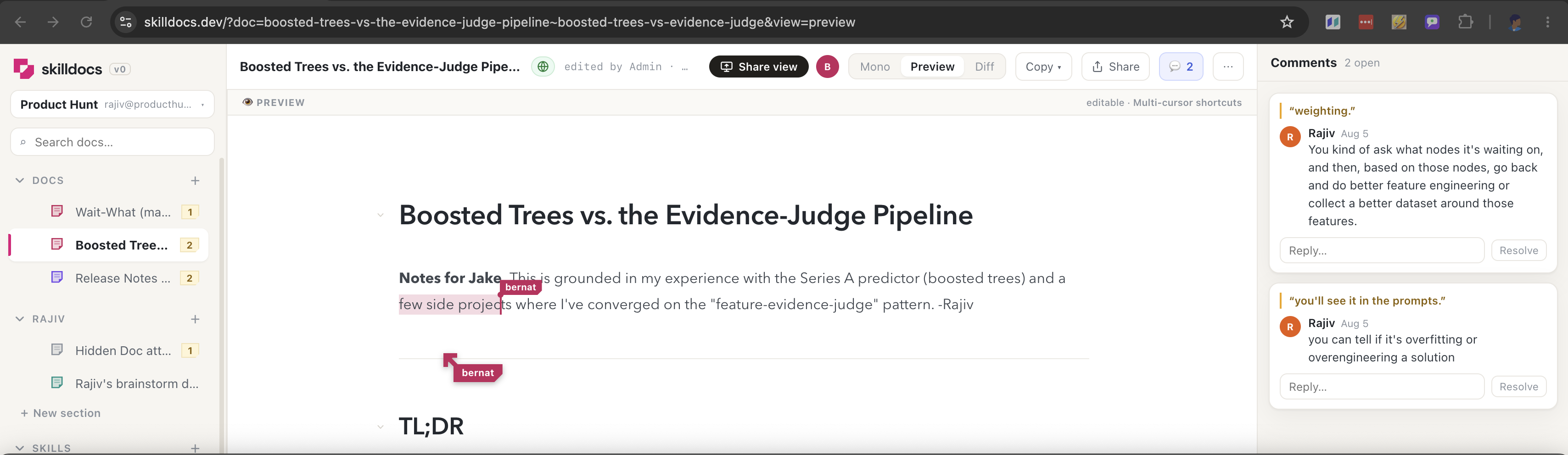
Maya and Sam are in the same paragraph. Their selections carry their names and colours; the avatars up top are everyone currently in the doc.
Comments
Feedback that stays attached
Select any text and comment. Threads anchor to the words, not to line numbers, so they travel as the document changes underneath them.
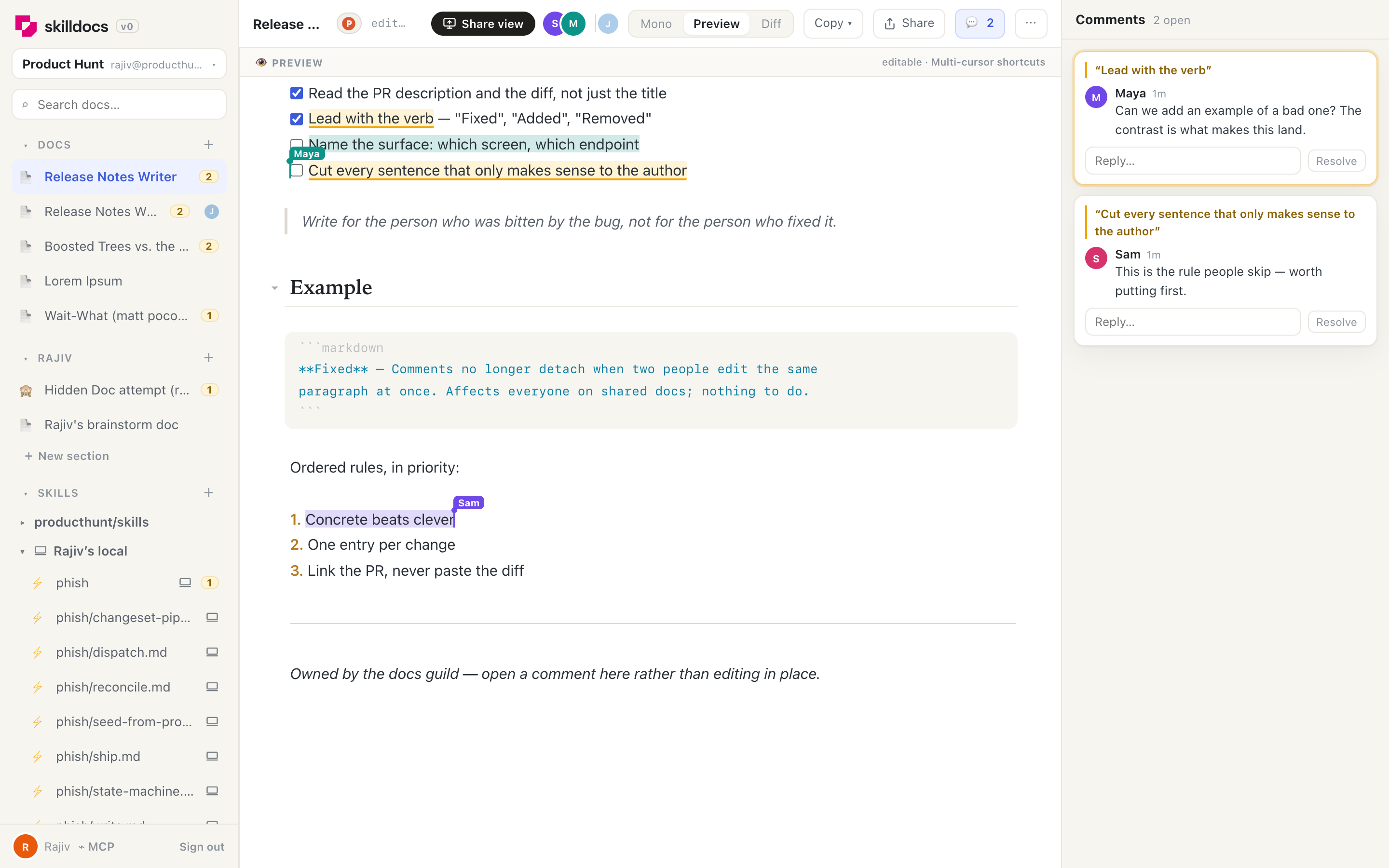
Every thread is tied to the phrase it's about — highlighted in place, resolvable in the rail.
Export
Copy the document — and the argument about it
The reason the comments exist in a structured form: you can take the document and its threads as one markdown blob and hand it straight to an agent. It reads the feedback with the quoted context attached, and knows what to change.
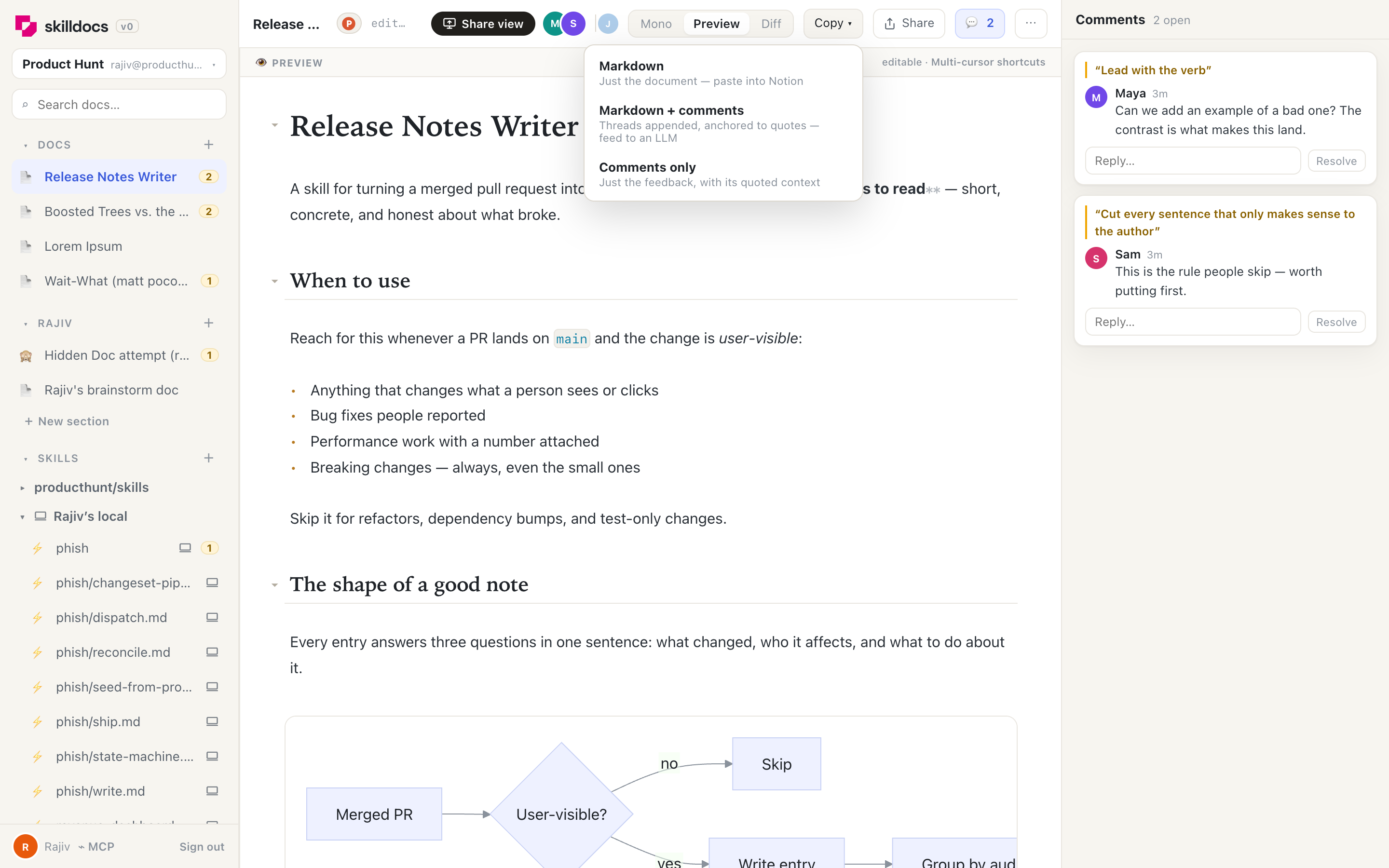
Three shapes: the clean document, the document with threads appended and anchored, or just the feedback.
The agent loop
Claude Code works in here too
The SkillDocs MCP server closes the loop the product was built for. An agent pushes a local skill up, the team edits and comments here, and the agent reads back the diff and the threads — then replies to them.
you ▸ push skills/release-notes/SKILL.md to skilldocs ⌁ skilldocs\_open → skilldocs.dev/?doc=release-notes-writer — the team edits and comments in SkillDocs — you ▸ read the skilldocs diff and comments, apply the feedback, reply to the threads ⌁ skilldocs\_diff → 2 sections rewritten since the baseline ⌁ skilldocs\_comments → 2 open threads from Maya and Sam ⌁ skilldocs\_reply → answered both, applied the checklist reorder ⌁ skilldocs\_pull → wrote the doc back over the local file
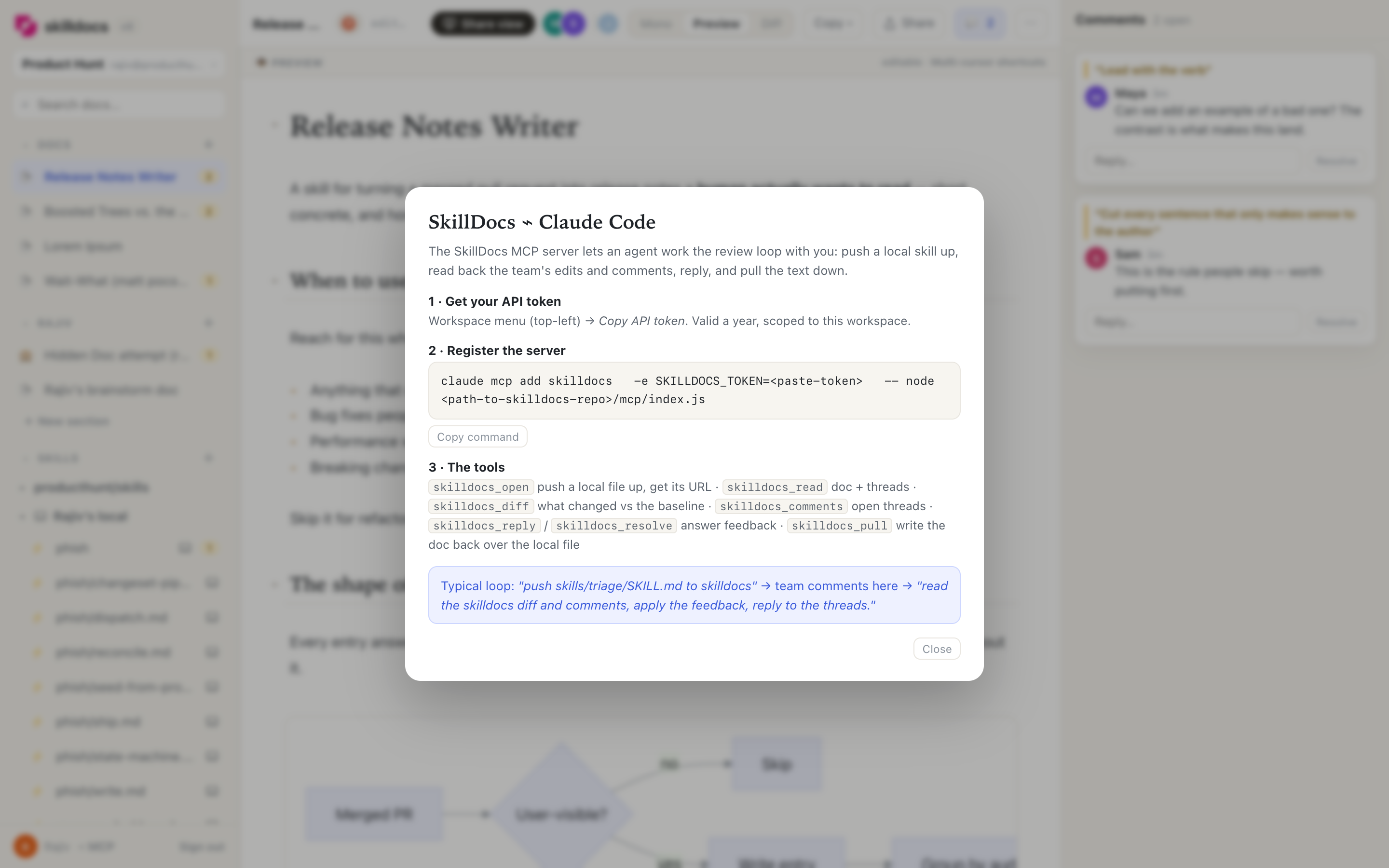
Setup is one command and an API token; the tools are scoped to your workspace.
Navigation
Your skills, wherever they live
Connect a GitHub repo and its skills appear. Push from a laptop and those appear too, marked as local. Group anything into sections you name yourself — the sidebar is the same shape as the way your team actually talks about the work.
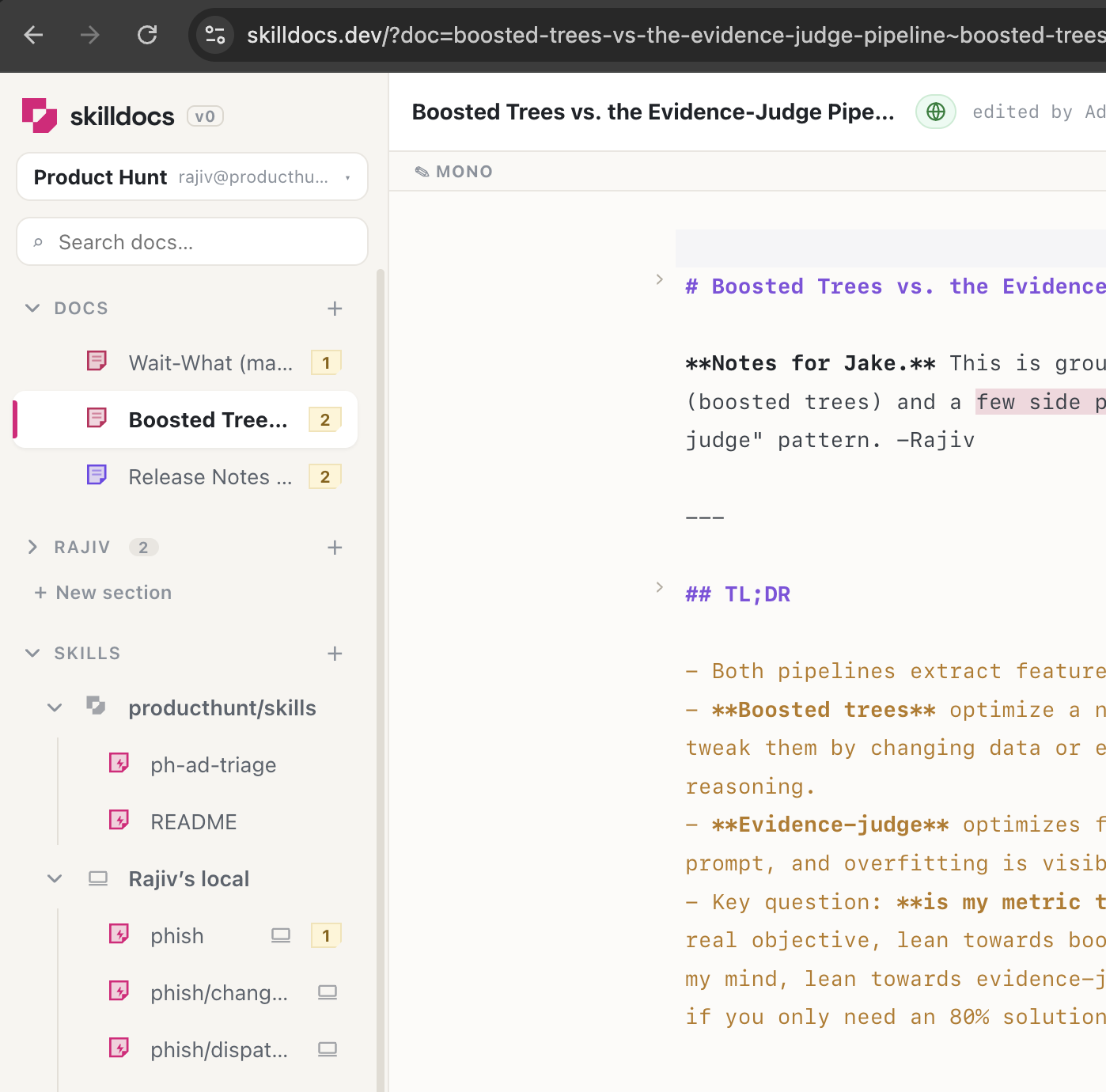
Docs, your own sections, then skills — from a connected repo and from a machine, side by side. (Alongside: Mono, the plain-markdown view, one click away.)