
Benedikt Seidel
In July I left Munich with two meetings booked. Three weeks later I had visited 58 companies.
It started on the Autobahn, the road that lets you drive as fast as you want, a thrill that fades a few hours in. Five hours driving north into the middle of Germany, I was up since dawn and then, traffic. Two hours of road left, three and a half until the meeting starts, and the buffer shrinking. Did I just start off my tour by being late to one of the two pre-booked meetings?

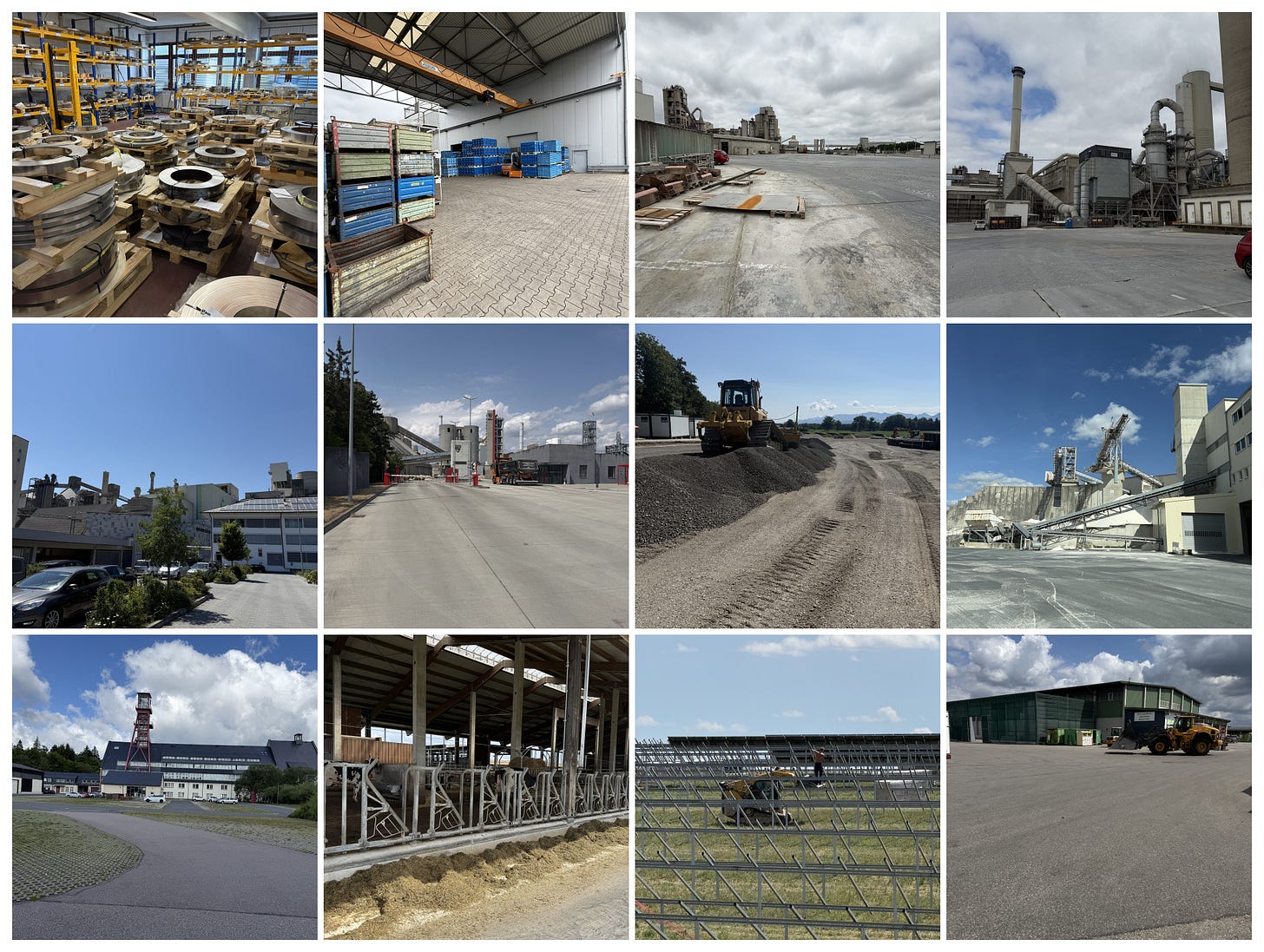
This post is about how two meetings became 58 and why showing up is the best way to get to know the physical economy. A gravel plant and a concrete manufacturer obviously belong together. But why precision metal stamping? Why road works, demolition, bricks?
A tour like this needs a name, or it just looks like a confused person driving around Germany. I called it the Physical AI Application Tour.

A few of the places I visited.
The idea was simple. The physical economy shapes everything around us, everything we touch, live in or drive with. I wanted to see how AI is actually used in this physical reality. How much of it is already on the shop floor? What would help most? - LLMs, autonomous forklifts, robot dogs, or smart cameras? What do the companies themselves think they need? And how does it feel to run one when your customers can order the same \[insert your product here\] from anywhere in the world, at any hour?
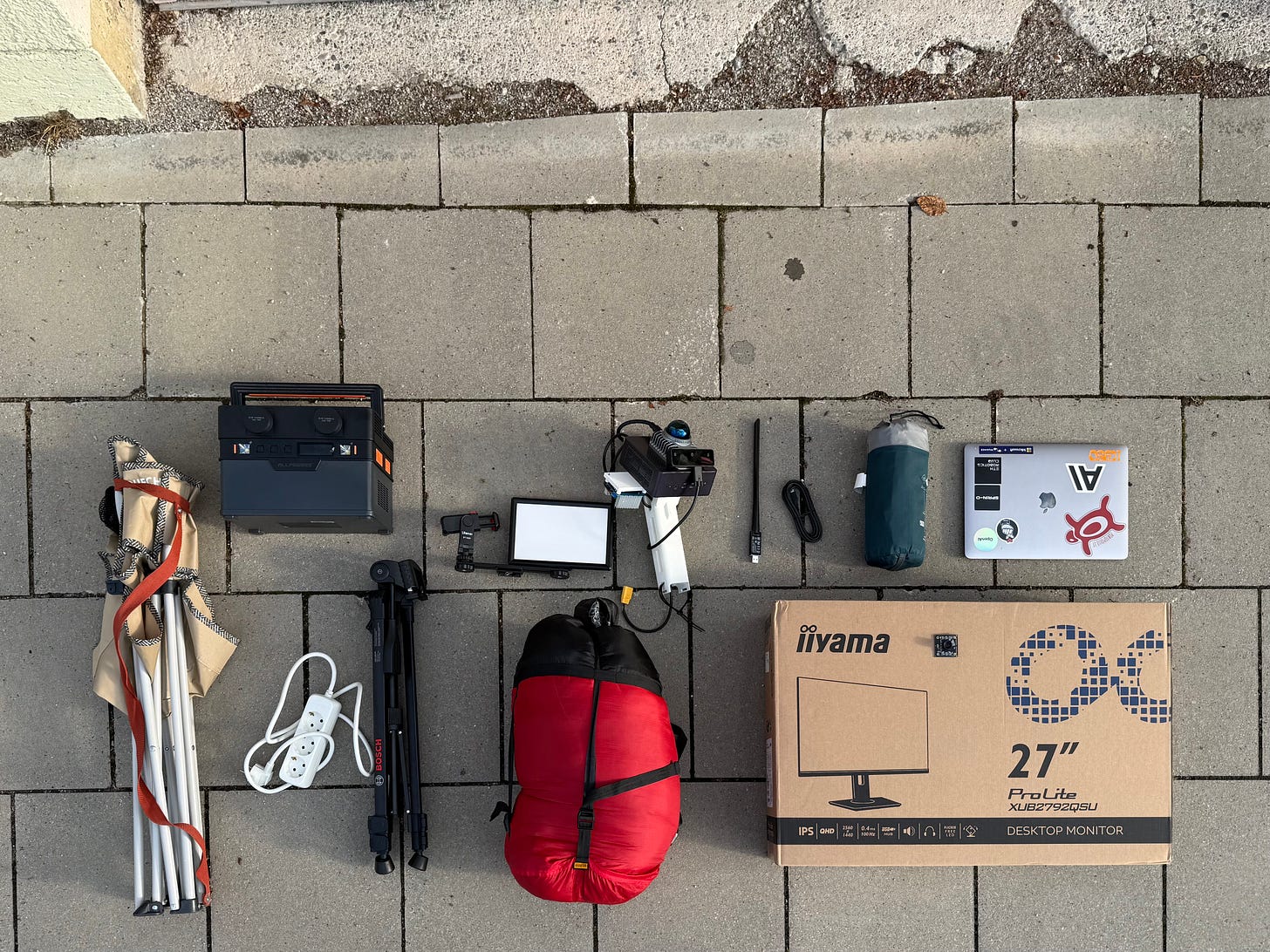
To start this tour off I packed loads of different things, many of which I didn't even use in the end. Seeing what I packed vs what I used, is the perfect analogy of what you think about on the couch vs what you see to be the reality once you are on the shop floor.

The physical AI essentials (from top to bottom, left to right): Camping office chair, battery, extension cord, tripod, light with phone clamp, a sleeping bag, 3D LiDAR + Camera Scanner, Wifi Antenna, camera cable, monitor, camera cable, tiny camera, air mattress and my good old MacBook Air M1.
The first stop was a metal stamping company, where I talked the CEO into sitting down with me, together with the person who runs their AI projects. They told me how they were monitoring business processes with “AI?” (in reality it was a ticketing system) and how they had high hopes for efficiency gains. In the end we spoke about all possibilities of what to monitor and what to automate inside the factory. Yes there was some part counting and applications for tracking materials, but reality proved that as long as people are inside a building they are anyway monitoring the space constantly.
What stood out was when I asked about new orders. They said it was taking them a long time to do feasibility checks and pricing for new metal parts and even though enough people request quotations they cannot handle all of them.
This first learning also hinted that what was needed was something different than I previously thought. While walking through sheet metal coils, in between storage rooms and loud stamping machines, I realised that a digital twin, which is discussed by all robotics and industry “experts”, is something only people who have never seen the reality of a shop floor come up with.
The people that actually work here don´t need a digital twin and the people who want it are actually looking for control, for insights gained through thorough analysis. What they want is problems and slow processes remedied by analysing that shop floor. Falsely this leads to technical people saying: “ Hey, we will give you a map and you will figure it out!”. Instead of going deep themselves and fixing those problems.
After this initial factory tour the meeting was over and I set up my office for the rest of the day in the central hub that I was in:
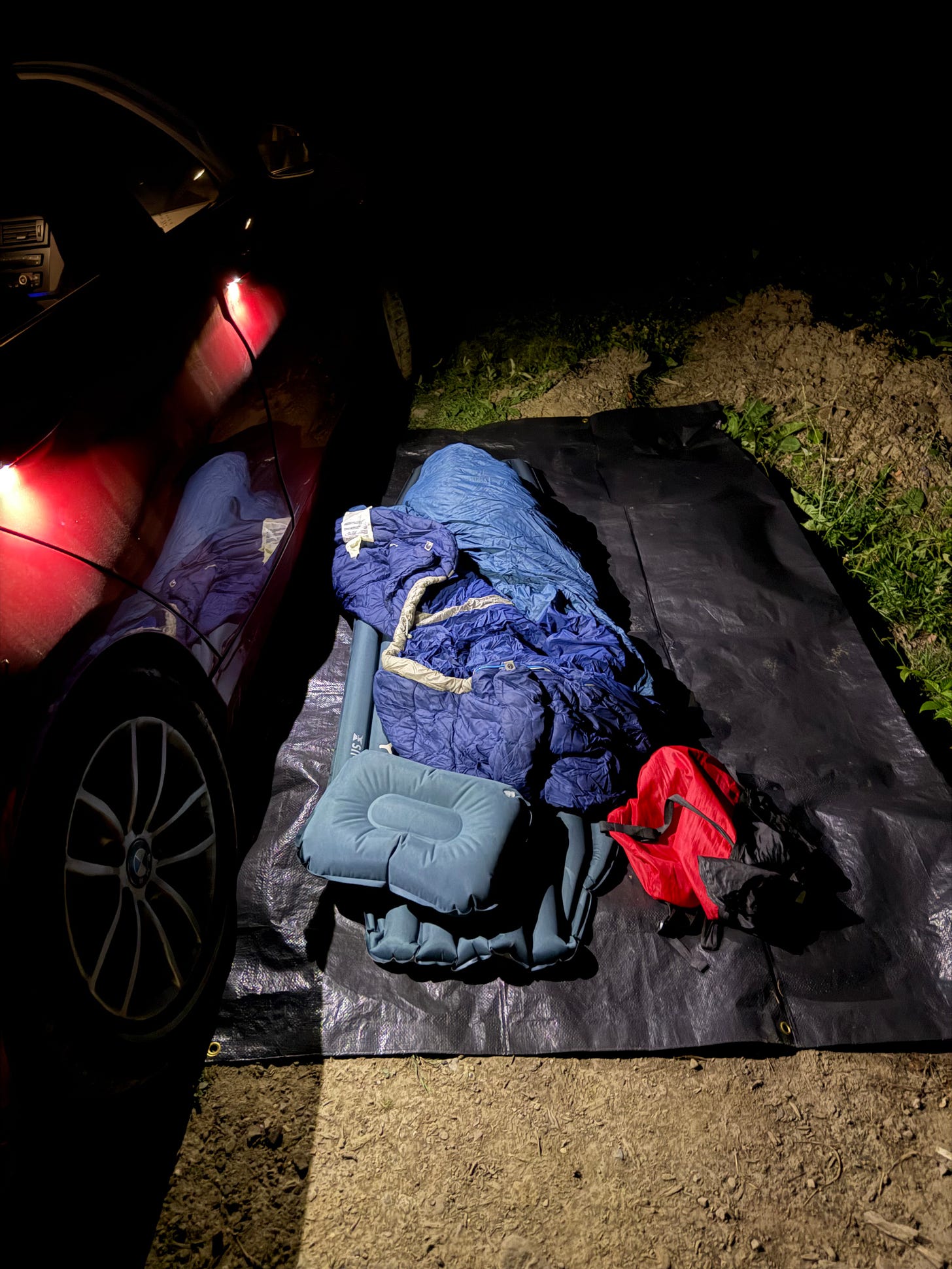
I worked in my office until it got dark and mainly formulated what went down as well as possible solutions to the actual problems I encountered. After coming up with some ideas, I rolled out my sleeping bag next to my car and hoped that there were no boars interested in the forefront of AI deployment research.

The next morning, I woke up next to a lot of Germans walking their dogs in the woods and crawled out of my sleeping bag. I then grabbed a bottle of sparkling water (there was only sparkling water at the supermarket I was at the day before) and took a full body shower behind some trees, hiding from the dog walkers.
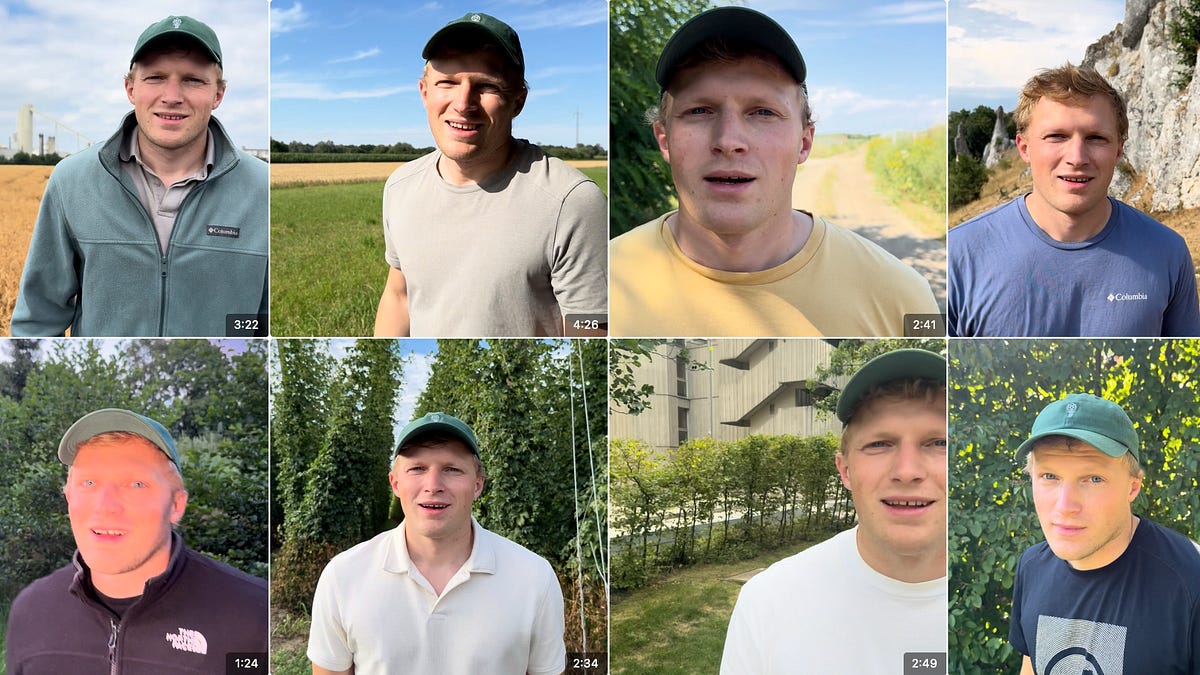
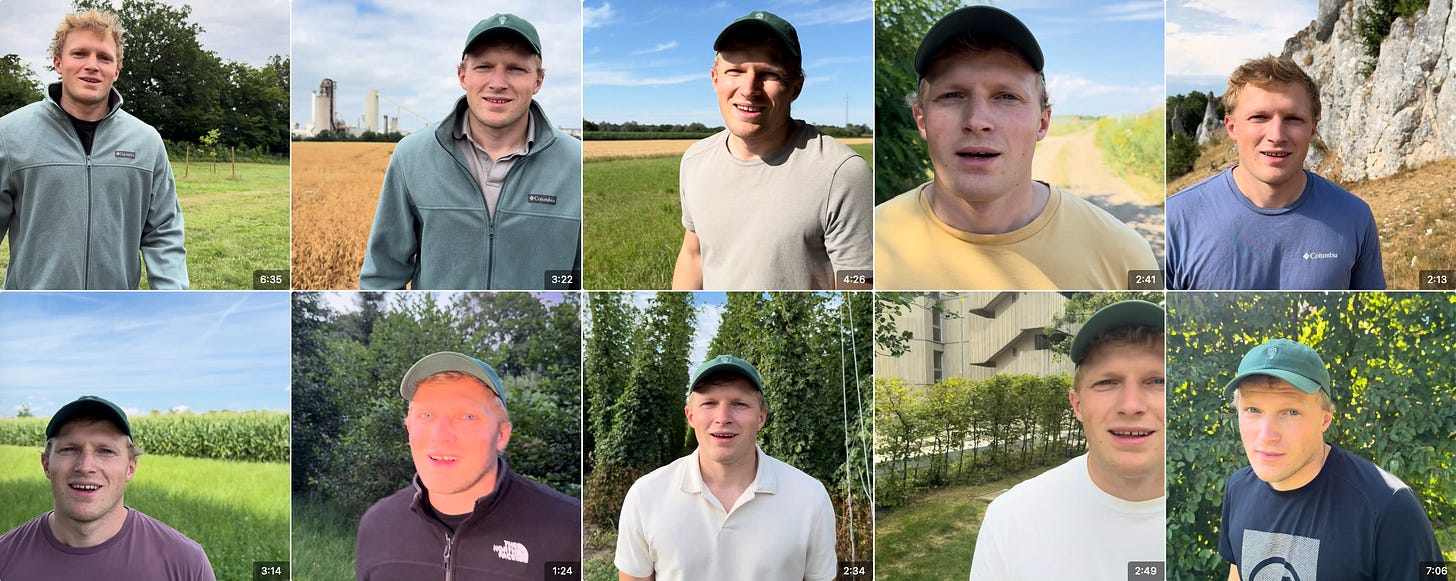
Optics, or as others call it: not looking homeless, is probably 90% of cold appearances and I wasn’t gonna take any chances of going up to a front desk un-showered. Everything went well and I even had particularly soft hair on this day, which I think shows in the first video of many I posted on X/twitter.
Over the next days I continued to visit any company that produces physical goods, moves physical goods or does something else to them. From foundries to recycling plants I showed up and asked AIot of questions. I have coded neural networks for Mercedes-Benz. I have written a state-of-the-art multi-sensor-fusion SLAM stack. I am currently building agents. But the second thing I learned during my tour was that none of that matters at a factory gate at 8 am.
The only thing that matters is whether you are confident and smiling when you walk in. After a long drive with no guarantee that anyone is even there, you need to tell your body, and especially your face: This is exciting! - This is frontier research in the AI diffusion game.

People asked me during and after my tour if I had planned the whole trip in advance, but if I had, the planning alone would have taken three months of full-time work. Companies answer at completely different reply rates and sit in different corners of the country. The route itself was fluid, something you cannot plan. You gather an insight at an aluminium foundry, and suddenly you are driving to steel manufacturers. The method was simple. During the day: drive there, show up, smile and ask questions. At night: code demos for the companies I had just met, or search for the next day’s targets. I used Claude, Google and then on Maps found other relevant companies close to where I was.

The third thing I learned, or which at least reinforced what I already knew was that, almost everyone thinks AI is a chatbot you can send emails with. Four years after ChatGPT, that is still the mental model on the shop floor and in the head office. - Yes this is a problem, but also a chance to show it is much more. Especially in the physical economy where LLMs turn into useless parrots once they encounter images or physical specifications. The positive thing that I was getting from my visits was that everyone knew AI is here to stay and that there is no way around AI.
As far as the questioning was concerned there were some stark differences between companies. Sometimes I was invited in for coffee, sitting in luxurious meeting rooms, I talked directly to the people in charge whereas other times it was more hostile.
For example at a large concrete manufacturer, I talked to a very kind secretary that said I should come back after the lunch break and that she would set up a meeting with the sales team. When I came back another secretary was there instead and I explained what happened before. She checked that diligently (many of them assume you are lying) and the person I knew came back. I felt my efforts of showing up paid off, when she actually got a person from the sales team out of their meeting. They gave me a lot of time and offered me coffee and the meeting room - wow - was a surreal experience, like inside a modern luxury mansion next to a quarry that just showed nature's raw beauty.
As I said, it didn’t always go like that. Once I even got thrown off the premises. I walked into a company I only later learned was a global leader in facade manufacturing. The front desk was white and beautifully designed, two women sitting a few metres apart. I approached the one who wasn’t busy talking to someone and gave my pitch: “I’m driving around Germany asking companies how they use AI and robotics… bla especially bla \[specifics for your company add here\]” She was interested, but the team I needed was in a meeting. As she checked the calendar for when I could come back, the woman on the other side of the desk cut in: “Wie oft sollen wir noch sagen, dass wir kein Interesse haben!” (How many times do we have to tell you we’re not interested!) - It was the first time I had ever set foot in the building.
I asked for the email of the person in charge. The first woman (here named Sybille) said Sure! \- The second said: “Sybille! You know we’re only allowed to give out the info@ address.” I thanked them and left… It was a hot day, so I sat down outside to answer some emails. An employee appeared at an open window next to me so I took the chance and told him what I was doing. He said he couldn’t help me and disappeared fairly quickly. I moved back to the bench I was sitting on before and kept typing. Then, all of a sudden four people came out of the building in a hurry (looking ready to fight me if necessary) and asked whether I had an official meeting. No, I said, and explained the tour. Leave! they answered, or we call security.
I left. At least nobody could say I hadn’t tried everything.
This happened to me only once fortunately, but what was even more worrying, was what happened more often than that: I encountered “lazy people”, the people who didn't care or just didn't want to listen at all. The one example of this that stood out the most was when I visited a road works company. I wanted to ask how they were calculating their volumes during construction and was sent to the front desk manager by another employee. She was on her phone with what seemed to be her daughter. When I came in, she asked her daughter to hold, no she didn’t hang up, she put the phone on the table in front of us and then let me do my pitch.
In retrospect the image that stayed with me added an imaginary nail file to her hand while she was on the phone and “listening” to me.
After my pitch, she asked me to send an email about this so she could look at who to forward it to…. I was in disbelief, standing in front of her I said that the email wouldn't contain more information than me being here. It didn't matter, I left feeling sorry for the business and asked myself how innovation would ever make it past the front door there. I mean I have no numbers about this, but how often does it happen that they get an in-person pitch related to their everyday problems?

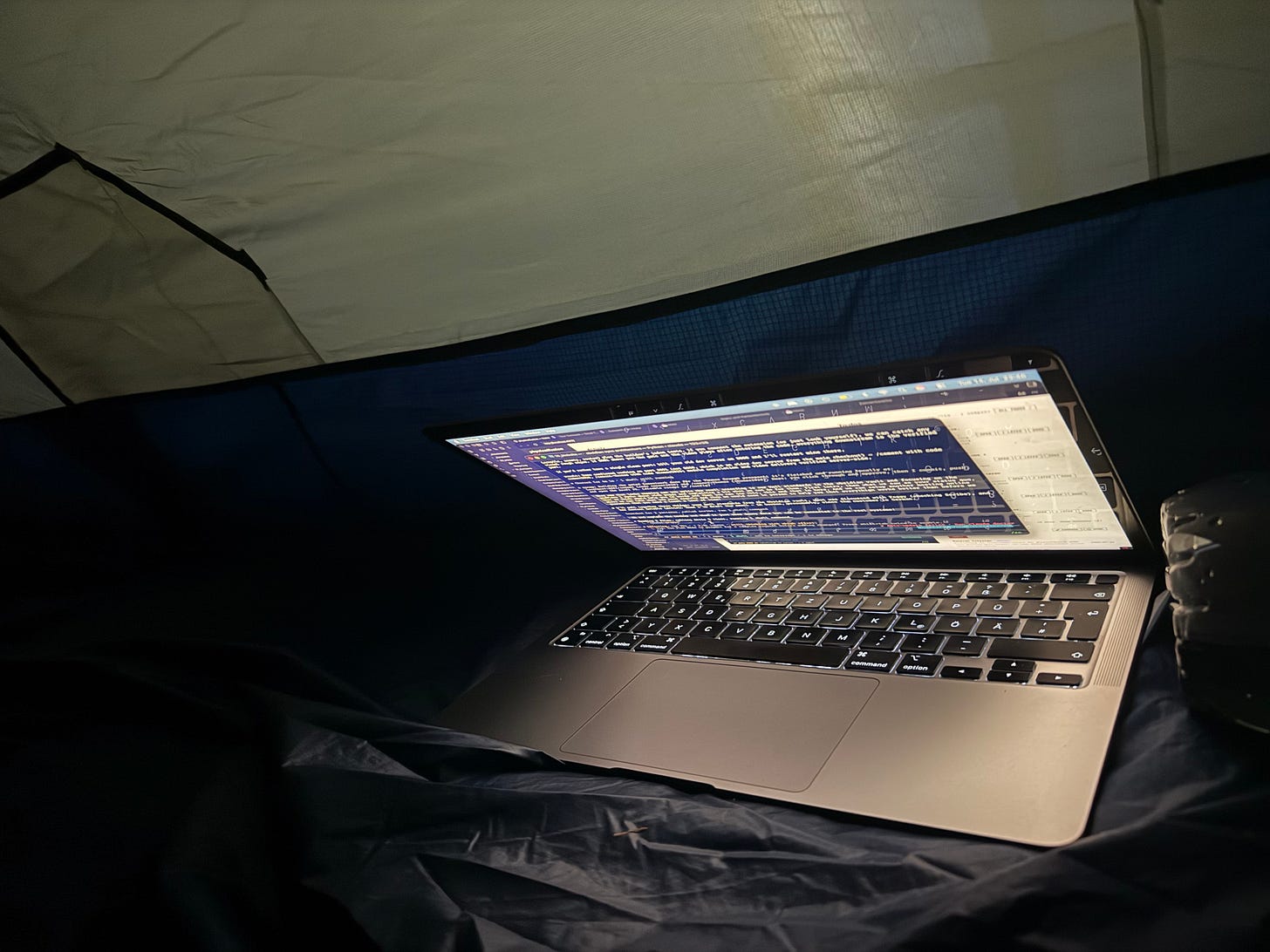
Coding demos during thunderstorms in my tent, after full days of driving and these meetings.
Still, in the end I had productive talks with 28 companies, at 25 I didn't get past the front desk and 5 companies were closed when I got there. Whenever I got the chance to speak to them I pressed them on specifics. Are you using drones to capture data during construction/demolition? Are you using structured light scanners for quality control? To find out the status quo per vertical. Some questions though always stayed the same: What are your hopes for AI? What is currently a bottleneck for you? And then I always ended with something political: How do you see your company/industry handling the US re-shoring, the high exports of China and the energy costs due to the Russian war? The reactions to the political questions varied between smiling and grim faces, but one thing became clear: The people operating these companies are not oblivious to geopolitics. They are waiting to make the next move.
The playing field is levelling, I have seen companies that are complete organisational disasters and companies with streamlined processes, but what is efficiency even? - If 12 people are doing something together efficiently it might be 11 too many. At least the organisational disaster companies want to change something.
Which brings me to my last learning, which is actually quite obvious and nobody has to drive to 58 different companies to learn that: There is soooo much to do! The world we live in, is not just text / emails and code but actual goods being made. These goods are not made to be ingested by LLMs and hence companies producing such products have currently no way to fully leverage AI. Yes some companies need a pick-and-place robot to automate simple work, I have gotten that confirmed, but for most companies I have talked to the bottleneck sits at the technical decisions. They are made by just one or two experts in the company. This is the knowledge everyone says is retiring.
After the tour, one feeling dominated: clarity. And honestly, some aggression came with it, the conviction that I can convince anyone that they need this. The tour got personal when I saw what the current way of operating means: the economic system I believe in may not provide for me by the time I need it--we need to change something!
A few weeks of follow-up later, that clarity has a shape. For the first time I can say exactly who my customer is. Companies bottlenecked by processes between standard input data and physical knowledge. That is where AI that understands these physical systems hits the top line directly, winning more customers, converting more of them, or cutting the cost of the product itself. What I am building will create revenue that runs itself, for the physical economy. The goal is to help the industry grow and do more, not less.
Mhmm - that doesn´t sound very specific or like there is an actual target. Every company on earth wants more revenue. The difference is the bottleneck, and after 58 visits I have a rather specific list of where it sits. You can see more about that in my X posts where I did almost daily video updates during my tour.
I firmly believe we need rigorous implementation of AI, now. It does not matter what it cannot do today. In five years, when it can, you are either ready with your processes to leverage it asymmetrically or lose to companies that do.
The AI diffusion game is the game I want you to win.

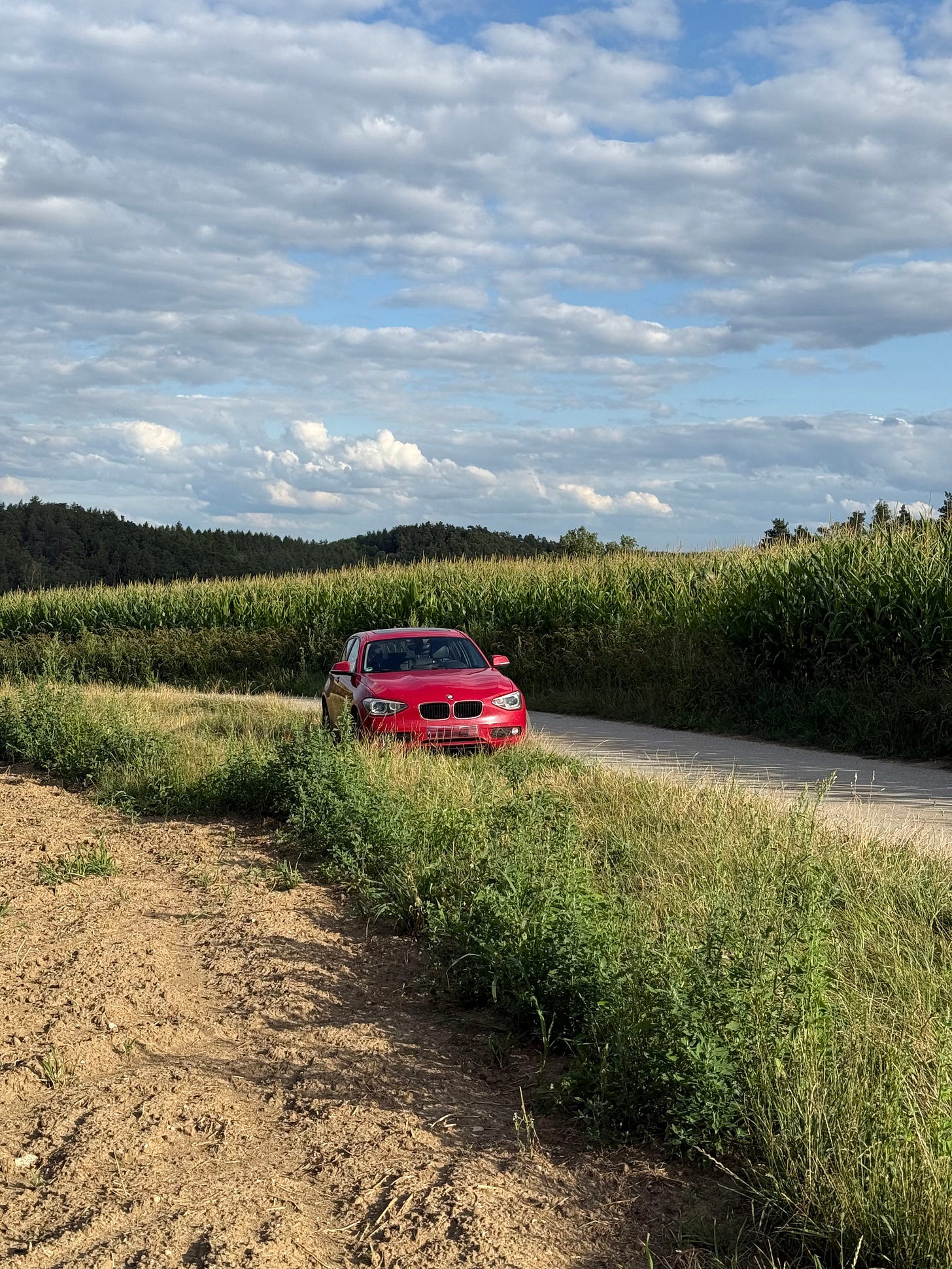
On the way to Germany´s lithium mine, I slept in the Czech Republic and I thought it would make a great relaxing final picture.
Final Thoughts
1. A critique of my tour would be that: I was only travelling around Germany, which is one country in Europe. - But if you want a proxy for how the European economy is coping, this is a good one: it is supposedly famous for efficiency and the largest economy in Europe. 2. Narrowing focus: To be honest I was never too attached to the things I coded before. I see the effort and thoughts put in as necessary between starting-ideas and the first contracts signed. Nonetheless changing what I was building and how I am talking about it was exhausting for no clear reason. It took a few days until I could effectively parse what I learned on this tour. However the cold calling and sales in the meantime was going better than ever before. 3. Help me, if you run, work at, or know a company in the physical economy: Somewhere in your company there is a process where the request is simple but the answer needs someone who knows the parts, the site, or the machines. A process that takes days. A feasibility check only one person can do. That process is probably on my list! - Tell me about it, reply to this email or write me on X or LinkedIn and I will show up where it makes sense.
Previous