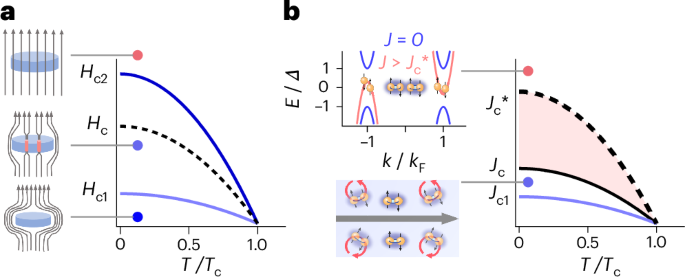
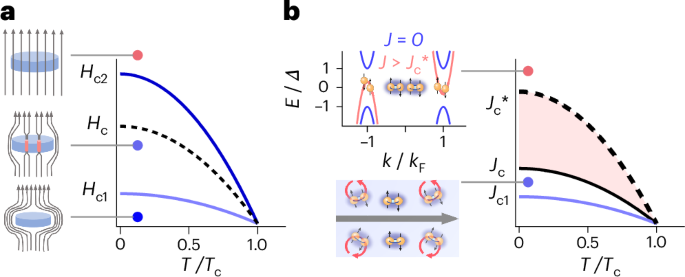
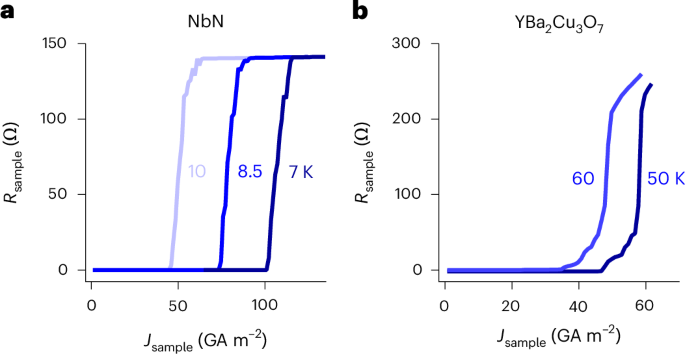
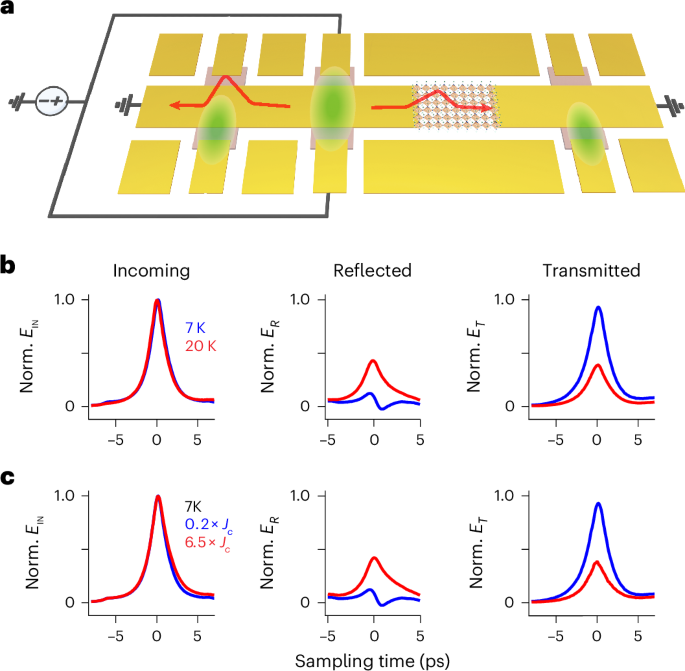
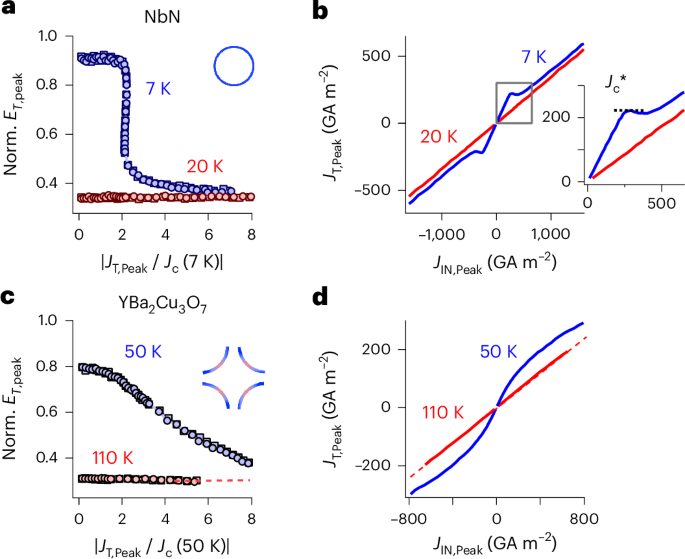
Accessing the intrinsic critical current density in type-II superconductors can provide a means to probe microscopic superconducting properties and increase current limits in high-magnetic-field devices and electrical power systems. However, the critical current density measured using direct currents generally lies below this intrinsic limit, mainly because of vortex motion and self-heating. Here we show that picosecond electrical pulses, which act on timescales too short for vortices to move, drive supercurrents up to the intrinsic depairing limit. We probe picosecond critical currents in NbN and YBa2Cu3O7, representative s-wave and d-wave superconductors, respectively. In NbN, we find a sharp onset of the picosecond depairing at a current density of about 2.2 times the conventional critical current density, consistent with microscopic dynamics based on Bardeen–Cooper–Schrieffer theory. By contrast, YBa2Cu3O7 exhibits a gradual suppression of superconductivity with increasing current, reflecting its d-wave symmetry. These results provide a probe of superconductors beyond the reach of conventional transport measurements. Attaining the depairing current could also support superconducting electronics operating closer to intrinsic current limits. Vortex motion and heating prevent direct-current measurements from reaching the intrinsic depairing limit of type-II superconductors. Picosecond pulses bypass these effects and reveal a sharp threshold in NbN but gradual pair breaking in YBa2Cu3O7.
Probing picosecond depairing currents in type-II superconductors
Skip to main content
Thank you for visiting nature.com. You are using a browser version with limited support for CSS. To obtain the best experience, we recommend you use a more up to date browser (or turn off compatibility mode in Internet Explorer). In the meantime, to ensure continued support, we are displaying the site without styles and JavaScript.
Close banner Close

Sign up for the Nature Briefing newsletter — what matters in science, free to your inbox daily.
Email address
Sign up
I agree my information will be processed in accordance with the Nature and Springer Nature Limited Privacy Policy.
Close banner Close
Get the most important science stories of the day, free in your inbox. Sign up for Nature Briefing