



Experimental Fat Loss

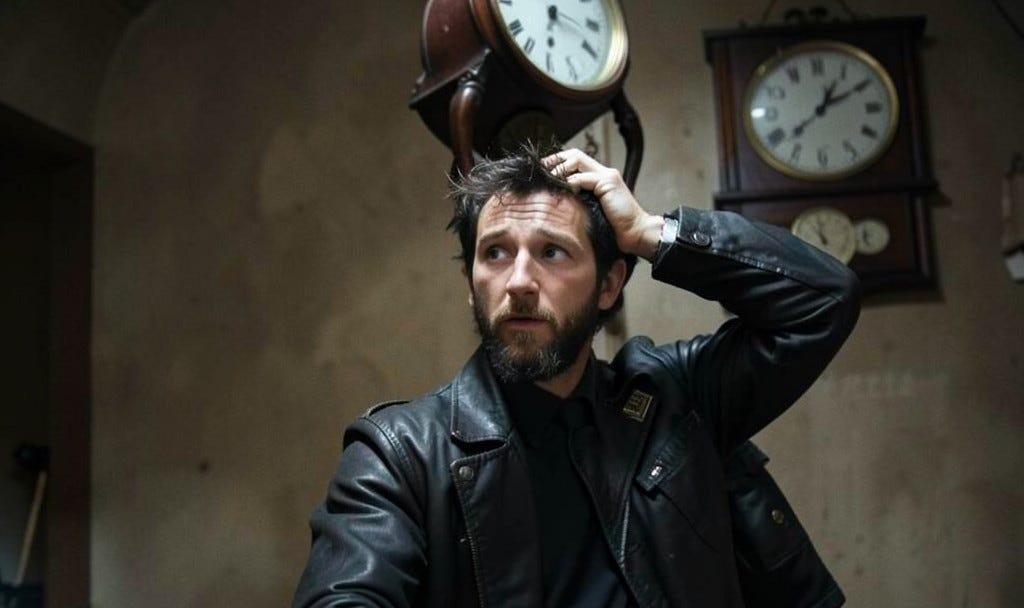
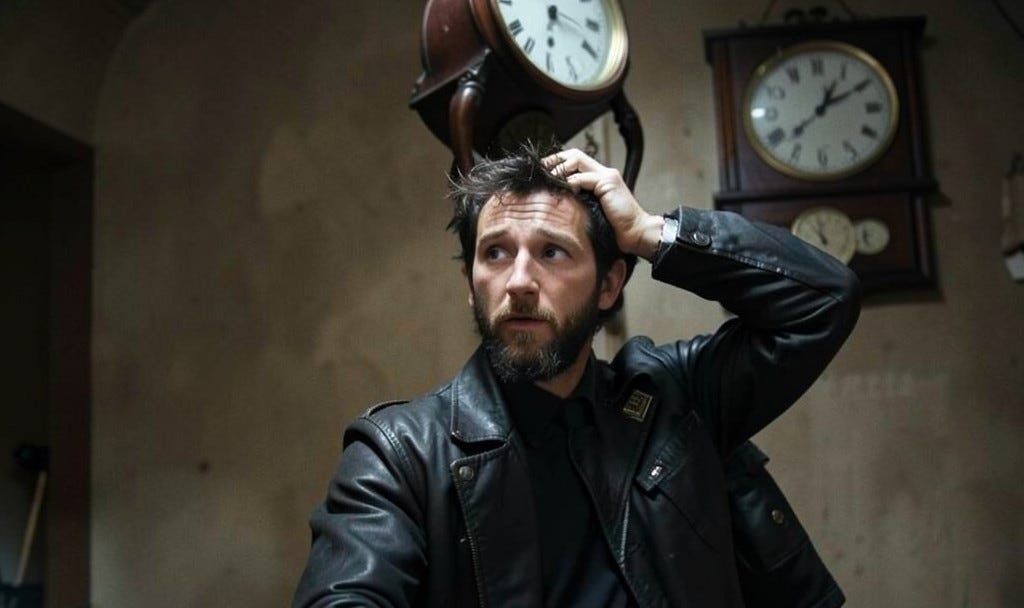
man, experiencing jet lag
As mentioned in last week’s post, I’ve taken all the informative help texts from my Jet Lag App and am posting them here for better access & posterity. If you’ve already clicked on every headline in the app, there’s nothing new here.
But if you haven’t, this might be interesting to you!
It’s more of my thoughts surrounding Jet Lag, a brief summary of the science around it, and how I approach actually fixing Jet Lag.
Jet lag is the mismatch of your internal clock (”circadian rhythm”) with the sun environment you’re in, most commonly your position on the planet, specifically the longitude.
Your body’s circadian rhythm adapts to sunlight a little bit every day in a process called “entrainment.” It can only entrain about 1h in timezone difference per day, because we did not evolve to require any more for most of our evolutionary history. Only jets allowed us to travel significantly faster than one timezone per day, especially when crossing oceans.
When you do travel significantly more than one timezone per day, say with a transcontinental flight, your circadian rhythm will lag behind in entraining to the new location’s light/dark cycle as dictated by the sun. This is “jet lag.”
As an example, let’s say that you board a plane in Los Angeles (UTC-7) and fly to Tokyo (UTC+9), a flight that takes about 11 hours and 45 minutes. The timezone difference from UTC-7 to UTC+9 is a whopping 16 hours, and you traverse it in about half a day.
Even if you get plenty of sun exposure in Tokyo, it will take you approximately 7 or 16 days (see calculator) to fully entrain to your new environment. This is why people traveling to/from Asia often experience such dramatic jet lag both ways.
If you’re curious, I’ve explained everything about Sleep, Jet Lag & Circadian Rhythm in detail on my blog before. In terms of literature, I find Till Roenneberg’s Internal Time to be the best book on the topic.
Subscribe
There are two directions to fly around the world, and there are two ways to entrain to a new timezone: you can stay up a little later every day, or you can wake up a little earlier every day. Which one is better depends on the timezone difference you have to overcome, and to a degree, on your chronotype.
For example, if you’re flying from Europe to the U.S East Coast., you only have to stay up a little longer for a few days. This is one of the easiest scenarios for many people. The reverse flight would mean getting up a bit earlier every day.
Because there are always 2 directions to entrain to a new timezone, this calculator simply shows you both. As you’ll see, in many cases, one way is much, much easier than the other. Which one is easier may depend on your chronotype.
The average person’s circadian rhythm is about 24.5h, or 30 minutes longer than the day itself. That means the average person has a slightly easier time staying up a little longer than waking up a little earlier. This is why your chronotype can make a difference: if you’re a huge morning person, you might have an easier time adapting via the “earlier every day” route. If you’re like most people, you’ll have a slightly easier time staying up longer. If you’re a huge night owl like me, it’s almost always easier to go the “stay up later” route.
The book Internal Time by Till Roenneberg explains this very well.
For the purposes of this calculator, I’ve guesstimated by how much you can “wake up earlier” or “stay up longer” each day based on a simplified chronotype. This is not a particularly well studied area, as far as sleep goes, and mostly based on my personal experience and anecdotes from friends.
Here’s what I’m using for each of the simplified chronotypes:
> Chronotype Advance speed (minutes/day) Delay speed (minutes/day)
Morning person 60 60
Average person 45 75
Night owl 30 90>
The “morning person” vs “night owl” chronotypes are asymmetrical. The average person’s circadian rhythm is 24.5h long. So it’s not that morning people have an easier time waking up earlier than they have staying up longer, they just have less of a disadvantage. This is true except for a small, rare minority of very extreme morning larks, whose circadian rhythm naturally is shorter than 24h.
That said, these numbers are pretty arbitrary, and how much of a morning person/night owl you are actually makes a huge difference. There are way fewer severe morning people than severe night owls, and being a “moderate” vs. “severe” vs. “extreme” case in your category would make a huge difference. If you have experience with shifting your sleep rhythm, you are probably the best judge.
While the field of Circadian Rhythms and Jet Lag is relatively well studied, there are still a lot of unknowns, and also circumstantial factors that can influence your entrainment dramatically.
For one, most modern people don’t exactly live in sync with their chronotype, relying on alarm clocks & copious caffeine (guilty!) to manage their waking time and sleep. This means that, in circadian terms, you aren’t actually starting in the timezone you physically reside in. For all we know, you’re already constantly living with so-called “social jet lag,” which is the discrepancy between your alarm clock and the time you naturally wake up on the weekend.
On top of that, how much you actually entrain at your new destination depends on what you do at your destination, and how much sunlight you get - and when!
Roenneberg, in his book, describes the circadian rhythm as a pendulum. And we know from physics that pendulums, despite being relatively simple things, are actually “chaotic” in the mathematical sense: they can be incredibly difficult to predict.
I really like the analogy of the pendulum, because it demonstrates one of the problems with predicting the circadian rhythm. Imagine a pendulum swinging in a fixed rhythm. Now you gently tap the pendulum. What’s the pendulum’s new rhythm or direction? Well, that actually depends a lot on WHEN in the swing cycle (phase) you hit it! Even given the exact same impulse, you could be accelerating the pendulum in its existing direction, or you could slow it down. You could even bring it to a complete halt if you time your impulse just right!
This holds for circadian rhythms. When you show up at your new destination, your entrainment “impulse” is exposure to sunlight. If you take in a lot of morning sunlight at your new destination, you will shift your phase towards the “wake up earlier” direction. If you don’t get a lot of morning sunshine, but get late sunlight, you’ll move your phase towards the “stay up later” direction. These are equivalent to when in the swing cycle you’re tapping the pendulum. But of course the sun goes up and comes down at a specific time in your new locale, and so you might not even be able to tap it exactly when you want! At least not without bringing a special “daylight” lamp.
Another factor is that sunlight exposure is not the only factor involved in entraining your circadian rhythm, although it is by far the biggest one. Other factors include warmth (correlates decently well with sunlight in most places), social interactions, and food intake!
How do you maximize your circadian entrainment?
One relatively simple method is to “fake it ‘til you make it” - start living as close to your desired destination timezone as possible. Since you’ll physically be in the new location, this is often pretty easy in principle: just live like the locals. Get outside when the locals do, eat when the locals do, go to bed when the locals do.
This works decently well in many cases, and it will likely get you entrained eventually. There are exceptions, and I’ve hit them: due to the chaotic nature of the phase shifts, it is possible to “deadlock” yourself, and end up in a stable equilibrium that is wholly unsuited for living in the destination, at least if you’re wanting to interact with locals during their daytime.
This typically looks like a reverse schedule: you eat dinner when the locals eat breakfast, so their morning sunlight is your evening sunlight, and actually delays your cycle later. Then you sleep during the day and wake up in time for their evening sunlight to be your morning sunlight, countering the previous signal. You therefore “anchor your circadian rhythm in place” despite being on nearly the opposite rhythm. This is most likely to happen if you skip about 12h of timezone difference, completely reversing your circadian rhythm relative to local time. Ask me how I know, lol.
A more sophisticated approach: with your understanding of circadian rhythms and pendulums, deliver the optimal “entrainment impulse” each day to shift your circadian phase in the desired direction. First, this requires choosing a direction: do you want to go the “wake up earlier each day” or the “stay up later each day” route? Once you’ve chosen a direction, you have to stick to it - otherwise you could very well shift back and forth by an hour a day, and never entrain.
Now that you’ve decided on the direction, you can try and deliver the optimal “impulse” each day by selecting your sunlight exposure. The important part is that you have to hit your internal, circadian rhythm with sunlight at the correct time, independent of what time it actually is in your destination. These might be the same, or they might not.
In practice: if you’ve chosen the “wake up earlier each day” route, you want to get sunlight as soon a you wake up. (Or even earlier, but that would involve sleeping outside?). If you’ve chosen to stay up later each day, you have to AVOID sunlight directly after waking, if possible, and instead get sunlight later in your “internal day,” optimally right before you get tired and want to go to bed (which will, by definition here, not be the bedtime of your destination).
This isn’t always possible of course. Maybe you have to get to work, or want to make the best of your time at your destination, and so you HAVE to go outside and get some sunlight at times that would be suboptimal for entrainment. Or, the sun goes down long before you get tired, and doesn’t come up again before you get too tired and go to bed. Such is life. It just means your entrainment will take a little longer.
How much sunlight do you need for these “impulses?” Nothing crazy. 15 minutes is good, 30 minutes is great. I think anything over an hour doesn’t make much of a difference. You don’t need to be sitting in full sunlight either, although I recommend not being behind glass. Sitting outdoors in the shade is my favorite way of doing it. You can be reading or be on your phone. Don’t stare directly into the sun!
It also doesn’t matter very much if you soak in direct sunlight all over your skin, aka sunbathing. The circadian rhythm is largely entrained via photo receptors in your eyes. As long as you’re outside, even in the shade, and not behind glass, you’ll get 85-95% of the entrainment effect.
Similarly, I wouldn’t worry that much about meal timing. Sure, don’t do absolutely crazy things like eating a giant meal right before bed if you’re planning to wake up earlier the next day. But in the greater scheme of things, sunlight exposure to your eyes is much more important.
Subscribe
One instinct many people have, myself included, is to just pull a massive all-nighter and “power through” the night with lots of caffeine or activities to reach the “other side” of your destination timezone.
The problem is that while you can achieve this, it does NOT fully entrain your circadian rhythm. Remember, it’s limited to making up about 1h of timezone difference a day. You might push that to the maximum doing the all-nighter, but you’re not magically going to be fully entrained just because you’re sleep deprived. It typically seems like it worked because you crash early that evening, and then sometimes sleep a long time to make up for the missed sleep.
But since it doesn’t address the actual jet lag - your circadian rhythm being out of sync with local solar time - it’ll re-manifest, typically after 1-2 days. Of course this only makes a difference if your timezone discrepancy is much more than 2-3 timezones to begin with, or by the time you come down from the all-nighter/crash cycle, you’re entrained - and it’ll look like it worked.
Again, ask me how I know..
There are situations in which this strategy makes total sense, and one might be the “redeye” flight - a late-night flight from the West Coast of the United States to the East Coast. You board the plane late, cover 3 timezones flying to the East, sleeping at most a little bit, and show up basically for sunrise. This way you get maximum early morning sun exposure. You drinks lots of coffee, and because of the sleep deprivation, you crash early, preventing you from getting much evening sunlight. The next morning you wake up early again, and now you’ve already got 2 out of 3 required “optimal entrainment” days under your belt! At this point, you’ll barely feel the 1h discrepancy, and the Heroic All-Nighter worked.
But this is unlikely to work if you’re flying from L.A. to Tokyo, because you’ll need about 2 weeks to adapt, and you can’t keep drinking heroic amounts of coffee & crashing for that long. Ask me how I know.
There you have it, all explained. It’s not actually that complicated: pick “earlier” or “later” depending on which one is shorter and if you prefer getting up early or staying up late. Then, either get sunlight right after waking up, or right when you get sleepy, respectively. Most of the rest is noise.