I recently watched a short documentary about water tensions between Egypt and Ethiopia over the Nile dams.
I found it quite ironic since Egypt is building enormous new satellite cities in the desert. These cities are usually very spread out and depend on vast amounts of new transport infrastructure and energy.
So I wondered if Ethiopia was doing something similar in its trajectory.
What I found out was quite interesting.
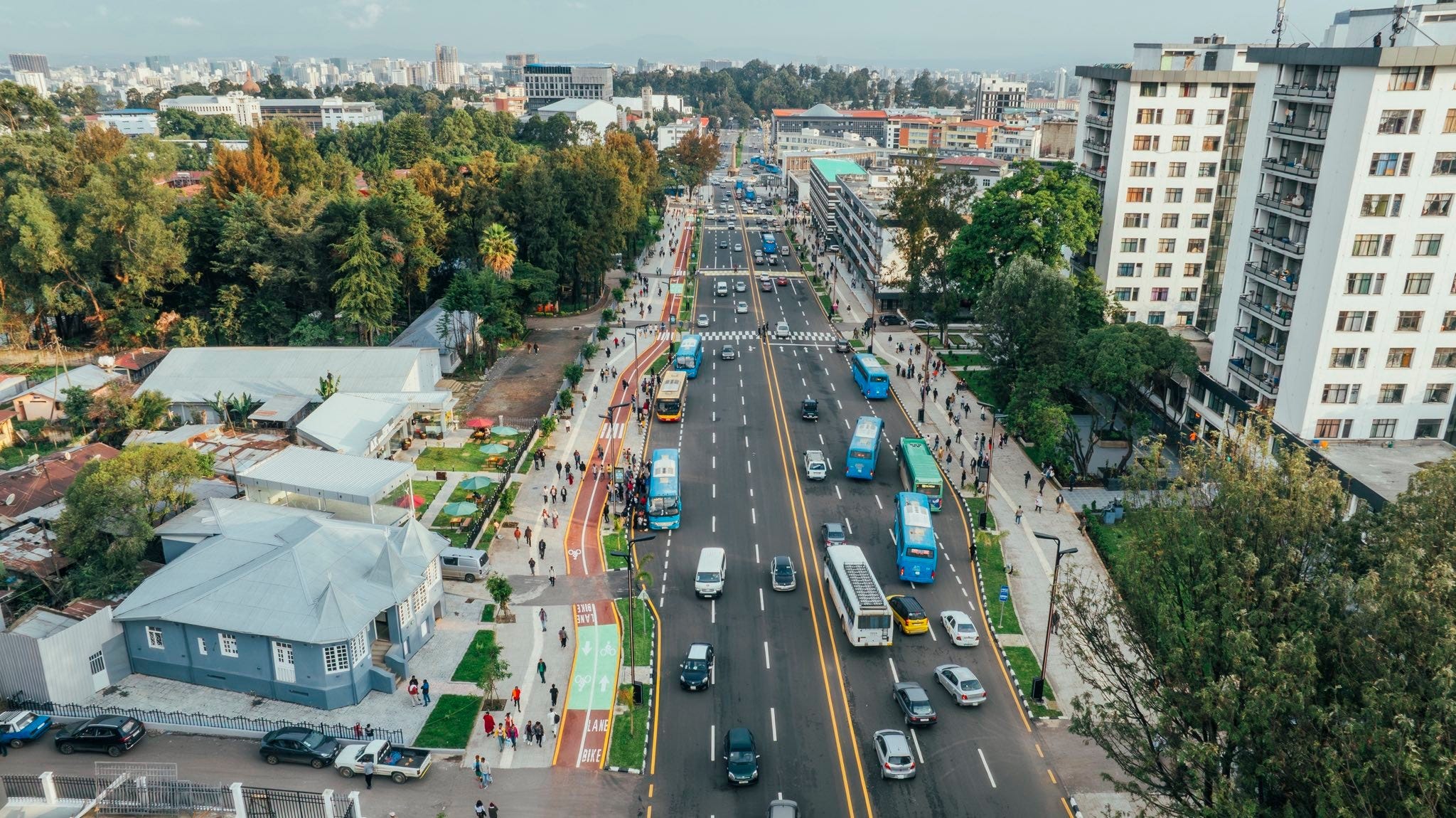
Car ownership is still low, while walking and public transit make up most trips. The country has banned the import of new combustion engine cars. (first in the world apparently) The capital Addis Ababa also seems to invest quite heavily in pedestrian, cycling and BRT infra.
Of course, not all is positive. Addis has still relatively low living standards, LRT has had problems, some of the new developments were controversial human rights wise. Also, high walking shares partly reflect low incomes.
But that makes the next few decades more interesting.
Could Addis actually become a much more prosperous megacity without first becoming car dependent? Or will rising incomes and perhaps cheap EVs lead to the same congestion and sprawl long term?
Sources: OECD on Egypt’s new urban communities; ITDP on Addis modal share and cycling plans; AFD on BRT/LRT; Bloomberg on Ethiopia’s ICE-car import ban; Amnesty International on redevelopment concerns.
Image:Entoto–Arat Kilo corridor, Addis Ababa. Source: Ethiopian News Agency (ENA), August 2025.
Michaël Hillaert (@michaelhillaert1)
Make money doing the work you believe in
Start your SubstackLearn more
For you
Get app