



STAR.VISION Unveils ‘Space.IDC’ Computing Constellation With Partners

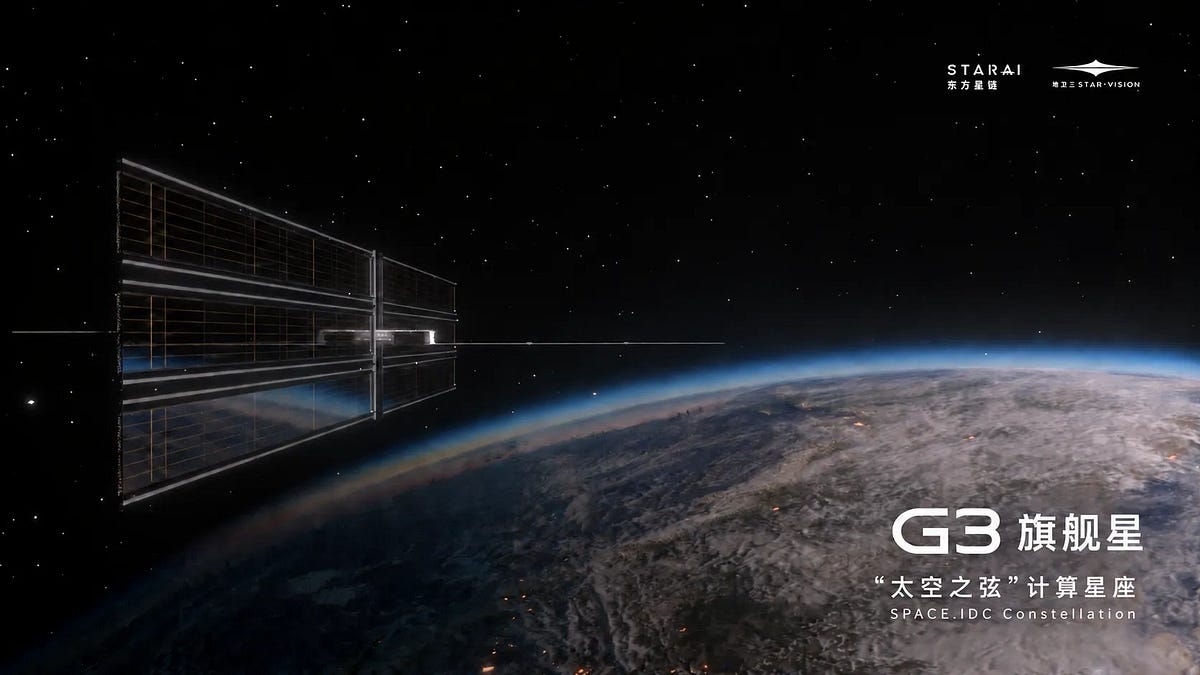
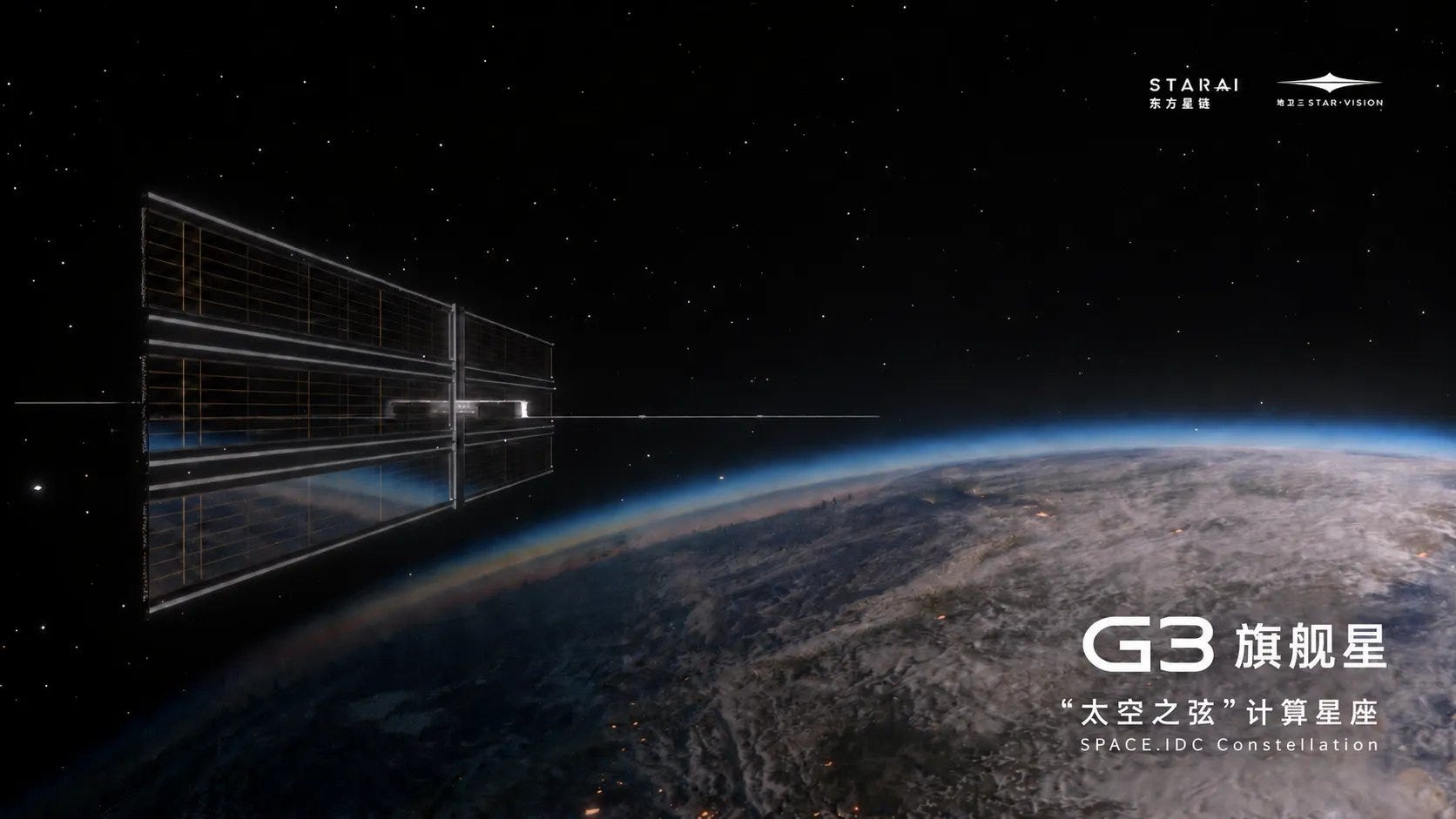
A promotional render of a ‘G3’ computing spacecraft in Earth orbit with its solar panels deployed. | Image: STAR.VISION Aerospace
At the Global Digital Trade Expo (全球数字贸易博览会) on September 25th, commercial space firm STAR.VISION Aerospace (地卫二空间技术) unveiled plans for its space-based computing constellation, joining a handful of Chinese enterprises with similar projects under development.
That project has been dubbed the Space.IDC1 Computing Constellation (太空之弦计算星座), or Space String Computing Constellation if literally translated, and, like others, proposes having significant amounts of compute placed into space to take advantage of plentiful solar power and the ability to radiate excess heat into a vacuum. Spacecraft deployed for the constellation will have the ability to crunch tasks sent to it from Earth, or received from other satellites that lack pre-processing capabilities.
The potential users STAR.VISION is looking to target with its constellation include those who need raw computing capacity or information processed within China and those aboard. Space.IDC was spoken of as a possible worldwide infrastructure, which makes sense as the company is quite internationally active.
For that, STAR.VISION envisages having in excess of one thousand spacecraft deployed. About 1,080 spacecraft will constitute the main constellation, to be fully deployed by 2035, with around 720 of them being for inference tasks and 360 for general compute needs.
To deploy the Space.IDC Computing Constellation aboard China’s current and near-future launch vehicles, STAR.VISION has come up with three spacecraft designs:
- ‘G1’ verification: designed to provide 40 to 60 PetaFLOPs of computing power by generating 11.5 kilowatts from its solar panels.
- ‘G2’ standard: set to host 160 to 310 PetaFLOPs of compute through producing 48 kilowatts of power.
- ‘G3’ flagship: expected to host 460 to 1000 PetaFLOPs of compute by generating 140 kilowatts of power through its giant solar panels.
Details on orbits to be used, inter-spacecraft links, which would need to be optical lasers with the amount of data processed, the size of radiators for cooling, or their mass were not shared. International regulatory paperwork that would provide further insight is yet to be filed as well.
At the unveiling on the 25th, STAR.VISION mentioned that it has booked an undisclosed number of launches aboard Orienspace’s Gravity-1 and Galactic Energy’s Ceres-2 to deploy ‘G1’ spacecraft. Suggestions of a possible target launch month or quarter were not shared.
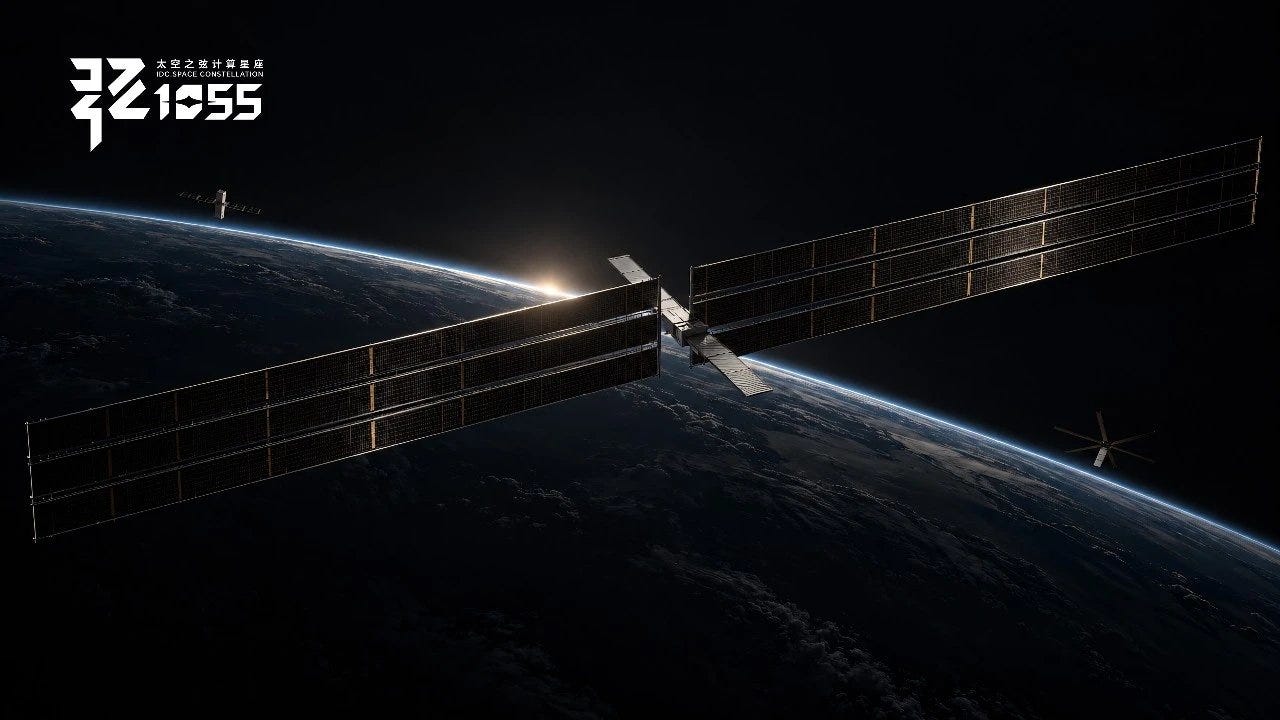
 , ‘G2’ (right), and 'G1' (left) satellites deployed in space.")
A promotional render of the Space.IDC’s ‘G3’ (center), ‘G2’ (right), and ‘G1’ (left) satellites deployed in space. | Image: STAR.VISION Aerospace
Pursuing space-based computing on a large scale is not a surprising new direction for the company, given they were one of the early adopters of using artificial intelligence systems on their remote sensing satellites, since at least mid-2023. It was also claimed that two satellites STAR.VISION made for Uzbekistan and Indonesia have been used to verify parts of the upcoming constellation.
Building the constellation and getting it initially off of Earth will take a significant amount of capital, so in support of that, STAR.VISION stated that they have secured strategic credit agreements with the Industrial and Commercial Bank of China (中国工商银行) as well as the Agricultural Bank of China (中国农业银行) to the tune of 10 billion Yuan (1.49 billion United States Dollars, as of September 28th). At least 1 billion Yuan (149 million United States Dollars) of that to be available for ‘Phase One’, with further details not shared.
To accelerate work on needed computing chips, manufacturing, and other systems, a series of agreements were also disclosed to have been signed with various entities. A notable few include the Hangzhou Institute for Advanced Study, UCAS2 (国科大杭州高等研究院), the Hangzhou Research Institute of Xidian University (西安电子科技大学杭州研究院), Hongqing Technology (鸿擎科技)3, Baidu AI Cloud (百度智能云), and MinoSpace (微纳星空). Unspecified support from the governments of Deqing Moganshan High-Tech Zone (德清莫干山高新区), Fuyang Economic and Technological Development Zone (富阳经开区), and Yunqi (云栖) town, all in Zhejiang (浙江) province, as well as Xichang (西昌市) in Sichuan (四川) province and Chongzhou (崇左市) in Guangxi (广西) has come as well.
The Space.IDC Computing Constellation is far from China’s first to be announced. ADA Space (国星宇航) and Zhejiang Lab’s (之江实验室) Three-Body Computing Constellation is ahead of all other firms, currently having a dozen satellites running in space and improving capabilities. Meanwhile, Orbital Chenguang (轨道辰光) has major financial backing, while Chaozhisuan Beijing Technology Co Ltd (超智算(北京)科技有限公司) has well-linked partners. Both have demonstration satellites working in orbit too. State-owned firms are also working on large computing spacecraft largely unnoticed.
Amid the global artificial intelligence boom, Chinese firms quietly obtained the lead in space-based computing. Since then, the Central Government has designated the necessary technologies as a focus area for the 15th Five-Year Plan period (2026-2030), with the Ministry of Industry and Information Technology (中华人民共和国工业和信息化部) in the early phase of considering ways to utilize computing constellations as a new infrastructure.
---
Thanks for reading China in Space! This post is public so feel free to share it.
IDC presumably stands for Internet Data Center.
University of Chinese Academy of Sciences.
An affiliated company of LandSpace, known for the Zhuque launch vehicles.