



'AI should assist teachers, not replace them': Union warns of risks of AI marking

RNZ / News / Education
Link: <https://www.rnz.co.nz/news/eyJhbGciOiJIUzI1NiJ9.%5Fg.pKhUMkRnoOZwX4iq2fhLAqba5Rz0jb3mINKRqASmxf0/education/1656575%2Fai-should-assist-teachers-not-replace-them-union-warns-of-risks-of-ai-marking>
30 September 2026, 9:53am
'AI should assist teachers, not replace them': Union warns of risks of AI marking
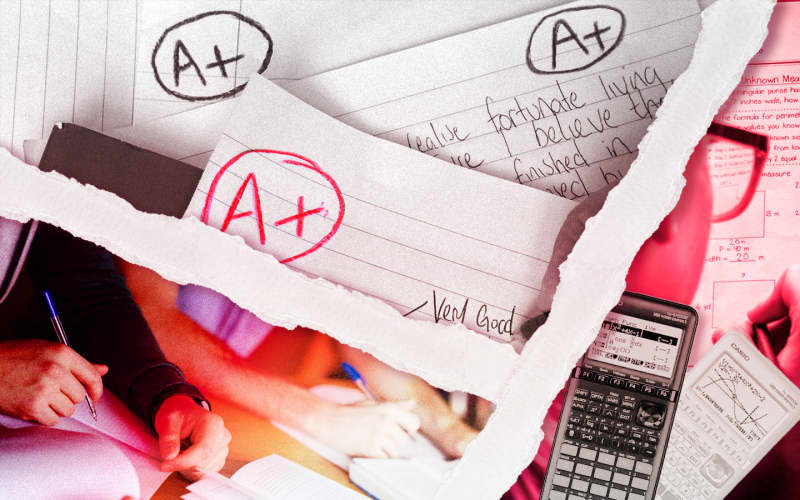
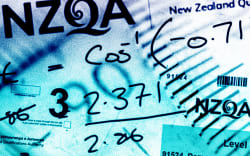
Caption:A paper presented at the Post Primary Teachers' Association conference says automated marking by artificial intelligence is on the rise.Photo credit:RNZ / Quin Tauetau
Secondary teachers are being urged to keep control of marking their students' work even if it is being done by a computer programme.
A paper presented at the Post Primary Teachers' Association conference on Wednesday said automated marking by artificial intelligence was on the rise.
The paper said the Qualifications Authority (NZQA) was using AI to mark reading, writing and maths NCEA co-requisite tests with a high degree of accuraccy.
"NZQA has proudly shared that "AI marking has achieved an agreement range of 80+% with human markers." This is as good, if not better than, human to human marking agreement," the report said.
It said that had helped reduce the number of human check markers for the tests from 100 in 2024 to just 34 this year.
The paper said automated marking was likely to expand under the qualification replacing NCEA from 2028-2030 with Education Minister Erica Stanford saying she wanted NZQA able to use automated marking even for assignments that were traditionally internally-assessed by 2028.
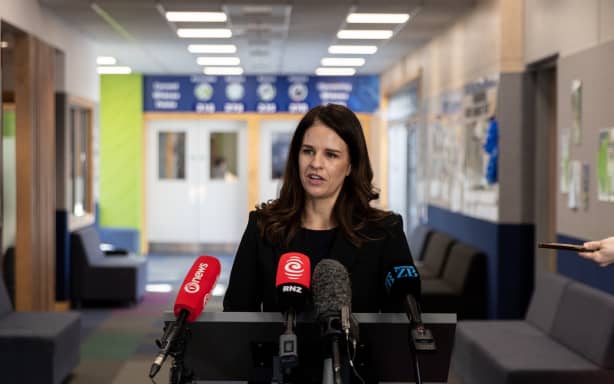
Education Minister Erica Stanford.
RNZ / Samuel Rillstone
But the report said that would not be an improvement.
"Teachers who mark external assessments consistently describe the work as valuable professional learning because it deepens their understanding of standards, student responses, assessment design and examiner expectations," the paper said.
"Marking is valuable because it strengthens teachers' professional judgement and helps them to understand standards and interpret student work. Teacher involvement in marking is not just about allocating grades - for many, it is how they 'know' their students. Marking is how the profession learns, maintains standards, and ensures fairness."
The paper said AI-human agreement in grading complex work was significantly weaker than human to human agreement.
"AI may inflate or compress grades, reducing its ability to distinguish levels of performance and these limitations make current AI tools unsuitable for high-stakes summative assessment without human oversight," the report said.
The paper said many PPTA members believed AI marking was inevitable and it would save teachers a lot of time.
"Members with a positive view on AI for assessment marking are "all for it" and think that, given parameters, AI marking will save teachers' administrative time. These members consider that AI can be a tool to support teachers' marking, but a human teacher must be 'responsible' for the marking, with teachers reviewing results and ensuring the accuracy of the system," the report said.
It urged the union to reject full automation of marking for high-stakes assessments and support a hybrid model where teachers kept control.
"AI should assist teachers, not replace them, and accountability for assessment decisions must remain with human professionals who can interpret evidence, explain judgements and uphold the credibility of the qualification," the report said.
"Assessment marking is a core pedagogical function, not just a technical task. Removing the teacher from that role is an integrity risk for the entire assessment system. Research supports a hybrid model, where AI assists, but teachers retain control."
30 September 2026, 9:53am
More Education
'Those opportunities don't happen frequently': Panel calls for changes to NCEA replacement
Ombudsman to investigate allegations Ministry of Education officials tried to circumvent Official Information Act

Ministry investigating 'serious concerns' about Horowhenua College's leadership

'Not happy': Secretary for Education Ellen MacGregor-Reid 'cannot explain' OIA comments

More News
NZ accused of breaking climate change promise with EU, but Todd McClay rejects claim

Laneway Festival locks in Fontaines DC, Hayley Williams, Slayyyter for 2027

Live: Nicola Willis rules out income tax cut, MPs mourn loss of former speaker Adrian Rurawhe

Mysterious Antarctic region that could lift sea levels by several metres must be studied - researchers

© RNZ, original at <https://www.rnz.co.nz/news/eyJhbGciOiJIUzI1NiJ9.%5Fg.pKhUMkRnoOZwX4iq2fhLAqba5Rz0jb3mINKRqASmxf0/education/1656575%2Fai-should-assist-teachers-not-replace-them-union-warns-of-risks-of-ai-marking>