


Machine Learning Everything
Peter Thiel was recently on the MD Meets podcast. This exchange caught my eye:
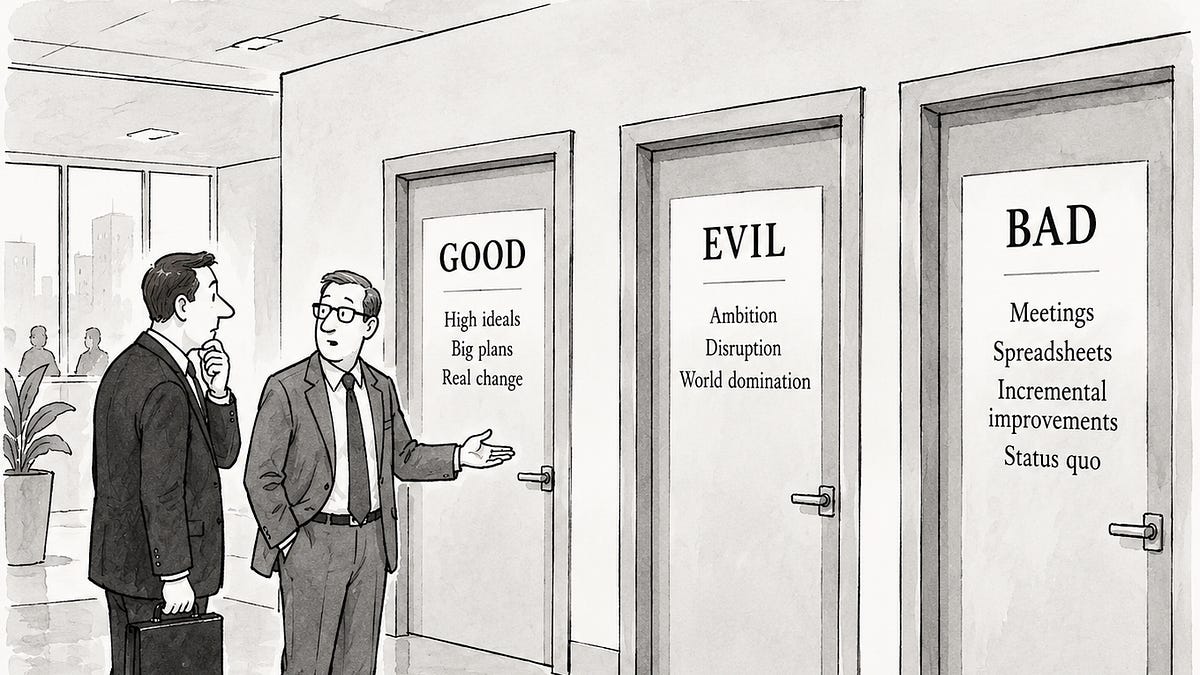
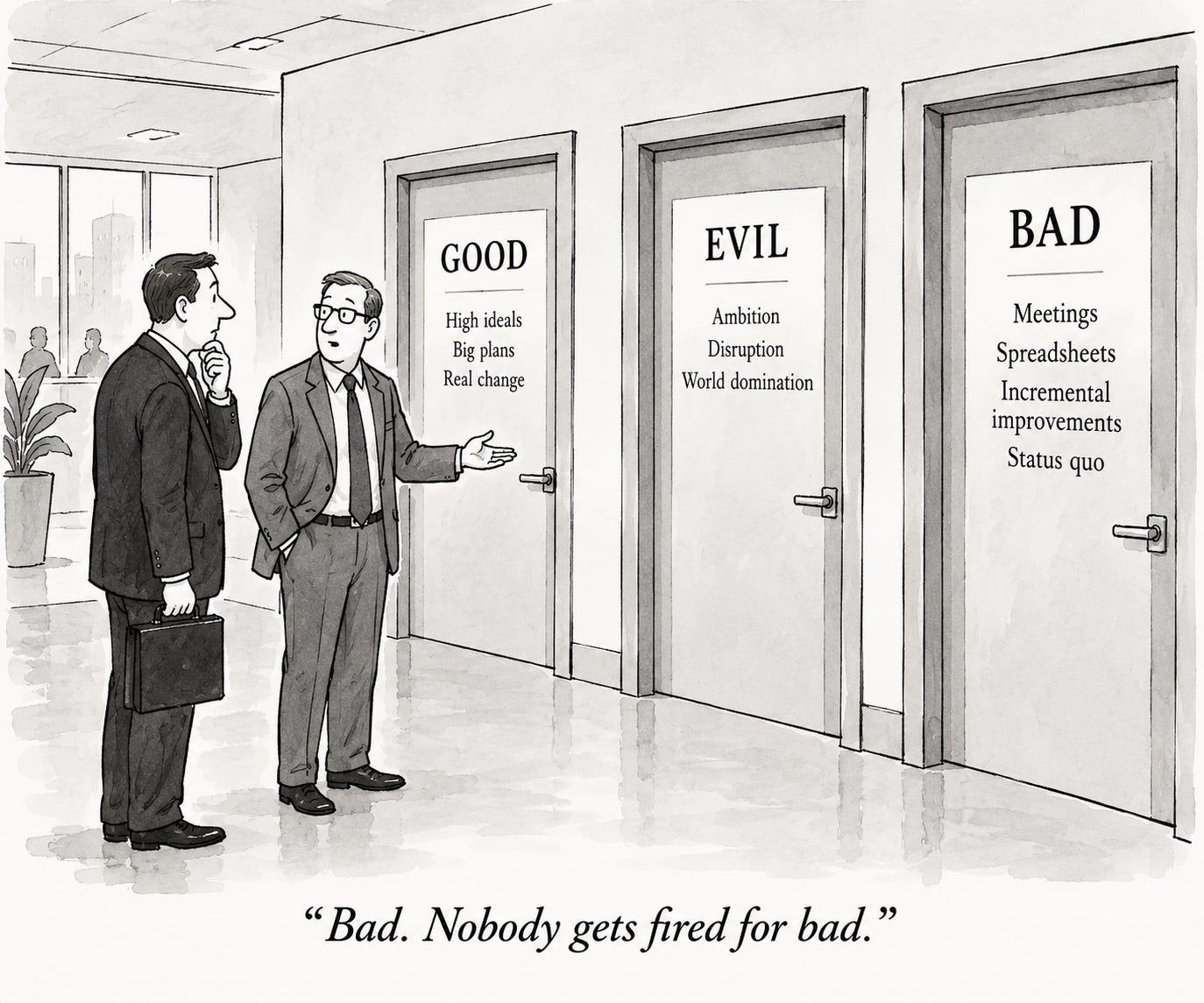
Thiel: And there’s always a question I like to ask: what is the antonym of good? The moral antonym is evil. The functional antonym is bad. A Ferrari is an evil car because it doesn’t get many miles per gallon. A Trabby is a bad car. It works, it’s less good than a Golf car—the former East German car. And so, if you’re evil, you’re at least competent. And if you’re evil, you’re not bad, and therefore you’re actually maybe kind of good because you’re at least getting something done.
When you start to look around, you realize a lot of things are “bad,” which often just amounts to incompetence. Most businesses are incompetent. They just go through the motions. Sure, they’re ambitious on the margin in terms of improving operations or driving sales. But they’re mostly content with doing the market consensus.

Consider boarding an airplane. It’s pure chaos and incompetence. Flying in general is a miserable process, and you can tell no one is really trying to make it better, whether it’s the government or the airlines.
And then you have someone like Ryanair, which is arguably evil. They squeeze out every nicety. They’ve unbundled everything: checked baggage, larger cabin bags, seat selection, priority boarding, food, and fast track. They removed reclining seats and window shades and even proposed charging money to use the toilet. On top of that, they relentlessly mock their fliers online.

You can argue that Ryanair is evil, and I kind of respect that. Better than the indifference and incompetence you get with other airlines.
Thiel goes on to apply the good vs. bad paradigm to Faust:
If you contrast the Faust books of Marlowe versus Goethe, in Marlowe’s Faust, it was the 16th-century Faust story. Faust is a fake scientist, sort of like a magician, a fake alchemist, and it’s bad science, and he goes straight to hell. In Goethe’s Faust, he has a pact with the devil and he gets his knowledge by morally dubious means, but it still always works out more for the best, and Goethe’s Faust gets redeemed. So I think it’s better to be good than evil—I want to be very clear—but perhaps I prefer Goethe’s Faust to Marlowe’s Faust. And then the moral question our society has is we have all these good versus evil debates, and we’re just full of badness. Most of the time those things are not even evil, not even good, they’re just merely bad. And so if you’re in a world where 99% of the businesses, companies, people, political leaders, business leaders are totally incompetent, that’s the problem we should actually be talking about.
There are two references here: Marlowe’s Faust and Goethe’s Faust.
The basic Faust legend is about an ambitious scholar who is unhappy with the limits of human knowledge and experience. He makes a deal with the Devil, selling his soul to get what he desires.
In Marlowe’s version, Faust sells his soul for supernatural knowledge. But he wastes it on tricks, entertainment, humiliating enemies, impressing aristocrats, and conjuring illusions. During his time with his new powers, he fails to repent and is eventually condemned to hell.
In Goethe’s version, Faust makes a similar deal, effectively wagering his soul in pursuit of unlimited experience. He does terrible things along the way. But Goethe’s Faust is also an incredibly ambitious, striving figure. He wants to experience and understand everything and eventually turns his energies toward large-scale human projects. Most importantly, Goethe’s Faust is ultimately saved rather than damned.
Marlowe’s Faust is morally wrong and ineffective, which leads to damnation: bad.
Goethe’s Faust is morally compromised but effective and productive, which leads to redemption: evil.
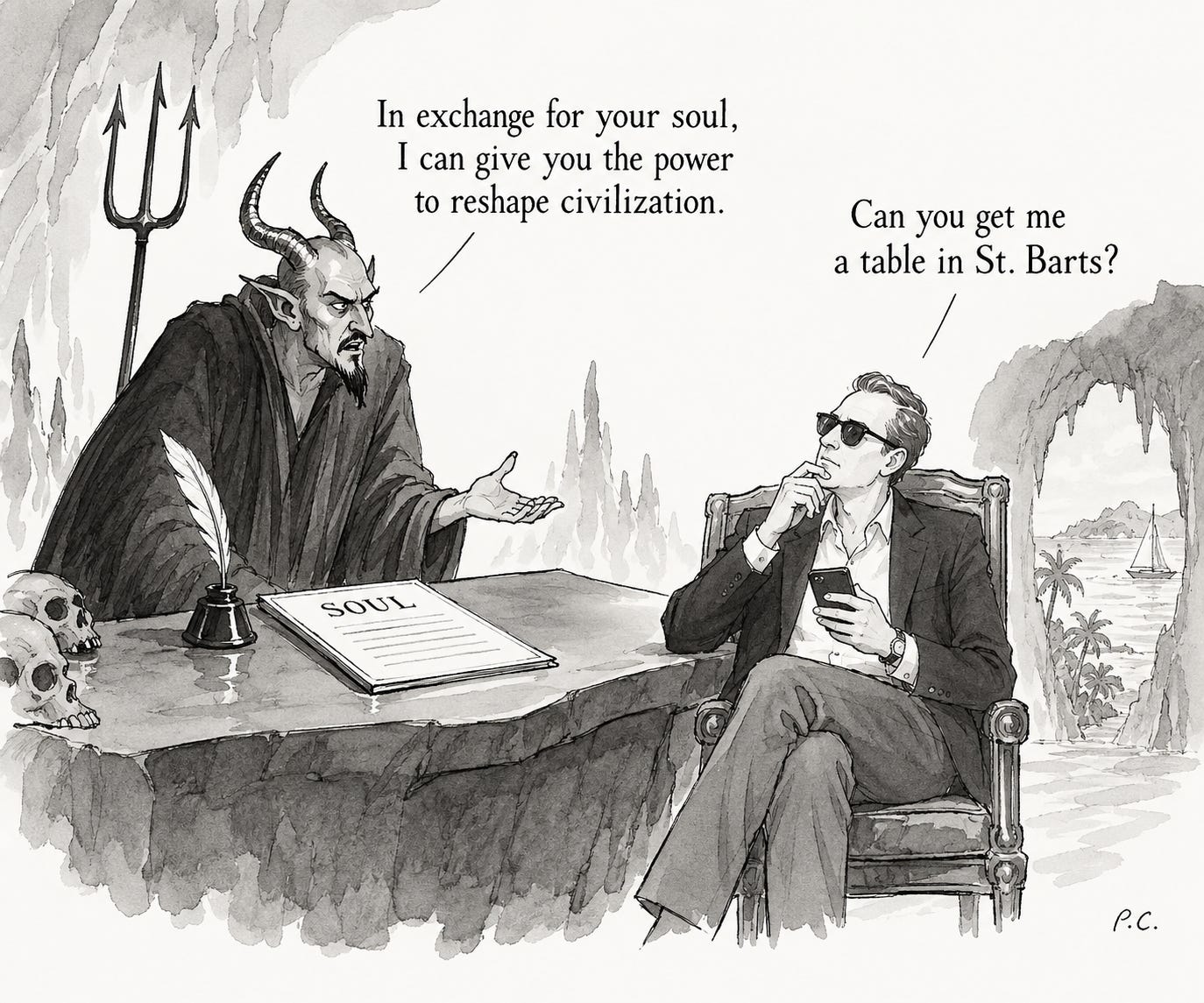
People who accrue great wealth and power today tend to waste it on triviality and entertainment. One of the most depressing things I’ve seen recently is a clip from Jeff Bezos’ birthday celebration in St. Barts.
Bottle service surrounded mostly by rich strangers. This is essentially what any first-year banking analyst does after his first bonus. Is this the best we can do with hundreds of billions of dollars in wealth?

Governments aren’t much better. The main idea dominating politics for the last 50 years has been to give people money or pay for things. Medicare, Medicaid, Social Security, and other transfers that make up the majority of spending are essentially that. Completely devoid of ambition or creativity. And it’s not even implemented efficiently.
If someone is going to pursue dangerous, transgressive, or morally questionable ambitions, there is at least something to be said for actually accomplishing something. Unfortunately, most groups are perfectly content with accomplishing nothing.
Subscribe