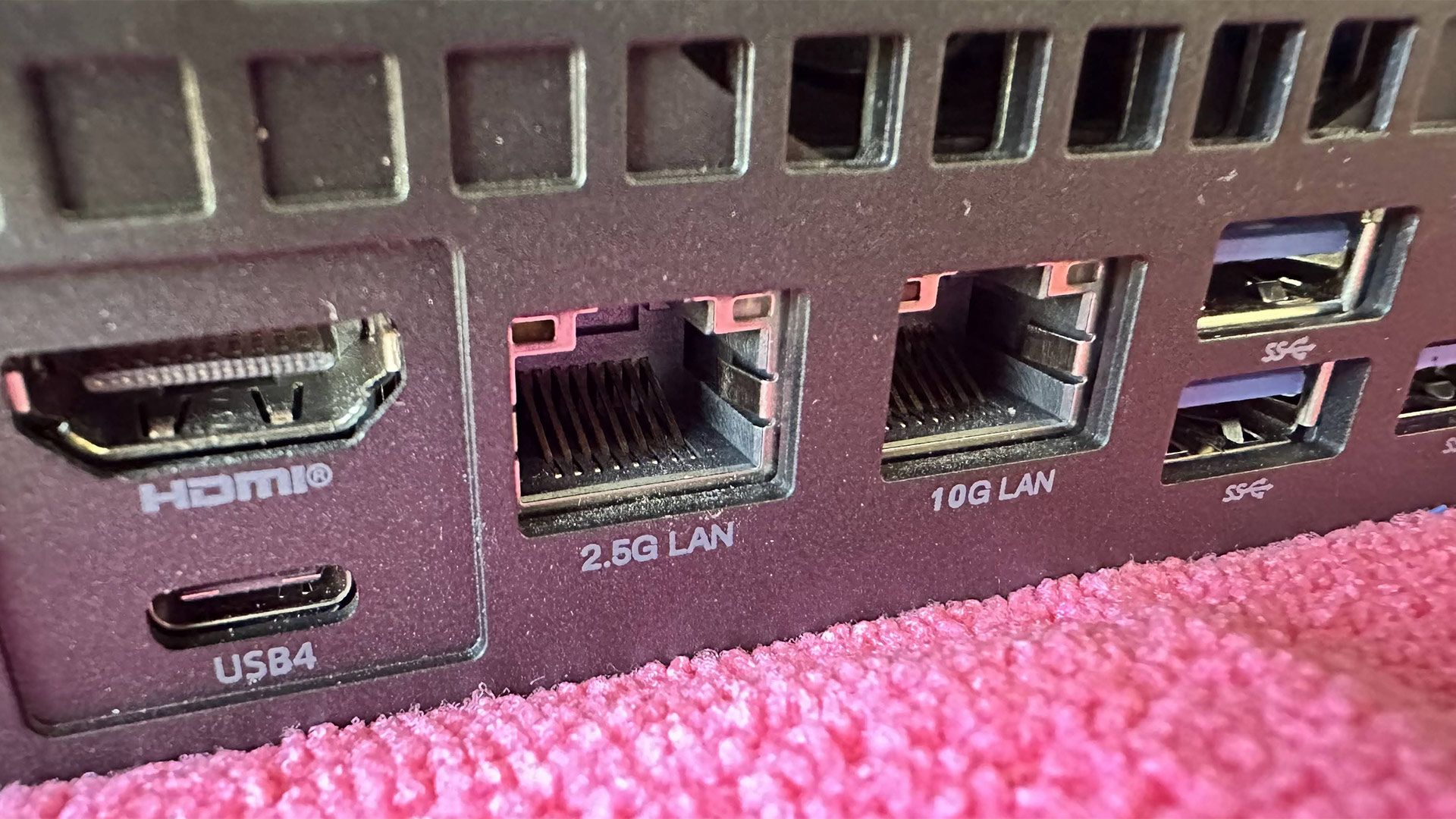




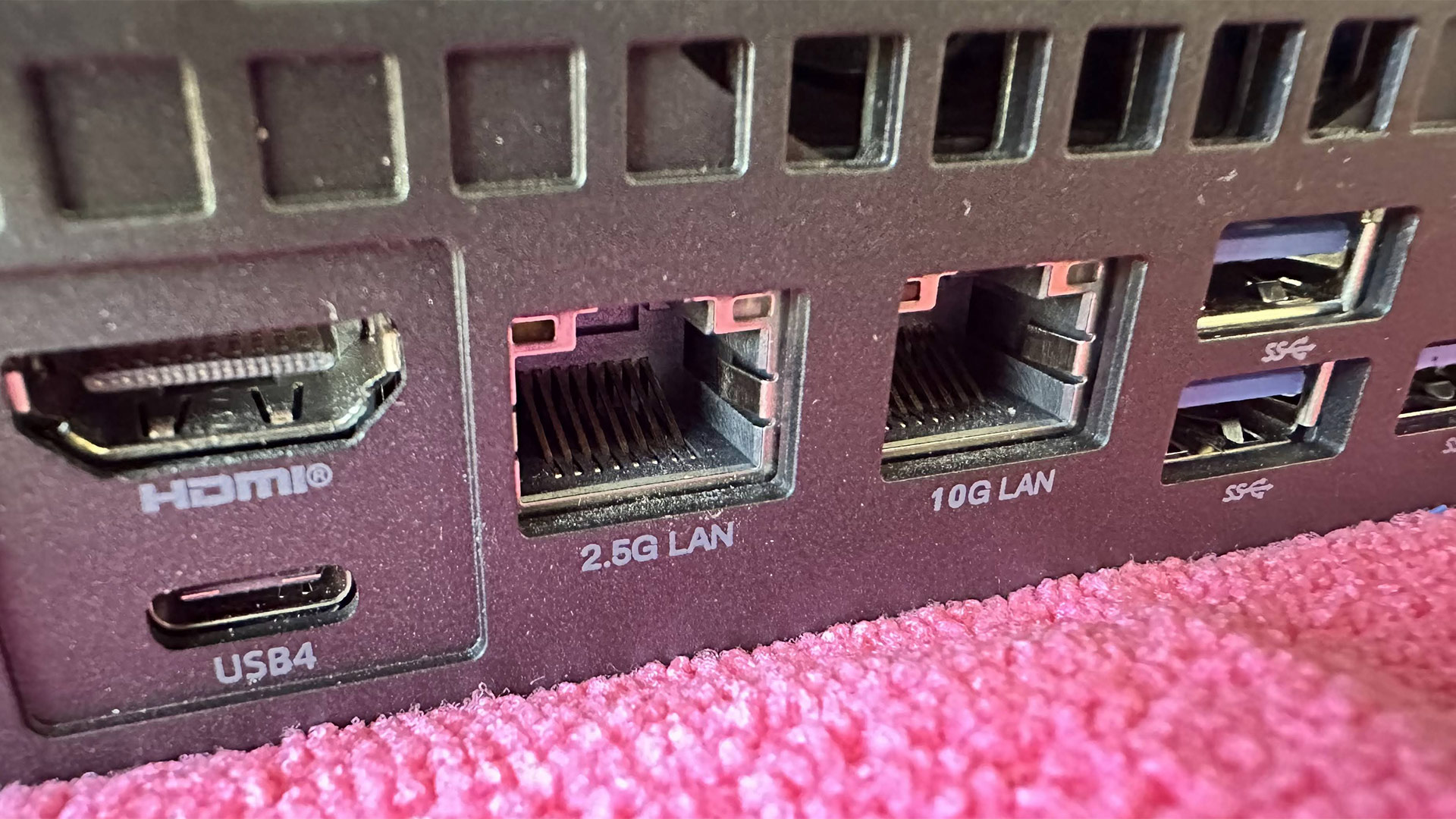
The Ethernet spec was first drafted on this day in 1980 — DEC, Intel, and Xerox defined the standard several years before the internet existed
(Image credit: Tom's Hardware)
- Copy link
- X
- You can't talk about Ethernet without Bob Metcalfe & David Boggs. The guys that created it back c. 1970-2 Sure, required sign off by the big names - DEC nearly 'owned' the Internet, and Intel, well, Intel is/was Intel. HA! I like to acknowledge the men and women engineers that actually did the work. "Companies" don't do work, individuals do. Gotta respect us engineers. "Internet" in the 70s/early 80s was awesome. Like remembering / sharing phone numbers. No central name resolution! AHAHAHAHA Managing local host files! \sigh\ Reply
- Arpanet veteran @ Stanford Linear Accelerator Center (Stanford University) 1970's. Fiber optic installation 1992. Reply
- What did you build with your extra BNC connector hardware? Reply
- And now after 36 years of RJ45 (and 46 years of Ethernet), we definitely need a new modern replacement for RJ45; but it must be smaller, slimmer and be sturdy & stable when plugged in while still user-terminatable with ease like RJ45. Being a new replacement could also mean more features if possible, even if the new features are optional. Reply
- > Xajel said:
- > Xajel said:
- View All 6 Comments
Share this article
Join the conversation
Add us as a preferred source on Google
Newsletter
Subscribe to our newsletter
On this day in 1980, version 1.0 of the Ethernet specification was published by Digital Equipment Corporation (DEC), Intel, and Xerox. This ‘DIX’ standard was established at a time still nearly three years before the modern internet existed. Nevertheless, Ethernet would become the default technology for connecting computers to each other in local networks – and all around the world. However, we must point out that Ethernet had existed in experimental form at Xerox PARC in the 1970s.
Before Ethernet, computer manufacturers were wary of building LAN connectivity into their computers. It seemed wasteful to integrate one type of network adapter that wouldn’t always work with other networked computers and equipment an organization might use. To foster the adoption of Ethernet industrywide, DIX allowed any vendor to use the specification in their own hardware implementations.
Ethernet has been adjusted, refined, and improved over time to remain competitive and relevant. In 1980, it arrived using coaxial cable wiring and with a top speed of 10 Mbps. Five years later, it would move to adapters with BNC connectors. The first RJ45 implementation, a connector that still identifies Ethernet ports to this day, was in 1990 alongside the introduction of 10BASE-T twisted-pair cabling (but still at 10 Mbps).
Latest Videos FromTom's Hardware
Watch full video here:
Data speeds ramped up tenfold, hitting 100 Mbps in 1995, and it would be just four more years until the next tenfold boost with the debut of Gigabit (1 Gbps) Ethernet. If you buy a PC nowadays, you will commonly see Ethernet ports labeled 2.5G and/or 10G. To make use of the latter, Cat6a or better cabling is typically recommended for reliable links. However, data centers run equipment connected via 800 Gbps+ Ethernet protocol connections over advanced fiber optics.
Despite the rise and generational advances delivered by Wi-Fi 7, wired Ethernet is still preferred for speed, low latency, and stability. These are very desirable qualities for enthusiasts, home labbers, and gamers alike. Thus, even on small form factor PCs and laptops with the latest Wi-Fi but no RJ45 networking port, some might choose to connect a USB Type-C to RJ45 Ethernet dongle when they are at the home/office with wired networking available.

Follow Tom's Hardware on Google News, or add us as a preferred source, to get our latest news, analysis, & reviews in your feeds.
Get Tom's Hardware's best news and in-depth reviews, straight to your inbox.
Contact me with news and offers from other Future brandsReceive email from us on behalf of our trusted partners or sponsors
TOPICS
Mark Tyson is a news editor at Tom's Hardware. He enjoys covering the full breadth of PC tech; from business and semiconductor design to products approaching the edge of reason.
And now after 36 years of RJ45 (and 46 years of Ethernet), we definitely need a new modern replacement for RJ45; but it must be smaller, slimmer and be sturdy & stable when plugged in while still user-terminatable with ease like RJ45. Being a new replacement could also mean more features if possible, even if the new features are optional.Why? Reply
And now after 36 years of RJ45 (and 46 years of Ethernet), we definitely need a new modern replacement for RJ45; but it must be smaller, slimmer and be sturdy & stable when plugged in while still user-terminatable with ease like RJ45. Being a new replacement could also mean more features if possible, even if the new features are optional.Eww no, why? You'd be giving up nearly 40 years of forward and backwards compatibility, and for what? If it's going to remain easy to hand-terminate it's not going to get much smaller or much more capable. The majority of devices are not small enough that the size of even a standard 8P8C jack is a problem, and for those that are thinner designs that still support standard cables exist. Look at a 2008-2012 Macbook Pro for example, plenty thin while at the same time still having a full array of ports. Most laptops should do this, they don't need to be thinner than that era of MBP. For devices that actually have a need to be as small as possible, USB-C ethernet adapters have already solved this problem. Reply