







House prices keep rising across Europe: Which countries saw the biggest increases and why?
Published on 03/10/2026 - 7:00 GMT+2
Share Comments Add Euronews on Google
 Facebook
 Twitter
 Flipboard
 Send
 Reddit
 Linkedin
 Messenger
 Telegram
 VK
 Bluesky
 Threads
 Whatsapp
House prices in Europe continue to rise, outpacing inflation in many countries. Annual increases ranged from 0.6% in Germany to 16.5% in Portugal in the second quarter of 2026.
House prices continue to rise across much of Europe, but the pace varies widely. Portugal, Bulgaria and Spain recorded double-digit annual increases in the second quarter of 2026, while prices fell in Finland, Luxembourg and France.
 ADVERTISEMENT
Across the EU, prices rose by 4.7% compared with a year earlier, outpacing inflation of 3.2%.
So where are prices rising fastest, and how much of that growth remains once inflation is taken into account?
Over 15% rise in Portugal and Bulgaria
Among 29 European countries, nine recorded double-digit year-on-year rises in house prices, according to Eurostat. Portugal saw the highest year-on-year increase in the second quarter of 2026, at 16.5%, closely followed by Bulgaria (15.5%).
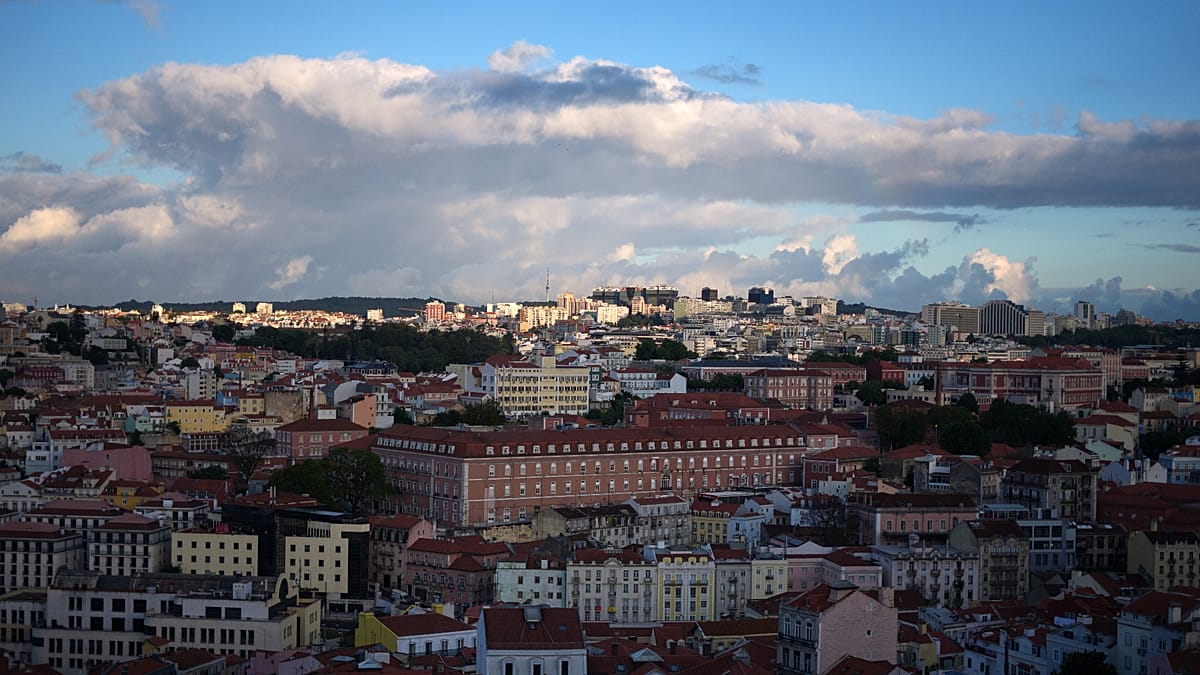
Mikk Kalmet, areal estate expert at Global Property Guide, noted that strong housing demand continues to outstrip supply in Portugal, particularly in Lisbon, Porto and popular coastal areas. “Limited new construction, foreign investment, tourism-related demand and persistent housing shortages have all contributed to rising prices,” he told Euronews Business.
Kalmet explained that in Bulgaria, rising household incomes, wage growth, relatively affordable mortgage financing and strong demand for property as an investment have supported price increases.
Related
- One-bedroom flat rent in Portugal costs more than minimum wage
- Nearly 19 years of income to buy a home? Europe's least affordable housing markets
- housing crisis
- Housing
- Euronews Compare
- Inflation
Lithuania (14.3%), Slovakia (13.6%), Croatia (12.7%), Spain (12.1%), Romania (12.1%), Latvia (11.4%) and Hungary (10.2%) also recorded increases of more than 10%.
Denmark (9.4%), Slovenia (9.1%) and Czechia (8.6%) were also close to the 10% level.
House prices also rose by more than the EU average in Cyprus (7.9%), Malta (6.9%), Poland (6.3%), Ireland (6%), Estonia (5.8%), Austria (5.1%) and Sweden (4.8%).
Three countries saw declines
Finland (-2.7%), Luxembourg (-2.2%) and France (-0.8%) were the only countries where house prices declined year on year over this period.
Mikk Kalmet pointed to weak economic growth in Finland, along with subdued consumer confidence and the lingering effects of higher interest rates.
“In France, affordability constraints, relatively weak housing demand and the effects of previously elevated mortgage rates have put downward pressure on prices,” Kalmet said, adding that economic uncertainty has also encouraged some prospective buyers to postpone purchases.
Among the EU’s ‘Big Four’ economies, Spain stands out with a 12.1% rise, while Italy (4%) is below the EU average. Germany recorded only a slight increase of 0.6%, just above France, where house prices fell by 0.8%.
“\[In Germany\] higher mortgage rates are back. Housing affordability is deteriorating. Demand for mortgage loans is weakening,” Carsten Brzeski and Franziska Biehl from ING wrote in their analysis.
Local fundamentals drive Europe’s housing divide
Kalmet pointed out that the different rates of house price growth largely reflect national housing shortages, income growth, mortgage conditions and demographic trends. “Housing markets are fundamentally local, even though European countries share many of the same economic and monetary conditions,” he said.
Countries experiencing strong demand and limited construction tend to see faster price increases. In contrast, countries with weaker economic growth, subdued household demand or greater sensitivity to borrowing costs have experienced slower growth or declining prices.
Growth is still strong in real terms
When inflation is taken into account, real house price growth is still strong in many countries.
In the EU, with inflation at 3.2%, house prices rose by 1.5% in real terms.
However, growth remained much stronger in several countries. In Portugal, for example, inflation was 3.6% over this period, resulting in real house price growth of 12.1%.
Real growth was also above 7% in Slovakia (9.4%), Bulgaria (9.1%), Lithuania (8.8%), Spain (8.3%), Latvia (7.9%), Denmark (7.7%), Hungary (7.7%) and Croatia (7.5%).
Six countries recorded declines in real terms, led by Luxembourg with a fall of 6.4%. Real house prices also fell by 3.2% in France and 2% in Germany.
Explaining what has driven house prices over this one year, Kalmet said: “Three factors stand out: persistent housing shortages, household income growth and changing mortgage conditions. In many European countries, residential construction has failed to keep pace with housing demand.
What’s next for house prices?
Kalmet expects that persistent housing shortages and continued demand could support further price increases in many European markets. However, growth is likely to remain uneven, and another year of double-digit increases should not be taken for granted.
“The biggest uncertainty is interest rates. The ECB raised rates in September 2026 in response to renewed inflationary pressures. Higher mortgage costs, combined with weaker purchasing power caused by rising energy prices, could slow housing demand,” he said.
Brzeski and Biehl noted that prospective buyers in Germany now face a challenging combination of higher property prices, higher financing costs and the lingering effects of weaker real purchasing power, driven by the adverse economic effects of the war in the Middle East.
Share Comments Add Euronews on Google
Read more
Economy Why young Europeans are struggling to get on the property ladder
Business What's the average age of first-time homebuyers across Europe?
Economy Housing in Europe: Where do people rent more than they buy?