
The Central European Blog
I promised the reader Dabor in the comments under the Nuremberg text that the next article will be a more optimistic one; so, here it is.
(I wonder what the visitor stats will be, though; when it comes to the attention economy of today, pessimistic takes usually beat the optimistic ones by a wide margin. People love them some negativity.)
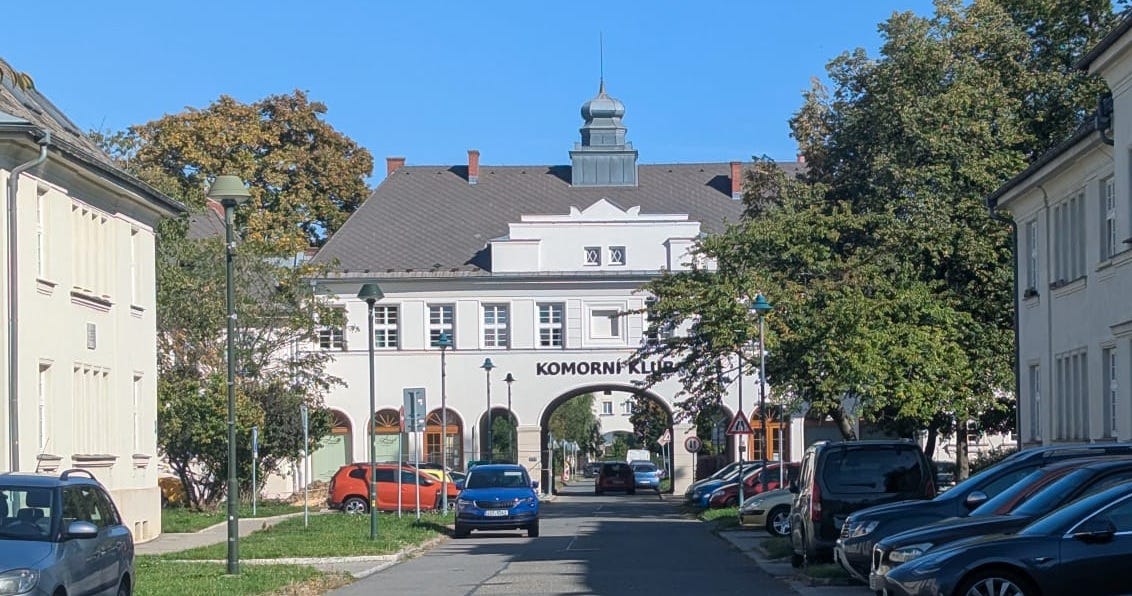
Anyway, let us now take a stroll through the streets of a neighbourhood which most Czechs have never heard of, and yet it is interesting and beautiful at the same time. Its name is Jubilejní kolonie (The Jubilee Colony), as it was built around a centenary of the founding of the Vítkovice Ironworks, and it is situated in my city of birth, Ostrava.
---
Until black coal was discovered, this particular region on the border of Moravia and Silesia was a mostly agricultural one. The soil was good and fertile, and dozens of agricultural villages dotted the landscape, with only a few smaller towns around.
In the second half of the 18th century, people found the first coal seams, and soon it turned out that the coal deposits here were really massive and the coal quality very good. For Upper Silesia in general, this was the beginning of the industrial era. The first ironworks in Vítkovice (nowadays part of Ostrava) were founded in 1828, almost two decades before the railway reached the region (1847).

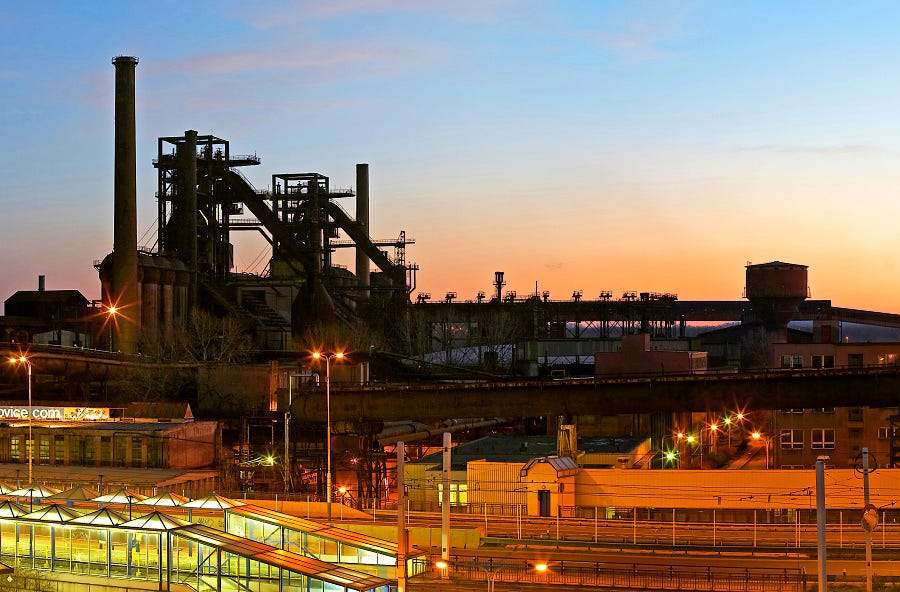
A part of the Vítkovice Ironworks and Steelworks, now decommissioned and turned into a tourist attraction, at sunrise. Photo: Boris Renner, CC BY-SA 3.0, Wikipedia.
Some 100 years later, the former village of Vítkovice was transformed into something that was more of a factory than a city, one of the largest industrial hubs in Europe. Of course, ironworks needed workers, and workers needed places to live. Multiple worker colonies emerged, some little better than slums, but as the 19th century gave way to the 20th, their quality slowly improved.
The project of the Jubilee Colony was one of such contemporary socially progressive schemes. The project called for housing in low-rise apartment buildings surrounded by trees. Various amenities were provided as well, such as a library for both the workers and their children, because the need for spiritual and intellectual nourishment was recognized at least as important as the need for shelter. The entirety of the colony was built over a period of eleven years and finished during the Great Depression.
This is how the houses look today, after a respectful but minimalist renovation - nothing was completely rebuilt.
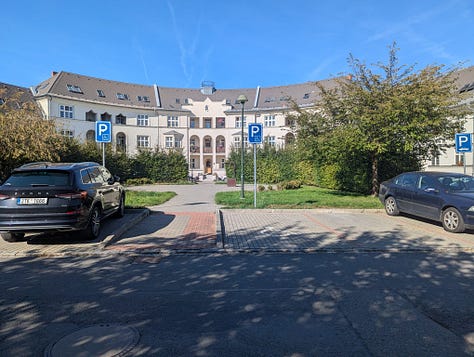
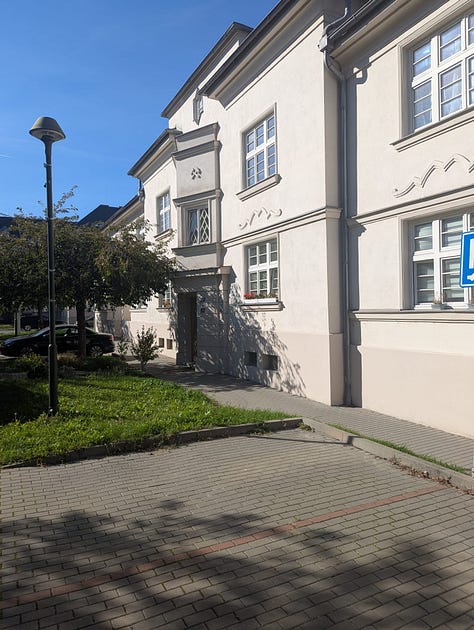
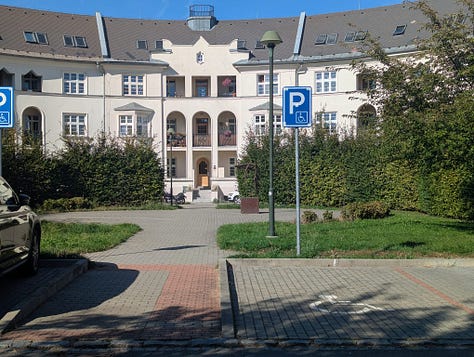
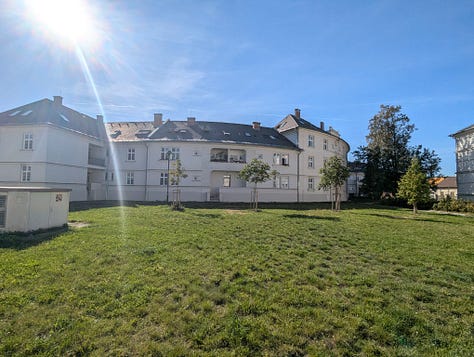
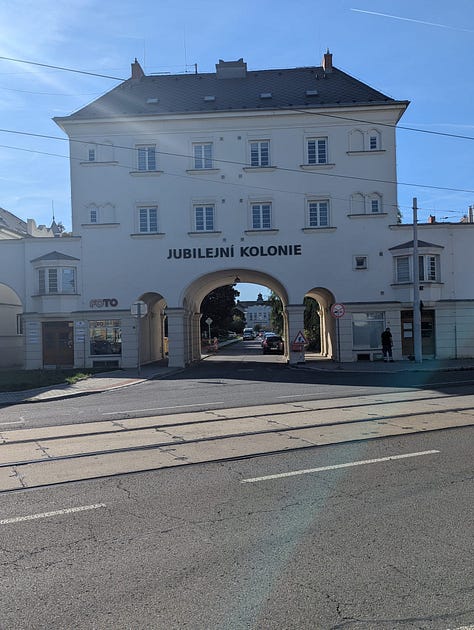
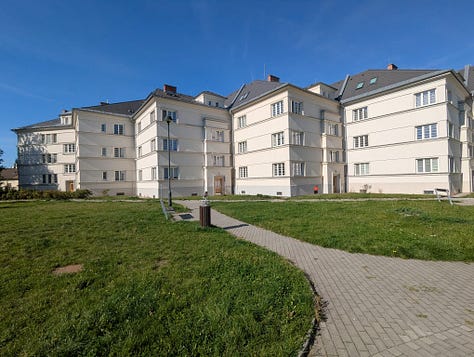
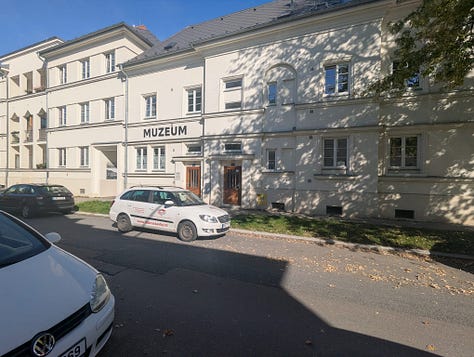
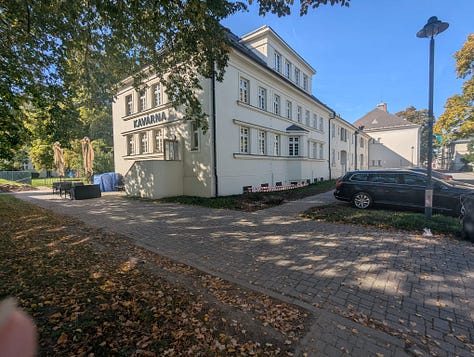
Photos from the Jubilee Colony
One of the houses contains a small museum, an apartment furnished entirely in the 1930s style, with very old appliances, furniture and even pillows, still filled with real goose feathers.
Even today, you can tell from a dozen details that this was not an affluent location. In some places, sinks and toilets were shared by multiple apartments, and there were communal bathrooms. The whole neighbourhood was built within walking distance (\~ 25 minutes) of the ironworks, because tram tickets were expensive and people had to have an alternative to get to work for free. There were also - now long demolished - communal sheds for rabbits and hens, so that households could produce their own meat and eggs.
And yet, this was still decent, humane living. Attention was paid to decoration and good looks - it is only modern architects who deem such touches unnecessary (why?). The quarter was small enough for people to know one another - there were only 605 apartments. This also helped with self-policing of petty crime and vandalism, which thrive in large, anonymous communities. Overall, a surprisingly comfortable place to live, dating from a time of economic turmoil and heightened social tensions.
---
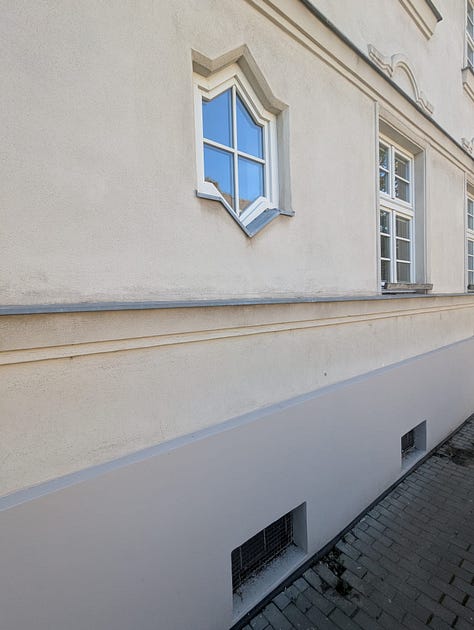
In many aspects, things improved in the last 100 years, but we also lost something along the way. New buildings tend to be bland and boring, and to consist of right angles only. Few architects would now think of adding a fancy little window like this:

… even if it is small details like that window that make your heart a little bit warmer. And few architects would think of adding an entry arch to the neighbourhood they are designing, even though humanity has been building arches since the days of Babylon and Rome, which indicates that people all around the world are fond of them.

Remember: this was not an expensive project, but its relative frugality still had room for some human warmth.
Our cities would look a lot better if someone took that idea seriously again. We are many times richer than Czechoslovakia was one hundred years ago, but all that money seems incapable of buying a soul.
The extent of use of AI in this article: 2 factual errors and 26 grammatical errors/bad formulations fixed. No editing.
---